
As manufacturing continues to move toward higher automation and tighter quality standards, machine vision has become one of the most important technologies on the production floor. Whether it's SMT assembly, semiconductor manufacturing, pharmaceutical packaging, or automated sorting, inspection systems are now expected to detect defects that are almost invisible to the human eye.
Traditional HD cameras often struggle in these environments. Limited resolution can result in blurred edges, missed defects, and unreliable measurements, especially when production lines operate at high speed. For manufacturers looking to improve inspection accuracy, upgrading to a 4K industrial camera is becoming an increasingly practical solution.
ELP develops industrial camera modules designed for demanding machine vision applications, helping manufacturers capture sharper images and build more reliable automated inspection systems.
Why Image Resolution Matters in Industrial Inspection
Higher resolution is more than a specification—it directly affects inspection performance.
A 4K industrial camera provides significantly more image detail than a standard 1080p camera. This additional pixel information makes it easier to identify tiny defects, verify product dimensions, and improve the accuracy of AI-based inspection software.
Typical applications include:
- PCB and SMT component inspection
- Semiconductor packaging
- Precision assembly verification
- Barcode and OCR recognition
- Automated sorting systems
For manufacturers producing small, high-value components, clearer images often translate into fewer inspection errors and more consistent product quality.
Sensor Performance Makes the Difference
When evaluating an industrial camera, sensor quality is just as important as resolution.
Professional 4K machine vision cameras typically use high-performance CMOS sensors designed for industrial environments rather than consumer imaging applications.
Key advantages include:
Better Light Sensitivity
Larger pixel structures help collect more light, producing cleaner images even under fast strobe lighting or low-light conditions.
Lower Image Noise
Reduced digital noise allows inspection software to distinguish real product defects from background interference.
Higher Dynamic Range
Many production environments include reflective metals, dark plastics, or mixed lighting conditions. A high dynamic range helps preserve image detail across both bright and dark areas.
These characteristics improve the reliability of automated inspection systems while reducing false detection rates.
High-Speed Data Transmission Is Equally Important
Capturing high-resolution images is only part of the equation. Those images must also be transferred quickly enough for real-time processing.
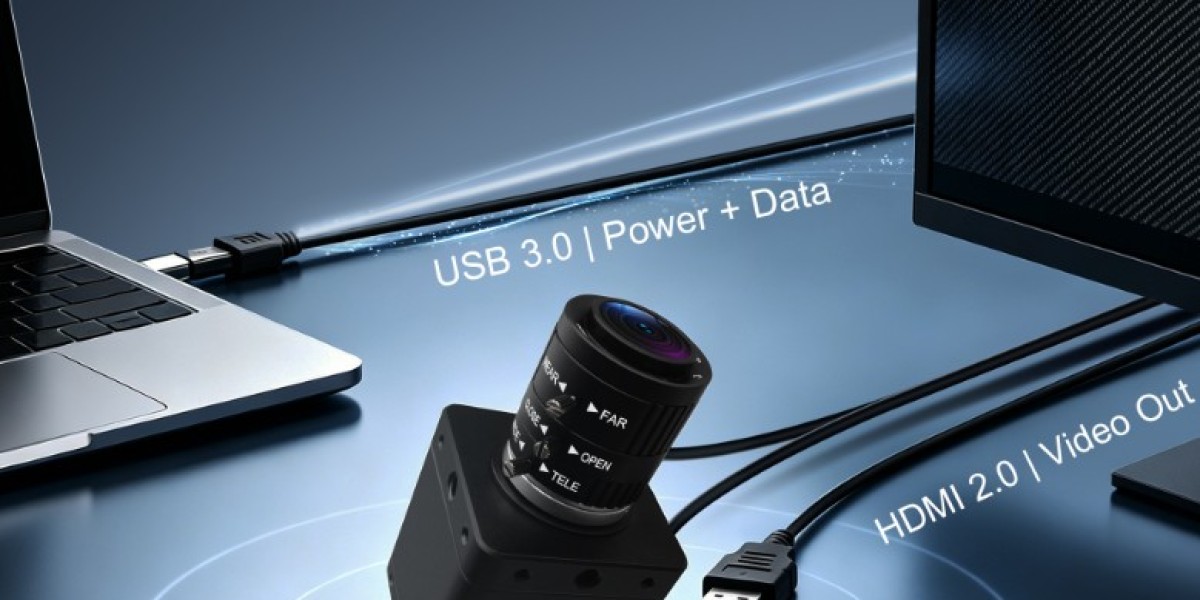
Modern 4K USB industrial cameras commonly utilize high-bandwidth interfaces such as:
- USB 3.0
- USB 3.1
- Gigabit Ethernet (GigE Vision)
These interfaces provide sufficient bandwidth for high-resolution image transmission while minimizing latency.
Many industrial camera modules from ELP support standard UVC protocols, making integration with industrial PCs and machine vision software much easier. Without requiring proprietary drivers, users can quickly deploy imaging systems into existing automation equipment.
Fast image transmission also allows AI inspection software to analyze images immediately and trigger automated sorting or rejection mechanisms without interrupting production.
Common Applications for 4K Industrial Cameras
PCB and SMT Inspection
Modern circuit boards contain increasingly smaller electronic components.
A 4K camera can capture an entire PCB with excellent detail, allowing software to inspect solder joints, missing components, alignment errors, and surface defects within a single image.
Pharmaceutical Packaging
Packaging inspection requires accurate verification of:
- Barcodes
- QR codes
- Expiration dates
- Batch numbers
- Product labels
Higher image resolution improves OCR accuracy while reducing reading failures on curved or reflective packaging.
Robotic Guidance
Industrial robots rely on machine vision for positioning and navigation.
High-resolution cameras provide better edge detection and more accurate coordinate calculations, helping robots perform pick-and-place operations with greater consistency.
Automated Quality Inspection
Manufacturers increasingly use machine vision to inspect:
- Surface scratches
- Cracks
- Assembly completeness
- Dimensional tolerances
- Product appearance
Improved image clarity allows software to identify defects that lower-resolution cameras may overlook.
Choosing the Right Lens Matters
Even the highest-resolution sensor cannot perform well if paired with an unsuitable lens.
Professional industrial cameras are typically designed with C-mount or CS-mount lens compatibility, allowing users to select lenses based on their specific inspection requirements.
High-quality industrial lenses offer:
- Low distortion
- Better edge sharpness
- Uniform illumination
- Improved color consistency
This ensures that the camera's full 4K resolution is utilized effectively throughout the entire field of view.
Built for Continuous Industrial Operation
Unlike consumer cameras, industrial cameras must operate reliably in demanding production environments.
Typical challenges include:
- Continuous 24/7 operation
- Mechanical vibration
- Dust exposure
- Electromagnetic interference
- Temperature fluctuations
Industrial camera modules are often housed in durable aluminum alloy enclosures that provide structural protection while improving heat dissipation.
ELP designs its industrial camera modules with long-term operational stability in mind, making them suitable for automated production lines where reliability is critical.
Simple Maintenance Helps Maintain Accuracy
Even high-quality vision systems require routine maintenance to deliver consistent results.
Some recommended practices include:
- Clean lenses regularly using appropriate optical cleaning materials to remove dust and contamination.
- Inspect camera mounts periodically to ensure vibration has not affected alignment.
- Recalibrate exposure settings when factory lighting conditions change.
- Verify focus and field of view after equipment maintenance or production line adjustments.
Preventive maintenance reduces false inspections and helps maintain stable imaging performance over long production cycles.
ELP Supports Modern Machine Vision Solutions
As industrial automation continues to evolve, imaging technology must keep pace with increasing inspection demands.
ELP provides 4K industrial camera modules engineered for applications including:
- Machine vision
- Industrial automation
- AI inspection systems
- Robotics
- Intelligent transportation
- Medical imaging
- Scientific research
By combining high-resolution imaging, stable hardware performance, and easy system integration, ELP helps equipment manufacturers and system integrators develop reliable vision solutions for a wide range of industrial environments.
Final Thoughts
Machine vision has become one of the core technologies behind smart manufacturing, and image quality plays a direct role in production efficiency and product quality.
A 4K industrial camera delivers the resolution, clarity, and reliability needed for today's automated inspection systems. From PCB manufacturing and pharmaceutical packaging to robotics and intelligent quality control, higher-resolution imaging helps manufacturers reduce defects, improve consistency, and support future automation upgrades.
For companies planning to modernize their vision systems, investing in professional industrial imaging equipment is not simply a hardware upgrade—it is an investment in long-term manufacturing performance.
https://www.hdusbcameras.com/high-frame-rate-optimization-with-4k-industrial-cameras.html