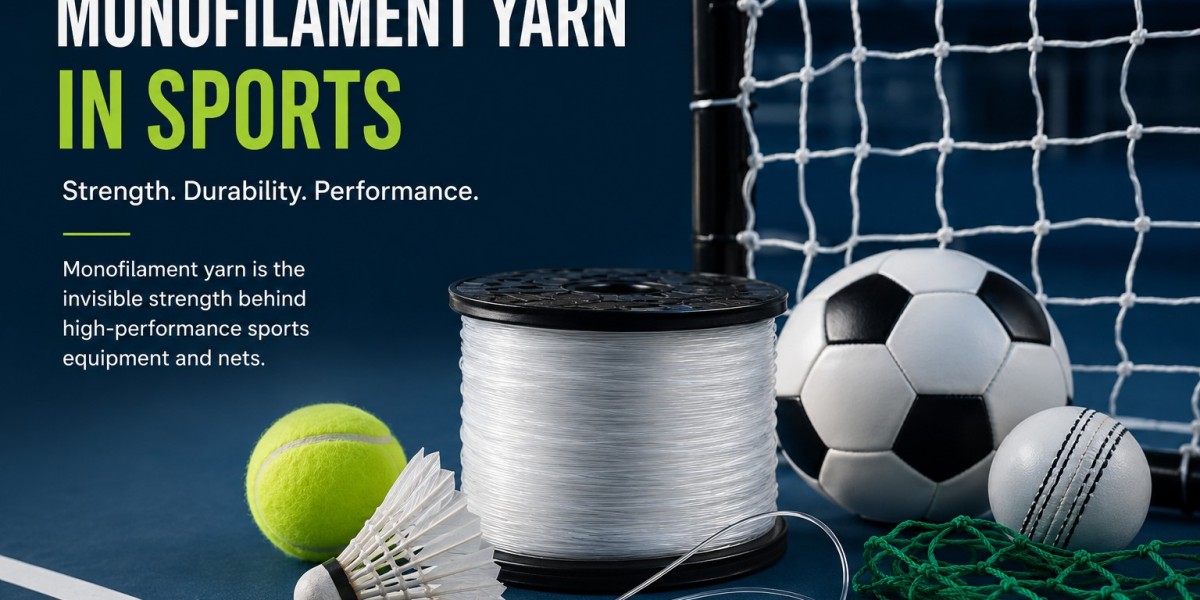

Sports equipment has evolved significantly over the years, with manufacturers constantly looking for materials that improve durability, precision, and overall performance. While carbon fiber and advanced polymers often receive attention, one material that quietly supports many sports products is monofilament yarn.
Known for its strength, flexibility, and resistance to environmental conditions, monofilament yarn has become an essential component in the manufacturing of various sports accessories. Its unique properties help create products that perform consistently under demanding conditions.
Why Monofilament Yarn Is Ideal for Sports Applications
Monofilament yarn is made from a single continuous strand of synthetic polymer. Unlike multifilament yarns, it offers excellent dimensional stability and retains its shape even after prolonged use. This makes it particularly suitable for sports equipment that experiences constant tension, impact, and outdoor exposure.
Some of its notable advantages include:
- High tensile strength
- Lightweight construction
- Excellent abrasion resistance
- UV and weather resistance
- Low moisture absorption
- Long service life
These characteristics make it a preferred choice for manufacturers aiming to produce reliable and durable sports products.
Common Sports Applications
Today, monofilament yarn is used across numerous sports and recreational products. Some common applications include:
Sports Nets
Football, tennis, badminton, volleyball, cricket practice, and golf nets frequently use monofilament yarn because it provides excellent strength while maintaining flexibility. The material helps nets withstand repeated impact without losing their structure.
Racket Components
Certain racket sports benefit from monofilament-based materials in specific components where consistent performance and durability are important.
Protective Sports Equipment
Protective barriers, fencing systems, and safety nets installed around sports arenas often rely on monofilament yarn due to its resistance to outdoor weather conditions.
Outdoor Training Equipment
Training cages, practice enclosures, and multi-sport facilities require materials capable of handling continuous use. Monofilament yarn offers the durability needed for these demanding environments.
Performance Benefits for Manufacturers
Manufacturers appreciate monofilament yarn because it combines functionality with production efficiency. It allows the creation of lightweight yet strong products that meet the expectations of athletes and sports facility operators.
Some manufacturing benefits include:
- Consistent product quality
- Better knot strength for net production
- Reduced maintenance requirements
- Improved product lifespan
- Compatibility with different weaving and knitting techniques
These advantages contribute to producing sports equipment that remains reliable even after years of regular use.
Growing Demand Across the Sports Industry
As participation in professional and recreational sports continues to grow, so does the need for high-quality materials. Modern sports infrastructure—from stadiums to local training centers—requires products that can withstand heavy usage and changing weather conditions.
This increasing demand has encouraged manufacturers to adopt advanced synthetic materials like monofilament yarn for producing long-lasting sports equipment.
Choosing the Right Material Matters
Not all synthetic yarns perform the same way. Factors such as diameter, polymer type, flexibility, UV resistance, and tensile strength influence the final performance of sports products. Selecting the appropriate Trusted Monofilament Suppliers in India helps manufacturers achieve better durability, improved safety, and consistent product quality.
Working with experienced manufacturers also ensures that the yarn meets the specific technical requirements of different sports applications.
Conclusion
The quality of sports equipment depends not only on design but also on the materials used during manufacturing. Monofilament yarn has established itself as a dependable material because of its durability, lightweight nature, and ability to perform in demanding environments.
As sports technology continues to advance, monofilament yarn will remain an important component in producing high-performance nets, training equipment, and other sports accessories that athletes and organizations rely on every day.