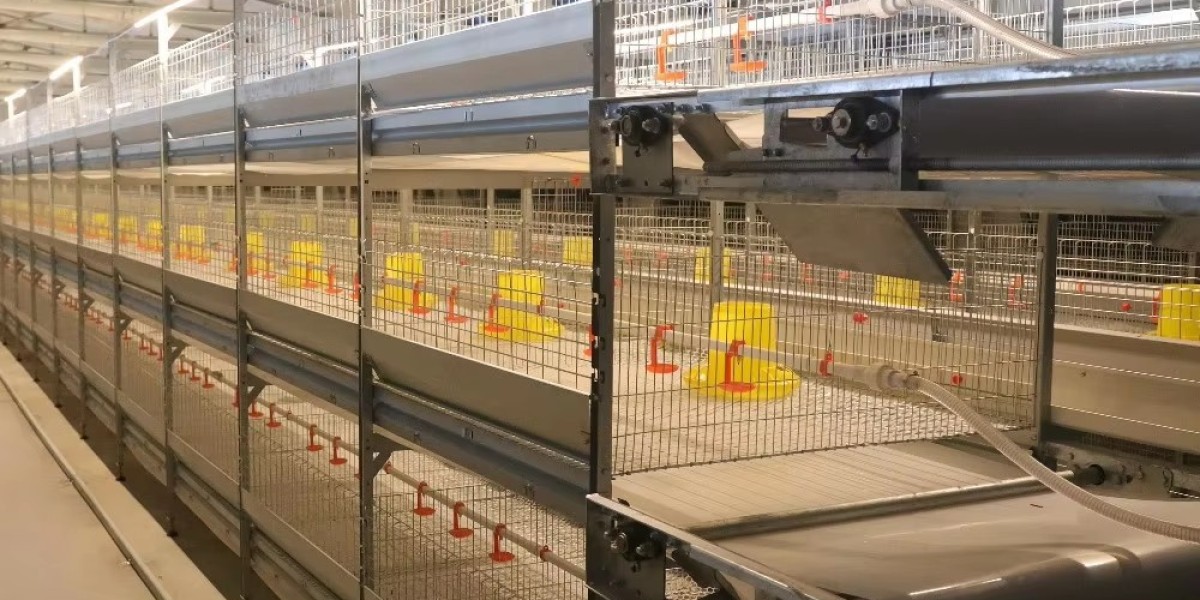

Building a large commercial poultry farm requires huge capital investment, and improper selection of chicken cage will bring long-term losses including high disease rate, low space utilization and frequent equipment failure. Many farm investors from Southeast Asia, Africa and Eastern Europe have consulted equipment suppliers about cage selection standards after suffering economic losses from inferior poultry cage products. This article sorts out systematic selection logic combined with years of on-site farm installation experience, helping large farm operators lock in high cost performance chicken cage matching their breeding scale.

Over sixteen years of equipment manufacturing and overseas project delivery, HuabangSmart technical team has participated in more than one thousand large poultry farm construction projects across sixty plus countries. A 100 thousand layer farm in Nigeria once purchased thin iron wire chicken cage without hot dip galvanizing to cut initial cost. Within eighteen months, rust perforation appeared on cage mesh, leading to frequent chicken foot injury and coccidiosis outbreak. The farm suffered a 22% drop in egg production rate and spent extra funds to replace the whole set of poultry cage ahead of schedule. Another 500 thousand broiler farm in Indonesia chose low tier narrow chicken cages, which violated regional animal welfare stocking density rules, resulting in local regulatory fines and reduced market sales qualification. These practical cases prove that blind pursuit of low price ignores long term operation cost, and standardized chicken cage selection is the core foundation of stable farm operation. Every large scale farm should confirm breeding quantity, chicken house size and local breeding regulatory standards before customizing cage systems to avoid irreversible economic losses.
High standard chicken cage for large farms must pass three core technical dimension inspections, covering material processing, structural design and modular expansion compatibility. Hot dip galvanized steel is the only qualified raw material for long term breeding scenarios, with zinc layer thickness controlled above 270 grams per square meter, which can resist humid high ammonia farm environment for fifteen to twenty years. Ordinary electroplated steel wire only maintains anti rust effect for two to three years, and the peeling zinc layer will pollute feed and drinking water to trigger poultry digestive diseases. In structural design, multi layer H type poultry cage adopts integrated bending frame without sharp welding burrs, which reduces poultry scratch injury rate by over forty percent compared with simple assembled A type cages. Modular expansion performance is also essential for large farms, as breeding scale often expands in phases. High quality chicken cage system reserves interface for automatic chicken feeding line, manure cleaning belt and environmental control equipment, which avoids overall disassembly and replacement when upgrading automation later. Unqualified low end cage products are integrated fixed structures, unable to add supporting automation devices in later operation.
Global poultry breeding association released unified stocking density standards for commercial chicken cage in 2025, which is the core reference basis for all large scale farm equipment configuration. For laying hens, each chicken needs at least 480 square centimeters independent activity space inside chicken layer cage, and the cage layer height must exceed 42 centimeters to ensure normal egg laying behavior. For meat broilers, single bird activity space needs to reach 1200 square centimeters in broiler chicken cage, and the slatted floor gap is controlled between 21 and 24 millimeters to prevent broiler foot pad damage. Regional regulatory standards have differentiated limits, European markets implement stricter welfare rules requiring extra fifteen percent activity space, while African and Southeast Asian regions allow moderate density within the range of international association standards. Professional poultry equipment manufacturers will adjust cage internal partition size according to the target market of farm owners, to ensure the farm passes local agricultural department inspection smoothly. Many novice farm investors ignore this authoritative standard, resulting in unqualified farm acceptance and delayed production cycle.
Most large farm operators only calculate initial procurement cost when selecting chicken cage, ignoring long term comprehensive operation expenditure difference between high quality and inferior cage products. Taking a 100 thousand laying hen farm as the calculation model, hot dip galvanized automatic chicken cage system has 18% higher initial purchase cost than thin iron ordinary cages, but it can save three types of long term expenses. First, disease loss expense: qualified cage reduces poultry mortality rate by 3.2% annually, converting to annual egg output increment of more than 120 thousand kilograms. Second, maintenance replacement expense: service life reaches twenty years, while inferior cages need full replacement within three years, and repeated disassembly labor cost exceeds new equipment fund. Third, labor management expense: matched automatic poultry feeder and manure cleaning structure cuts daily manual labor by sixty percent, reducing monthly worker salary expenditure significantly. Comprehensive calculation shows that standardized poultry cage system can recover extra initial investment within twenty four months, and continuously create stable profit space for the farm in the subsequent long operation cycle. Large scale breeding projects with service cycle over ten years must prioritize long term comprehensive cost rather than single one time purchase price.
HuabangSmart has independent galvanizing production workshop and complete automatic equipment supporting production line, capable of providing customized chicken cage overall solutions for large farms with breeding capacity ranging from fifty thousand to two million birds. Technical designers draw exclusive farm layout drawings according to chicken house length, width and height data provided by customers, and deliver full set equipment supporting automatic feeding, drinking and manure removal systems to more than sixty countries and regions around the world. All cage products pass repeated simulation breeding test on internal test farms, with more than fifty independent invention patents supporting structural and automation core technologies, effectively helping large commercial farms reduce comprehensive breeding cost and stabilize production output.