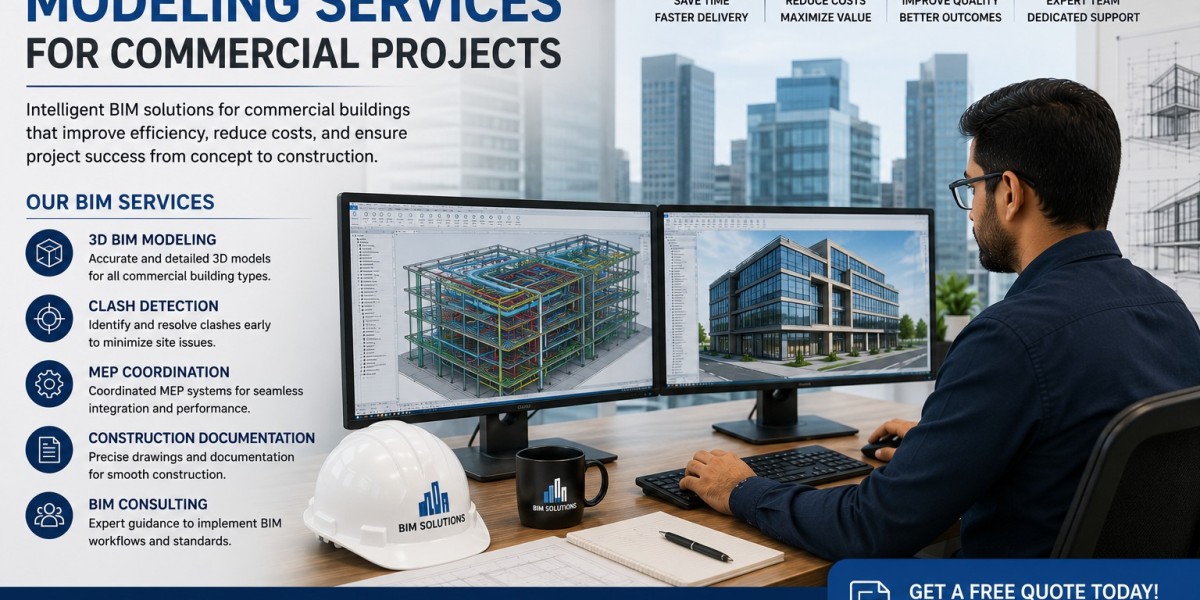

Commercial construction has changed a lot in the last decade. Owners, architects, engineers and contractors now expect projects to be delivered faster, with fewer errors and tighter budgets. This is exactly where Building Information Modeling Services step in. Building Information Modeling Services help teams plan, design, construct and manage commercial buildings using a single digital model that everyone can access and understand. Instead of relying on scattered drawings and assumptions, teams work from one accurate source of truth.
In this blog, we will look at what Building Information Modeling Services actually include, why they matter so much for commercial projects, and how businesses can choose the right BIM partner for their needs.
What Are Building Information Modeling Services
Building Information Modeling Services refer to a set of processes and digital tools used to create a 3D model of a building along with all its data. This model includes structural details, mechanical and electrical systems, plumbing layouts, materials, quantities and schedules. Unlike traditional CAD drawings, a BIM model is intelligent. If you change a wall or a duct in the model, every connected drawing and document updates automatically.
For commercial projects such as office towers, shopping complexes, hospitals, hotels and warehouses, this level of coordination is extremely valuable. These projects involve many stakeholders working together, and a small mistake in design can lead to expensive rework later. Building Information Modeling Services reduce this risk by allowing every discipline to work inside the same digital environment.
Why Commercial Projects Need Building Information Modeling Services
Commercial buildings are complex. They have multiple floors, large spans, heavy mechanical systems and strict compliance requirements. Here is why Building Information Modeling Services have become essential for such projects.
Better Coordination Between Teams
A commercial project usually has architects, structural engineers, MEP consultants and contractors working at the same time. Without a shared model, clashes between systems such as ducts running through beams are common and only discovered on site. Building Information Modeling Services allow clash detection early in the design phase, saving both time and money.
Accurate Cost Estimation
Because a BIM model contains detailed quantities of materials, it becomes much easier to generate accurate cost estimates. Contractors and owners get a realistic picture of the budget before construction even begins, which helps avoid surprises later.
Faster Project Timelines
When teams are not spending weeks resolving design conflicts on site, projects move faster. Building Information Modeling Services allow prefabrication planning, sequencing and scheduling to happen digitally, which shortens the overall construction timeline.
Improved Facility Management
A commercial building does not stop needing management once construction is complete. The same BIM model can be handed over to the facility management team, giving them access to equipment details, maintenance schedules and system layouts. This makes long term operations smoother and reduces unexpected downtime.
Sustainability and Compliance
Many commercial projects today must meet green building standards and local regulations. BIM software allows teams to run energy simulations, daylight analysis and material studies within the model itself, helping the project stay compliant without extra manual effort.
Key Components of Building Information Modeling Services
When you hire a BIM service provider, the scope usually includes several specialized areas.
Architectural BIM Modeling covers the overall building design, including walls, floors, roofs and interior layouts.
Structural BIM Modeling focuses on the framework of the building, including columns, beams, foundations and load bearing elements.
MEP BIM Modeling deals with mechanical, electrical and plumbing systems, ensuring these services fit properly within the structure without conflicts.
Clash Detection and Coordination involves reviewing the combined model from all disciplines to identify and resolve conflicts before construction starts.
4D and 5D BIM adds time and cost dimensions to the model, allowing teams to visualize construction sequencing and track budgets against progress.
As Built Modeling documents the actual completed structure, which is useful for renovations or future expansions.
A good provider will offer some or all of these services depending on the size and complexity of the commercial project.
Choosing the Right Building Information Modeling Services Provider
Not every BIM provider offers the same quality or expertise. When evaluating a partner for your commercial project, consider the following points.
Look at their experience with commercial buildings specifically, since these projects have different demands compared to residential work. Ask about the software they use, such as Revit, Navisworks or ArchiCAD, and confirm it matches your internal team's workflow. Request sample models or case studies from similar past projects. Check how they handle communication and revisions, since commercial projects often involve frequent design changes. Finally, ask about their process for clash detection and how quickly they turn around coordinated models.
A reliable provider will act as an extension of your team rather than a separate vendor, staying involved from early design through construction and even into facility handover.
Final Thoughts
Building Information Modeling Services have moved from being a nice addition to becoming a core requirement for successful commercial construction. They bring together every discipline into one connected model, reduce costly errors, speed up timelines and support the building long after construction ends. For any business planning a commercial project, whether it is an office building, retail space or healthcare facility, investing in professional Building Information Modeling Services is one of the smartest decisions to make early on.
If you are planning your next commercial project, partnering with an experienced BIM team can save you significant time, cost and stress throughout the entire building lifecycle.