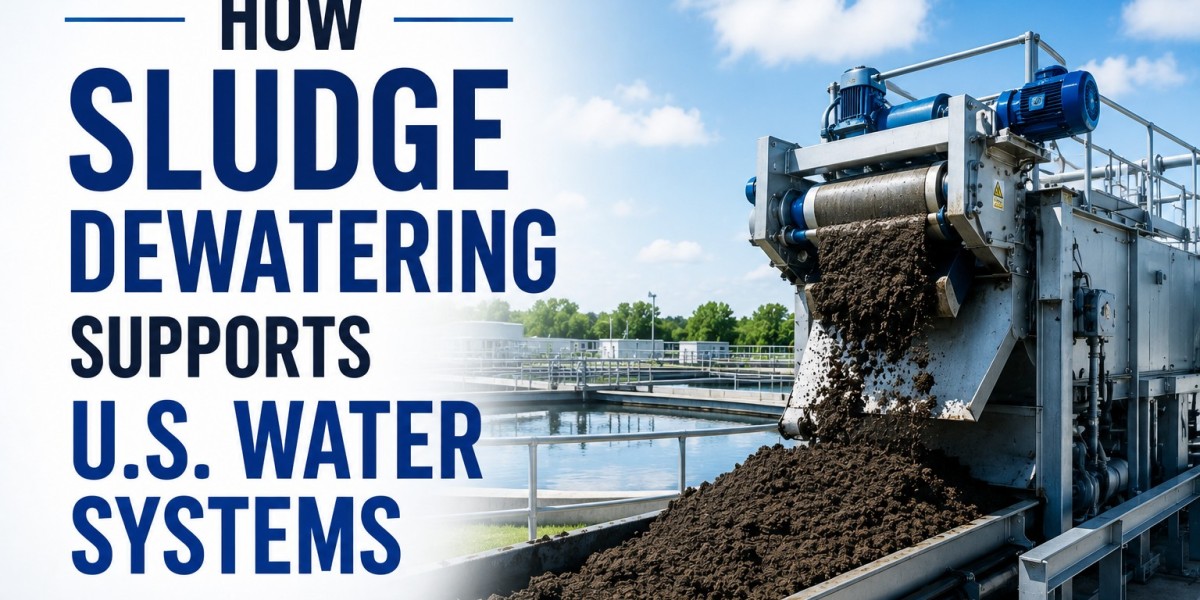

Sludge dewatering systems are important to wastewater treatment because they reduce the water content of sludge before disposal, reuse, or further processing. These systems help municipal plants, industries, and treatment operators lower hauling weight, improve handling, reduce storage pressure, and support biosolids management. In the United States, demand is linked with aging wastewater infrastructure, stricter compliance needs, and resource recovery planning.
A recent U.S. sludge dewatering system study by MarkNtel Advisors highlights demand from belt filter presses, mixed sludge treatment, municipal wastewater facilities, and infrastructure rehabilitation. The study values the sector at USD 750.55 million in 2025 and projects it to grow from USD 810.15 million in 2026 to USD 1,204.23 million by 2032, reflecting a CAGR of around 6.83% during 2026–2032.
Wastewater Infrastructure Drives Demand
Wastewater treatment plants generate sludge as they remove solids and pollutants from water before discharge or reuse. Dewatering is needed because untreated sludge contains high moisture, making it heavier and more difficult to transport or manage. By reducing water content, treatment facilities can lower disposal costs and improve downstream treatment efficiency.
The U.S. Environmental Protection Agency’s wastewater infrastructure survey assesses clean water infrastructure needs required to meet Clean Water Act water-quality goals over a 20-year period. EPA also reported that the 2022 survey identified at least USD 630 billion in clean water infrastructure needs, supporting long-term investment in wastewater systems.
Belt Filter Presses Lead Equipment Use
Belt filter presses accounted for around 39% share in 2026, according to the shared study. Their leadership is linked with broad use in municipal wastewater treatment plants, continuous processing capability, moderate operating cost, and familiarity among plant operators. These systems use gravity drainage and mechanical pressure to remove water from conditioned sludge.
Belt filter presses remain practical for many facilities because they can handle steady sludge flows and are easier to operate than some advanced systems. However, performance depends on sludge type, polymer conditioning, belt maintenance, feed consistency, and operator training. Aging units may need replacement when efficiency, dryness, or maintenance reliability declines.
Mixed Sludge Creates Consistent Volumes
Mixed sludge accounted for approximately 40% share in 2026, making it the leading sludge type in the report. Mixed sludge is commonly produced when primary sludge from sedimentation and secondary biological sludge from treatment processes are combined before digestion, thickening, or dewatering. This stream is common in municipal wastewater operations.
The U.S. has a large base of publicly owned treatment works that continuously process household, commercial, and industrial wastewater. EPA’s wastewater source guidance notes that U.S. wastewater treatment facilities process approximately 34 billion gallons of wastewater every day. This scale supports continuous sludge generation and year-round dewatering needs.
Biosolids Management Requires Control
After sludge is treated, it may become biosolids that can be managed through land application, landfilling, or incineration, depending on treatment quality, regulation, and local conditions. Dewatering supports each pathway by reducing moisture and improving handling, storage, transport, and processing efficiency.
EPA’s sewage sludge and biosolids information explains that U.S. sewage sludge is generally managed through land application, landfilling, or incineration. This reinforces why dewatering systems are important before final use or disposal decisions are made.
Compliance Pressures Shape Upgrades
Regulatory compliance is a major reason treatment facilities invest in sludge processing equipment. Facilities must manage solids, nutrients, pathogens, odors, metals, and emerging contaminants while meeting permit and operating requirements. When rules become stricter, older dewatering systems may struggle to meet operational and documentation expectations.
PFAS concerns are also affecting biosolids discussions. EPA’s biosolids overview notes that sewage sludge may contain PFAS and other contaminants received from upstream sources such as industrial facilities, landfills, and homes. This increases attention on monitoring, treatment selection, and responsible solids management.
Energy-Efficient Systems Gain Attention
The report identifies a shift toward energy-efficient centrifuges and advanced filter presses as a key trend. These systems can produce drier sludge cake in selected applications, helping facilities reduce hauling weight, landfill use, and operating costs. Advanced equipment may also improve automation, monitoring, and consistency.
Centrifuges, screw presses, and advanced filter presses are not suitable for every plant, but they are increasingly considered during upgrades. Selection depends on sludge characteristics, capacity needs, space limits, energy use, polymer consumption, maintenance skills, and lifecycle cost. Treatment facilities must evaluate total performance rather than only purchase price.
Resource Recovery Expands Relevance
Sludge dewatering is becoming more connected with resource recovery. Drier sludge can support anaerobic digestion, composting, thermal drying, incineration, and nutrient recovery projects. When solids are easier to handle, utilities can better evaluate biosolids reuse, renewable energy generation, or disposal reduction strategies.
This is especially relevant as wastewater treatment plants are increasingly viewed as resource recovery facilities rather than only waste-processing sites. Dewatering systems can support this shift by preparing sludge for downstream processes that recover energy, reduce volume, or create usable biosolids products.
Outlook for U.S. Sludge Dewatering
U.S. sludge dewatering system demand is being shaped by belt filter presses, mixed sludge volumes, municipal infrastructure rehabilitation, biosolids management, compliance pressure, and energy-efficient equipment upgrades. The report figures indicate steady growth through 2032 as treatment facilities continue replacing aging systems and improving solids handling.
The long-term direction will depend on infrastructure funding, wastewater volumes, PFAS-related policy developments, odor management, resource recovery economics, and operator capacity. As wastewater systems modernize, sludge dewatering will remain essential for reducing volume, lowering handling costs, and supporting responsible biosolids management.