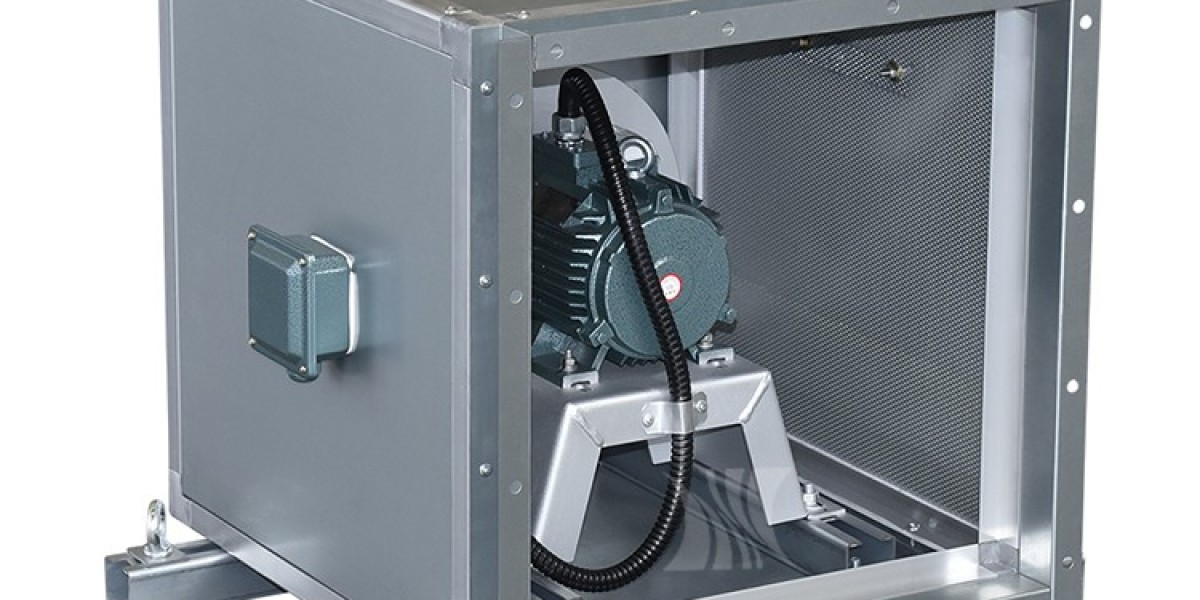

Overheating is the silent killer of electronics, and a well-chosen cabinet fan is your first and best line of defense. Whether you are managing a data center server rack or a factory floor control panel, the process of selecting the right fan involves more than just picking a size. I have consulted on countless enclosure cooling projects, and getting the details right from the start prevents thermal shutdowns and extends equipment life. Let me walk through the selection process for an NF cabinet fan step by step.
Cabinet Fan Determine the Heat Load First
The starting point for any cabinet fan selection is knowing how much heat you need to remove. Add up the power consumption of every component inside the enclosure: drives, power supplies, transformers, and even the control circuits themselves. This total wattage is your heat load. NF provides a simple formula: required airflow in cubic feet per minute equals the heat load in watts divided by the product of the specific heat of air, the density of air, and the allowable temperature rise in degrees Celsius. For most applications, a rule of thumb is that approximately three cubic feet per minute of airflow removes one watt of heat with a ten-degree Celsius temperature rise. This gives you a target airflow value to look for in NF cabinet fan specifications. Always include a safety margin of twenty to thirty percent to account for filter loading and future equipment additions.
Cabinet Fan Choose the Right Voltage and Power Supply
NF cabinet fans are available in multiple voltage configurations. For IT server racks, 115V or 230V AC fans that plug into standard power distribution units are common. For industrial control panels, 24V DC fans powered from the same DC supply that runs the control system simplify wiring and improve safety. DC fans also offer easy speed control by varying the supply voltage, which is useful for temperature-responsive cooling. Ensure the fan's power consumption is well within the capacity of your power supply, especially when multiple fans are installed in a single enclosure.
Cabinet Fan Consider Airflow Path and Fan Placement
Effective cooling requires a clear airflow path from inlet to exhaust. NF cabinet fans are typically installed as intake fans at the bottom of the enclosure, with filtered exhaust vents at the top, taking advantage of natural convection. This arrangement draws cool, filtered air in, pushes it upward across the heat-generating components, and exhausts the warmed air. Avoid placing the fan where its airflow is blocked by cable bundles, large components, or mounting plates. In taller enclosures, consider using multiple fans or ducting to direct air to hot spots. NF offers cabinet fans with various airflow patterns, including reversible models that can be configured as either intake or exhaust fans.
Cabinet Fan Filter Selection and Environmental Protection
The environment dictates the level of filtration required. In a clean server room, a simple dust filter may suffice. In a factory with oil mist, metal dust, or washdowns, you need higher-efficiency filters and possibly a higher IP rating. NF cabinet fans come with integrated filter mats in standard and high-efficiency options, as well as washable metal filters for oily environments. The filter efficiency rating tells you what percentage of particles of a given size are captured. A filter that is too restrictive, however, will reduce the fan's airflow, so the fan and filter must be selected as a matched pair.
Cabinet Fan Noise Constraints and Speed Control
In occupied spaces like offices or control rooms, fan noise can be a nuisance. NF offers low-noise cabinet fan models with optimized blade designs and vibration-dampening mounts. For applications where the thermal load varies, a temperature-controlled fan with a built-in thermostat or external speed controller adjusts fan speed based on enclosure temperature, reducing noise and energy consumption during periods of low activity.
Cabinet Fan Monitoring and Alarm Integration
For critical applications, a fan failure can lead to rapid overheating and equipment damage. NF offers cabinet fans with tachometer outputs that provide a signal proportional to fan speed, allowing a monitoring system to detect a stalled or slowed fan. Some models include built-in alarm contacts that trigger if the fan stops or if the enclosure temperature exceeds a set threshold. This proactive monitoring prevents surprises and allows for planned maintenance before a failure occurs.