
The Quiet Power of a Painted Face: Why Portrait Artworks Still Matter
Just gaze at any portrait or figurative paintings long enough, and something strange occurs. The eyes appear to follow you. Mouth as if to stop a word. Portraiture is the weird magic of art, a genre that has weathered every era of art history, from Fayum funeral panels to digital painting on Instagram. Take the example of the famous portrait paintings like Mona Lisa, somehow these portrait artworks manage to grasp our attention more than other forms of art: it makes stillness feel alive.
But what is this power that makes humankind go cuckoo, that engages us so much? Let's discuss.
A Genre of a Paradox
Portraiture is a kinda figurative art; it requires an artist to do two contradictory things at the same time – to capture a likeness and to capture a self. If you've got a steady hand and a sharp eye, you can duplicate the geometry of a face – the distance between the eyes, the curve of a jaw, the exact shadow under the cheekbone. However, a technically correct portrait artwork can still seem very lifeless. When you're trying to capture or portray something that the person in front of you may not realise they are revealing — a tiredness at the corner of the mouth, defiance in the set of the shoulders, the way a person has tension in their hands — that's when it becomes a good portrait and not just a forgettable one.
Hence, portrait artists from the past have frequently spoken of their art not as a record but as a translation. Rembrandt did not do his own self-portraits in a flattering manner; they are unflinching. But it is the lumpy but honest sitters that make Alice Neel so magnetic decades later. The technical skill is the minimum you need to be able to play. The real feat is mental.
The whole face is the window to the soul, not the eyes!
In all of the history of international portrait competitions, one thing everyone has heard is that the eyes are the most important part of a portrait, and as long as those eyes are “nailed” on, the portrait will come alive. Those painters who have worked in earnest in this genre will assure you that it's more spread out than that. The tension in a brow, the asymmetry that most faces naturally have, the way light captures the philtrum or pools in the hollow of the temple — it all helps to make a face look like it's "present" or if the face appears to be a mask. Many artists of the famous portrait paintings were slightly asymmetric, as a symmetrical face -- somehow -- looks fake to the human eye.
Medium Changes Meaning
In a portrait art contest, all mediums are allowed, always. Do you know why?
A portrait done in oil, charcoal, watercolor, or even digital brushwork will look different, and it will have different implications. Oil paint's quality of slow drying allows the artist to blend soft transitions between light and shadow, which is one reason for the lightness of most of the Western portrait canon. Graphite, on the other hand, is more likely to focus on structure and gesture than on glowing; a portrait in graphite can seem more like a frame of a moment in motion. Digital portraiture is a relatively new form of the genre, offering new textures such as painterly "brushes" that can simulate oil, but can be layered, undone, and experimented with that no physical medium can duplicate.
There are additional constraints and freedoms in photography-based portraiture and sculpture. If you're going to model a clay or bronze bust of a person, you're going to have a problem with likeness this time: there's no illusion of light to be used, and all the planes of the face have to be correct. It's not a typical problem-solving exercise like a painter working with paint on a flat surface; it is still a search for the same answer: what is that person's presence doing?
Why Portraits Endure Even in an Age of Selfies?
The fact that portrait painting is still alive in a world where everyone has a camera that can capture the perfect picture of a face in half a second may seem inconceivable. But that is, of course, why handmade portraiture has grown in all the more relevance, rather than less.
TERAVARNA has hosted the best portrait drawing art contest and has noticed this—A photo represents a fraction of a second. A painted or drawn portrait artwork, on the other hand, invites one to look, to choose, to shift, to embody time: the hours that an artist spent making a portrait. It's not a photo that carries the evidence of attention. A portrait took 30 hours to observe, and in a culture of instant, disposable images, that is almost a form of resistance.
For Artists Who Wish to Expand in the Style
As a working portrait artist, or if you're considering becoming one, here are a few habits that make some portraits truly come to life while others don't:
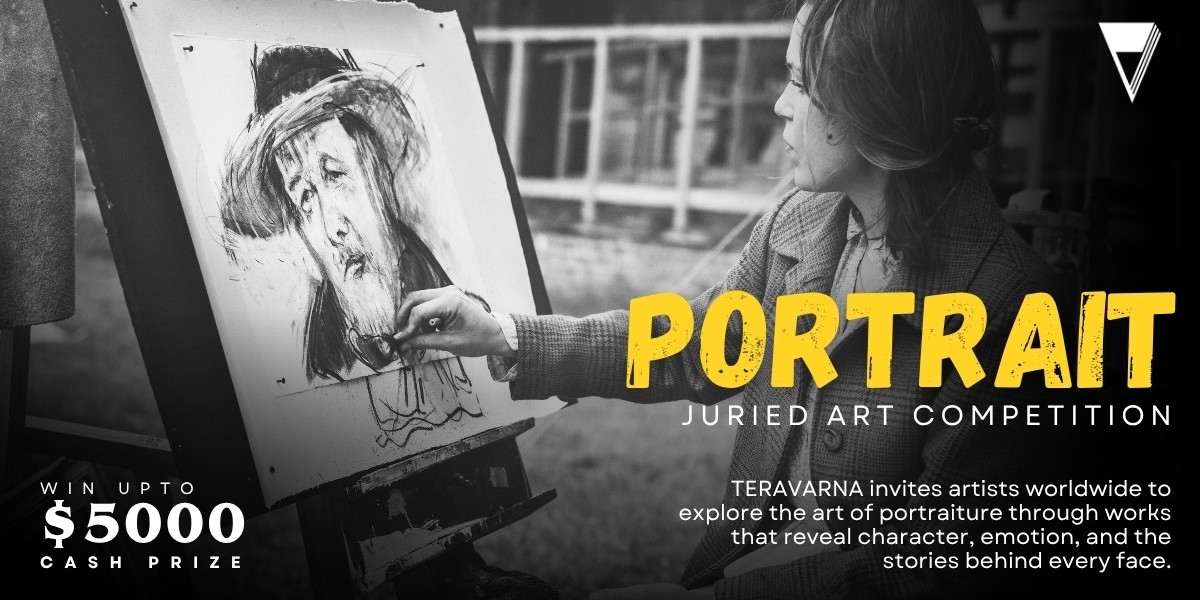
First, participate in art exhibitions and competitions. Participate as much as you can in portrait drawing contests. Portraiture, which is not simply a commission-based art but one taken seriously by those who practice it, has many places to exhibit. It's now much easier for portrait and figurative artists to get their work noticed by curators and collectors beyond their local area, thanks to international juried competitions, gallery open calls, and online exhibitions. TERAVARNA's current Portrait Art Competition is just one of many open calls out there at any particular moment in the art world, so there's no harm in keeping an eye out for the ones that may interest you as a painter, photographer, or sculptor!
Secondly, learn anatomy, then forget it so as not to be reminded of it. While knowledge of the bony structure of the skull can aid in creating shadows and structure, it is important to avoid over-rendering all the details, as this can produce a face that looks more like a diagram than a person.
When possible, make use of sketches from the real world. Even for a short time, it is better to paint or sketch a live sitter than to look at a reference photo; a painting or sketch allows you to see the subtleties that the photo will never show.
Let asymmetry stay. Don't try to "symmetrize" a face, as that's where the likeness is most likely to be. Study the famous portrait paintings to know more about how these small things make all the difference.
Before getting started, choose an emotional thesis. If this portrait is about anything — vulnerability, defiance, exhaustion, joy? Technical decisions must support that thesis.
A genre that has no plans to fade away
Portrait art or figurative paintings have transcended art movements, trends, and technologies because it is a timeless requirement—people want to be seen, and they want to see, and see closely, another person without the social faux pas of staring. So long as they do need it, there will be somebody mixing paint, sharpening charcoal, or opening a digital canvas to pursue the special, unique combination of features that defines one face from all of the other faces that have come before.