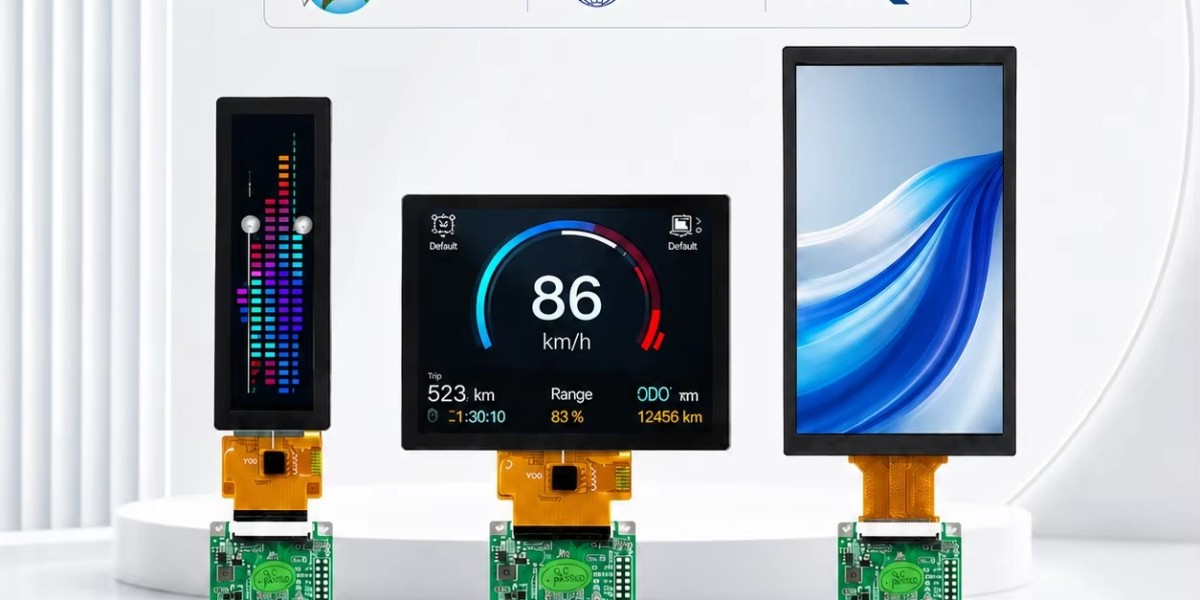

Vehicle central control screens, instrument panels and rear entertainment car lcd panel displays are exposed to strong sunlight all year round, and poor sunlight readability is one of the most frequent complaints from vehicle owners. Many vehicle electronic suppliers adopt standard brightness lcd panel without professional optical optimization, leading to screen whitening, unclear text and distorted color when sunlight shines directly on the cockpit display. Over ten years of automotive display manufacturing and after-sales technical support experience, more than eighty percent of vehicle screen sunlight visibility problems can be solved through four core technical optimization directions of brightness promotion, anti-glare coating, full optical lamination and ips wide angle panel matching. This article disassembles the root causes of sunlight readability defects of car display one by one, introduces targeted improvement technologies supported by factory production lines, and combines real new energy vehicle mass production cases to provide complete technical optimization reference for auto display purchasers.
High Brightness Backlight System Optimization For Vehicle Panels The primary factor causing car lcd panel sunlight invisibility is insufficient backlight brightness. Ordinary consumer lcd panel only configures 300 to 500 nits backlight, under outdoor noon sunlight with brightness above 10000 lux, the screen light output cannot offset external strong light, resulting in complete whiteout visual effect. The factory develops special automotive high brightness backlight solution for car display, two brightness grades of 1000 nits and 2000 nits can be customized according to vehicle installation position. Instrument cluster screens adopt 1000 nits backlight to balance power consumption and visibility; central control large screen and floating navigation display adopt 2000 nits high brightness backlight to cope with front windshield direct sunlight. The high brightness backlight uses high efficiency LED lamp beads with low heat generation, matched with uniform light guide plate to avoid local over-brightness or dark area on the panel surface. A domestic new energy vehicle brand originally equipped 500 nits standard lcd panel for central control display, vehicle owners continuously feedback screen cannot be seen clearly in sunny days, after replacing factory customized 1500 nits high brightness car lcd panel, the sunlight visibility complaint rate dropped to zero within two vehicle delivery batches. All high brightness backlight modules pass long-term high temperature aging test to ensure no lamp bead burnout under long-term cockpit high temperature environment.
Anti Glare And Anti Reflection Optical Coating Technology Even if the backlight brightness reaches high standard, simple glass surface reflection will still block driver viewing of screen content, and optical coating is the second core optimization measure for car display sunlight readability. Ordinary car lcd panel only attaches ordinary protective glass without functional coating, sunlight will produce mirror reflection on the glass surface, forming strong light spots to cover screen text and icons. The factory configures two layers of composite optical coating on the surface of automotive lcd panel cover glass, including anti-glare AG coating and anti-reflection AR coating. AG coating forms tiny micro rough texture on the glass surface to diffuse reflected light and eliminate mirror bright spots; AR coating reduces light reflectivity to below one percent, greatly lowering the light intensity reflected back to human eyes. The composite coating also adds anti-fingerprint AF layer to avoid fingerprint residue affecting daily viewing. The coating process is completed in thousand level dust-free workshop to prevent particle impurities from damaging the coating uniformity. Comparative test data shows that car lcd panel with composite optical coating can improve sunlight readability by sixty five percent compared with uncoated ordinary panels under the same sunlight environment.
Full Optical Lamination Eliminates Air Gap Reflection There is an air gap between traditional separated cover glass and lcd panel, air and glass refractive index difference will produce secondary light reflection, which is easily ignored by many auto display designers. The light reflected from the air gap will overlap with external sunlight reflection, double weakening the screen display contrast, even high brightness backlight cannot offset this double reflection interference. The factory adopts full optical lamination process for all customized automotive display products, filling the gap between touch cover glass and lcd panel with transparent optical glue, completely removing air layer to eliminate secondary reflection source. After full lamination processing, the contrast ratio of car lcd panel increases by forty percent under strong light, color layering and text definition are significantly improved. In addition to optimizing sunlight visibility, full lamination also enhances anti-vibration performance of car display, adapting to vehicle bump driving environment, reducing internal friction noise generated by separated glass and panel during driving vibration. European new energy vehicle suppliers have fully popularized full lamination car display schemes, and the factory’s automated lamination production line can realize mass full lamination processing of all size car lcd panel with stable yield above ninety nine point five percent.
Ips Wide Angle Panel Matching To Avoid Side View Color Fading Many vehicle floating screens and side instrument display panels are placed at inclined angles, TN ordinary lcd panel will produce serious color fading and brightness attenuation when viewed from the driver’s side perspective, making screen content unrecognizable under sunlight side irradiation. Ips display panel selected by factory automotive customized lcd module maintains consistent brightness and color at one hundred seventy eight degrees full viewing angle, no matter the driver observes the screen from front, left or right inclined angle, the display effect will not fade or whiten under sunlight. The factory matches automotive grade ips lcd panel with wide temperature liquid crystal material, simultaneously solving sunlight visibility and extreme temperature color shift two major pain points of car display. Different from consumer ips screen, auto ips panel adds anti-ultraviolet protective layer inside liquid crystal structure, resisting long-term ultraviolet radiation from sunlight to prevent panel yellowing and brightness attenuation after long-term vehicle use. The factory technical team can match ips display panels of different sizes according to vehicle interior space layout, combining high brightness backlight, composite optical coating and full lamination three technologies to form an integrated sunlight readable car display solution.
One Stop Customization Service For Vehicle Sunlight Visible Display Vehicle manufacturers need integrated display optimization scheme instead of single partial upgrade, and the factory’s vertical integrated production capacity can realize all four sunlight readability optimization technologies in one customized lcd panel without coordinating multiple suppliers for separate processing. The factory technical team can conduct optical simulation according to vehicle cockpit 3D design drawing, predict sunlight irradiation angle and light intensity of different vehicle models, and formulate targeted brightness, coating, lamination and ips panel matching scheme for each vehicle screen position. All customized automotive lcd panel products pass vehicle standard vibration, high and low temperature and EMC reliability test before delivery, complete PPAP filing documents can be provided for auto tier one supplier audit. The factory has cooperated with dozens of global new energy vehicle brands to complete sunlight readable car display mass production projects, accumulated mature optical optimization experience, and can help vehicle electronic research and development teams avoid repeated trial and error of display optical scheme, shorten prototype verification cycle and reduce overall vehicle display procurement optimization cost.