
Introduction
Many food plant procurement managers struggle to distinguish extrusion equipment from ordinary food processing machines when expanding production lines. A large number of inquiries focus on the core operating logic and application scope of food extruder, as improper equipment selection will directly lead to low finished product yield, high power consumption and unstable product texture. This guide sorts out all core knowledge of extrusion equipment from structural composition to finished product categories, combining mature equipment manufacturing experience to answer common doubts of global food processors, and provides clear reference standards for factory equipment renovation and new project investment.
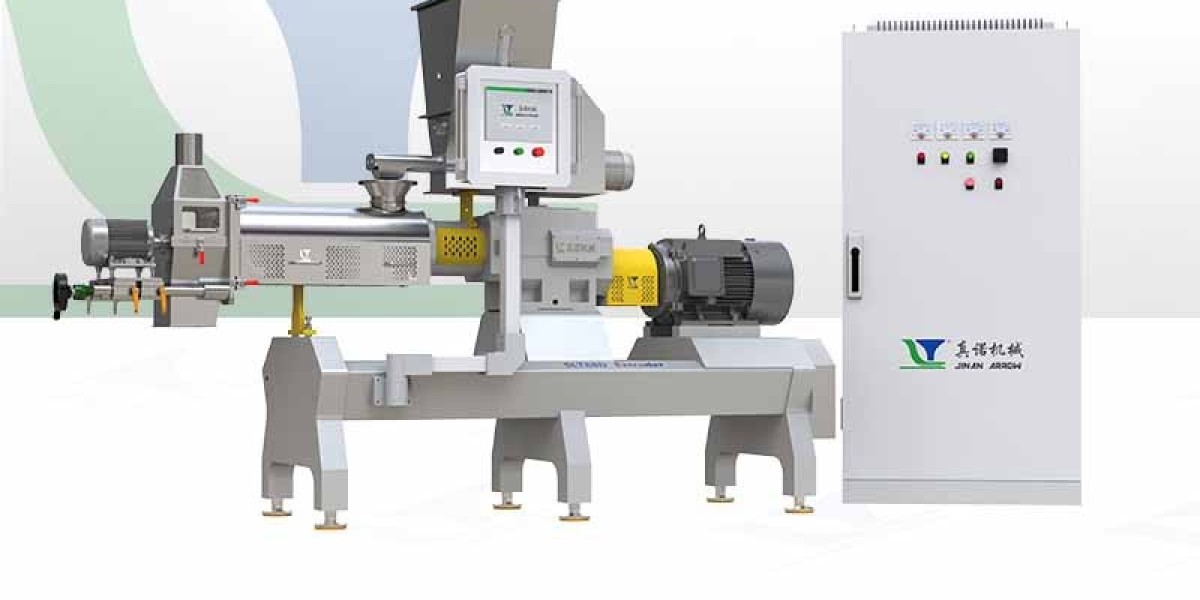
The core operating unit of food extruder centers on twin screw transmission modules that meet European manufacturing standards. The feeding system, extrusion barrel, heating control module and cutting device form a closed processing loop, each part adopting wear resistant food grade alloy components to extend service cycle. The intelligent data storage control system embedded in the main unit records real time temperature, pressure and rotating speed parameters during production, which facilitates later production parameter adjustment and product formula iteration. Different model series of extruders support customized power configuration according to factory voltage standards in different regions, and all core parts come with one year warranty after equipment delivery. The delivery cycle of standalone extrusion host ranges from 20 to 45 working days, with supporting seasoning, drying and cooling units available for separate matching to form a complete automatic production flow. Factories with small batch trial production demands can select test type small extruders with 30 to 50 kg hourly output, while large scale industrial plants can configure high capacity models supporting over 1000 kg hourly processing volume.
One prominent advantage of qualified food extruder lies in strong raw material compatibility, covering grain, plant protein and composite pellet raw materials widely used in global snack factories. The equipment can process puffed snacks including corn chips, rice cakes and Bugles crispy chips, and also complete production of breakfast cereal raw materials such as corn flakes and nutritional fortified rice. Plant protein raw materials processed through extrusion form textured soy meat products, which rely on the high temperature high pressure environment inside the extrusion barrel to realize protein tissue reorganization, greatly improving the taste simulation degree of vegetarian meat products. Pellet semi finished products produced by extruder need to be matched with supporting industrial fryer and food dryer to complete final shaping and dehydration, and the whole set of pellet snack production line realizes continuous automatic operation from raw material feeding to finished product seasoning. Chinchin snacks popular in African markets, Kurkure and Cheetos style twisted puffed food all take twin screw food extruder as core processing equipment, and different screw combination molds can switch finished product shapes without replacing the whole host, effectively reducing production line downtime loss caused by product replacement.
For food processing enterprises, standardized food extruder brings multiple cost control and production efficiency improvements compared with traditional single function processing equipment. The integrated heating and pressure control structure reduces energy consumption by around 22% relative to old generation extrusion equipment, and stable parameter control raises finished product yield by more than 35% to cut raw material waste. Modular assembly design simplifies daily maintenance work of workshop technicians, and unified spare part supply channels ensure long term stable operation of equipment after purchase. All finished equipment passes ISO 9001 quality system certification and CE safety certification, and over 30 patented technical optimizations solve common problems such as uneven puffing and material blockage in long time continuous production. Equipment manufacturers provide complete on site installation and commissioning technical support after goods arrive at the buyer’s factory, with professional technical teams guiding workshop staff to master formula matching, parameter adjustment and daily fault troubleshooting skills, avoiding production stagnation caused by unskilled operation. Factories with customized production demands can adjust screw length, mold shape and electrical control components according to exclusive product formulas to realize exclusive production line configuration matching market differentiated snack demands.