
Introduction
Twisted puffed snacks including Kurkure and Cheetos style products occupy large market share in Asian, African and South American retail channels, while ordinary corn puff products target mainstream supermarket casual snack demands. Many snack factory procurement staff confuse corn puff making machine and kurkure making machine during equipment selection, leading to finished product texture failure and mold frequent replacement cost increase after production line startup. This article conducts systematic comparison of two types of extrusion equipment from core structure, mold configuration, raw material matching and production efficiency dimensions, providing clear selection reference standards for buyers planning to produce single category or mixed puffed snack products.
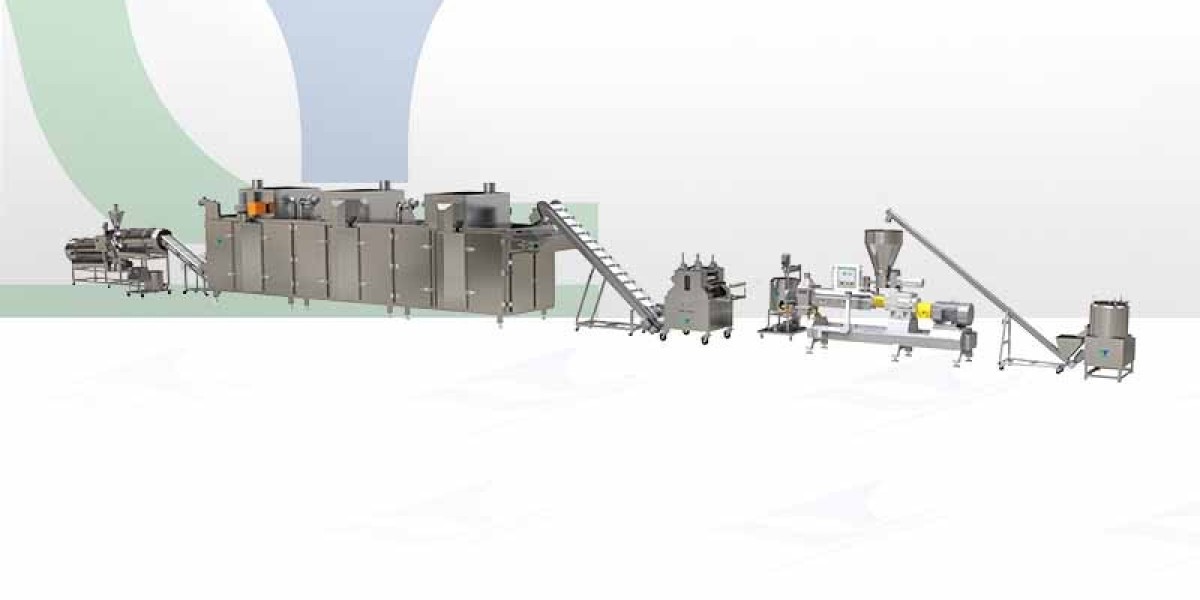
Standard corn puff making machine adopts simple circular and strip extrusion molds, with short screw pressure maintaining sections inside the extrusion barrel, suitable for producing hollow cylindrical, spherical and sheet corn puff finished products with loose crisp texture. The cutting unit of corn puff machine is equipped with single speed straight cutting blades, which can complete uniform cutting of regular shape puffed semi products without complex torsion forming steps. In contrast, dedicated kurkure making machine lengthens the high pressure torsion section of twin screw to realize spiral twisting of raw material during extrusion, and special multi groove spiral molds are matched to form irregular twisted strip finished products unique to Kurkure and Cheetos snacks. The cutting device of kurkure making machine adopts variable speed rotating cutting structure to ensure consistent length of twisted strips, and the extrusion barrel internal pressure control range is wider to maintain stable torsion forming effect under long time continuous production. Both types of equipment share the same European standard host frame and one year warranty policy, with independent mold accessories available for separate purchase to realize mixed production of two product categories on one production line if factory order volume supports multi product operation. The delivery cycle of standalone corn puff machine and kurkure making machine host ranges from 20 to 45 working days, and supporting seasoning and cooling units can be configured synchronously according to buyer’s production flow layout demands.
Corn puff machine mainly adapts single raw material of corn flour, and can also match rice flour composite raw materials to produce rice cake and rice puff products, with low requirement on raw material protein content and stable puffing effect under simple formula matching. Kurkure making machine needs composite raw material mixing of corn flour, chickpea flour and edible oil premix, and the screw internal pressure optimization design ensures uniform torsion forming of high oil content raw materials without material blockage inside the extrusion barrel. In terms of production efficiency, both equipment support hourly output from 100 kg to 1200 kg, but kurkure making machine consumes slightly higher power under the same output due to long pressure maintaining torsion section, while corn puff machine has lower unit energy consumption for single raw material processing. The intelligent control system of both equipment stores exclusive mature formulas for respective product categories, and workshop operators can switch production modes with one click after replacing matched molds without repeated parameter debugging. Small test equipment with 30 to 50 kg hourly output is available for both corn puff and Kurkure product trial production, allowing factories to test market feedback before investing in full automatic mass production lines. After extrusion forming, corn puff semi products only need short time low temperature drying, while Kurkure twisted strips require supporting industrial fryer to complete deep frying shaping, forming a complete pellet frying line matching flow.
Factories focusing only on ordinary hollow corn puff, rice puff and corn chip products can directly select independent corn puff machine matching supporting food dryer and seasoning equipment, with lower initial investment and simpler daily operation maintenance. Enterprises planning to operate mixed snack production lines covering both regular puffed snacks and twisted Kurkure or Cheetos products can configure dual mold interchangeable twin screw extruder, which supports fast mold replacement to switch two product categories and save investment cost of purchasing two separate production hosts. Export oriented snack factories with large single category Kurkure order volume are recommended to adopt dedicated kurkure making machine matched with complete pellet frying line including industrial fryer, oil circulation filtering unit and continuous seasoning machine, to guarantee stable finished product torsion uniformity and reduce manual intervention links. All equipment of two series meets CE and ISO 9001 certification standards, with over 30 patented technical optimizations solving common problems such as uneven puffing and mold blockage during long time continuous production. Professional technical teams provide targeted formula matching guidance according to local raw material supply of buyer regions, and after sales technicians complete on site commissioning and operator training after equipment delivery, supporting long term stable multi product production operation of snack processing plants.