
Table of Contents
What Is Surf and Turf?
What Makes a Good Surf and Turf Platter?
What Is Included in the Mermaid Surf and Turf Menu?
How to Choose the Right Combination
Understanding the Flavour and Texture Balance
How Surf and Turf Should Be Prepared
Choosing Sauces, Seasonings and Accompaniments
Is Surf and Turf Suitable for Sharing?
Buying Considerations Before Ordering
Common Surf and Turf Mistakes
Expert Tips for a Better Dining Experience
Surf and Turf in Mississauga
Read More
Final Thoughts
Frequently Asked Questions
A well-prepared Surf and Turf platter brings two very different dining traditions together: the depth and richness of grilled meat and the delicate sweetness of seafood. At Mermaid Boil, the concept is expressed through combinations featuring steak or lamb chops alongside lobster tail and shrimp, giving Mississauga diners several ways to enjoy both sides of the platter. al is not simply that meat and seafood appear on the same plate. A successful combination depends on portion balance, proper cooking, compatible seasoning and enough contrast to make every component feel distinct. When those details are handled carefully, surf and turf can work equally well for a special dinner, a shared family meal or a group gathering.
Understanding the different combinations also helps diners avoid ordering more food than they need or choosing a platter that does not match their preferences. Some people want the familiar pairing of steak and lobster, while others prefer lamb chops, shrimp or a larger combination designed for sharing.
What Is Surf and Turf?
Surf and turf is a meal that combines seafood with red meat. The “surf” usually refers to lobster, shrimp, crab, scallops or another shellfish, while the “turf” commonly includes beef steak or lamb.
The classic version is often associated with steak and lobster tail, but modern restaurants use the term more broadly. A platter may include several grilled meats, different shellfish or a combination of both individual and shareable portions.
The purpose of the pairing is contrast.
Seafood generally offers a lighter texture, natural sweetness and subtle briny character. Beef and lamb provide a richer flavour, firmer bite and more pronounced savoury notes. Eating them together creates variety without requiring diners to order two completely separate meals.
Is Surf and Turf the Same as a Mixed Grill?
Not exactly.
A mixed grill focuses mainly on different meats, such as steak, lamb chops, kebabs or chicken. Surf and turf must include at least one seafood component and one meat component.
Some larger surf-and-turf platters may resemble a mixed grill because they contain several meat selections. However, the presence of lobster, shrimp or other seafood is what defines the meal as surf and turf.
What Makes a Good Surf and Turf Platter?
A good platter is determined by balance rather than size alone.
The meat should provide richness without completely overpowering the seafood. The seafood should be cooked gently enough to preserve its texture, while the steak or lamb should receive the heat and resting time needed to remain tender.
Several elements influence the final experience.
Appropriate Portioning
The seafood and meat portions should reflect how the platter will be eaten. A single diner may prefer one steak with a lobster tail and a small serving of shrimp. A group platter can include multiple steaks, several lamb chops, additional lobster tails and a larger shrimp portion.
More food does not automatically create a better platter. The right quantity depends on the number of guests, their appetites and whether sides or additional dishes will be ordered.
Distinct Cooking Methods
Steak develops flavour through direct heat and browning. Lamb chops also benefit from a well-seared surface and careful temperature control.
Lobster tail and shrimp require a lighter approach. They can become firm or rubbery when left over high heat for too long. Each ingredient should therefore be cooked according to its own needs rather than being treated as part of one uniform batch.
Balanced Seasoning
A heavy seasoning blend can easily dominate lobster and shrimp. At the same time, seasoning that is too mild may leave the steak or lamb tasting flat.
The best approach allows the meat to remain savoury while using acidity, garlic, herbs or restrained spice to complement the seafood.
What Is Included in the Mermaid Surf and Turf Menu?
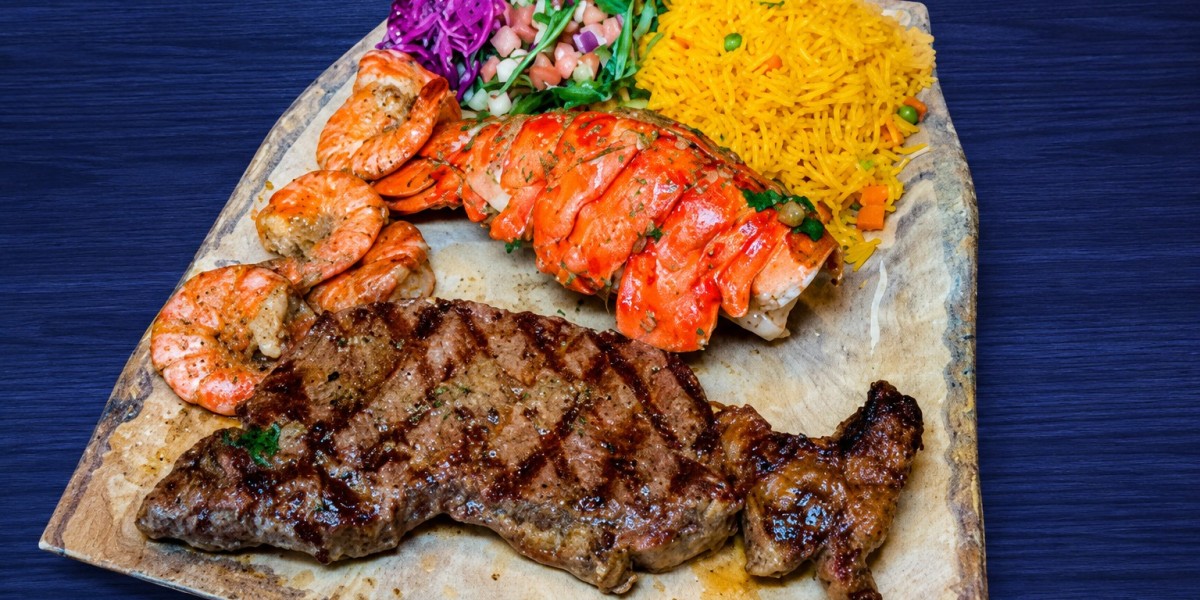
Mermaid Boil currently presents its Surf & Turf Platter through four combinations. The menu centres on AAA striploin beef steak, lamb chops, lobster tail and shrimp. Diners may also substitute beef steak with lamb shank. ination One: Steak, Lobster Tail and Shrimp
This is the most recognisable surf-and-turf arrangement.
It includes:
AAA striploin beef steak
One lobster tail
Five shrimp
This option suits diners who want a straightforward steak-and-seafood meal without adding several different meat cuts. The steak provides the main savoury component, while the lobster and shrimp create two distinct seafood textures.
Combination Two: Lamb Chops, Lobster Tail and Shrimp
This combination replaces steak with three lamb chops.
It includes:
Three lamb chops
One lobster tail
Five shrimp
Lamb has a more distinctive flavour than beef, so this version creates a stronger contrast with the mild sweetness of lobster and shrimp. It may appeal to diners who regularly choose lamb at grills or Mediterranean restaurants.
Combination Three: Steak, Lamb Chops, Lobster Tail and Shrimp
This is a broader mixed-meat interpretation.
It includes:
AAA striploin beef steak
Three lamb chops
One lobster tail
Ten shrimp
This option offers more variety and is better suited to a substantial appetite or a shared dining experience. Because it contains both steak and lamb, diners can compare two different meat textures alongside the seafood.
Combination Four: A Larger Sharing Platter
The largest listed combination is designed around multiple portions.
It includes:
Two beef steaks
Five lamb chops
Two lobster tails
Twenty shrimp
This arrangement is the most appropriate option for group dining. However, the number of people it serves will depend on appetite, side orders and whether other menu items are being shared.
The restaurant’s current menu should always be checked before ordering because availability, portions and preparation options can change.
How to Choose the Right Combination
The best choice depends on how many people are eating and which component matters most to them.
Choose the Steak Combination for a Classic Experience
Diners trying surf and turf for the first time may find the steak, lobster and shrimp combination the easiest place to begin.
Striploin has a pronounced beef flavour and a firm but tender texture when cooked correctly. Lobster tail provides a softer, sweeter contrast, while shrimp adds a smaller seafood bite that can be eaten between portions of steak.
Choose Lamb Chops for a More Distinctive Flavour
Lamb chops have a more aromatic and recognisable flavour than beef steak. They work particularly well for diners who enjoy Mediterranean and Middle Eastern grilled meats.
Because lamb can be richer than lobster and shrimp, acidity becomes especially useful. Lemon, herbs or a light garlic preparation can help refresh the palate between bites.
Choose the Mixed Combination for Variety
A platter containing steak, lamb chops, lobster and shrimp offers the broadest tasting experience.
This is a practical choice when two people have different meat preferences or when a group wants to sample several items without ordering completely separate entrées.
Choose the Larger Combination for Group Dining
The largest platter works best when diners are comfortable sharing food.
Before ordering, consider:
How many adults and children are eating
Whether the platter is the only main course
How many sides will be ordered
Whether guests prefer seafood or meat
Whether anyone has a shellfish allergy
How hungry the group is
These details are more useful than relying on platter size alone.
Understanding the Flavour and Texture Balance
The central challenge of surf and turf is preventing one side of the platter from overwhelming the other.
Steak
Striploin offers a robust beef flavour with a balance of tenderness and structure. It is substantial enough to anchor the meal but should still be easy to cut and chew.
Allowing steak to rest after cooking helps retain moisture. Cutting it immediately can cause juices to run onto the plate, affecting both the meat and nearby seafood.
Lamb Chops
Lamb chops are tender when cooked carefully but can become dry if exposed to excessive heat. Their flavour is deeper and more aromatic than lobster or shrimp.
Garlic, herbs, lemon and moderate spice generally work well with lamb without requiring a heavy sauce.
Lobster Tail
Lobster tail has a firm, delicate texture and natural sweetness. It should feel tender and moist rather than tough.
Its flavour can be lost under excessive salt, thick sauce or aggressive spice. Butter, lemon and garlic are common accompaniments because they support rather than conceal its character.
Shrimp
Shrimp adds a springy texture and absorbs seasoning more quickly than lobster.
Because shrimp cooks rapidly, timing is important. Properly cooked shrimp should remain juicy and tender. A tight, overly firm texture often indicates that it has spent too long over heat.
How Surf and Turf Should Be Prepared
Preparing several proteins for one platter requires coordination.
The meat and seafood should not simply be placed on the grill at the same time. Their cooking times are different, and each item needs individual attention.
Steak Preparation
A steak should begin with a dry surface so it can sear properly. The cooking temperature must be high enough to create browning, but the internal doneness should still reflect the diner’s preference.
After cooking, the steak benefits from a brief resting period before slicing or serving.
Lamb Chop Preparation
Lamb chops cook relatively quickly because of their size. The surface should be browned while the interior remains moist.
Uniform thickness matters. When one chop is much thinner than another, they may not reach the same level of doneness at the same time.
Lobster Tail Preparation
Lobster tail requires controlled heat. It can be grilled, broiled or prepared with a sauce, but the flesh should not become dry or tightly curled.
The shell may be opened or split to expose the meat to seasoning and heat more evenly.
Shrimp Preparation
Shrimp should generally be one of the final components cooked. It needs only enough time to turn opaque and develop a tender, lightly firm texture.
Cooking shrimp too early can leave it sitting while the meat finishes, causing it to cool or become overdone.
Choosing Sauces, Seasonings and Accompaniments
The right accompaniment connects the seafood and meat without making them taste identical.
Lemon and Garlic
Lemon and garlic are natural bridge ingredients.
Lemon cuts through the richness of steak and lamb while brightening lobster and shrimp. Garlic adds savoury depth that works with both sides of the platter.
Cajun-Inspired Seasoning
Cajun-style seasoning can add warmth, paprika notes and savoury complexity. The intensity should remain controlled when lobster is present, particularly for diners who want to taste the seafood itself.
Mediterranean Seasoning
Cumin, coriander, garlic, lemon and herbs can complement lamb and seafood when applied with restraint.Mermaid Boil describes its wider seafood offering as Mediterranean-inspired and includes seafood boils, fish platters, bowls, wraps and sides such as Sayadeya rice, yellow rice and Egyptian salad. and Fresh SidesRice can absorb meat juices and seafood seasoning, making it useful with a mixed platter. Salad provides freshness and acidity, while fries offer a familiar, filling option.Diners should confirm which sides are included with a particular combination rather than assuming every platter has the same accompaniments.
Buying Considerations Before Ordering
Number of Diners
Start with the number of people eating, but adjust for appetite. A platter shared by two adults will be approached differently from one divided among four people with additional dishes.
Protein Preferences
Do not choose the largest combination only because it offers more food. A steak-heavy platter may not suit a group that mainly wants seafood, while a lamb-based combination may not appeal to diners unfamiliar with lamb.
Preferred Doneness
When ordering steak, communicate the preferred level of doneness clearly.
For a shared platter, guests may need to agree on one temperature. A group with very different preferences may be better served by ordering separate steaks or combinations.
Allergies and Dietary Restrictions
Shellfish is a major food allergen. Anyone with a shellfish allergy should speak directly with the restaurant about ingredients, preparation surfaces and cross-contact risk.
Personal dietary restrictions should never be assumed from the name of a dish or its main ingredients.
Current Menu Availability
Seafood availability can be affected by supply and seasonality. Restaurant menus, substitutions and portion details may also change.
Review the current online menu or contact the restaurant before travelling specifically for one item.
Value for the Group
Value should be assessed according to usable portions, not merely the number of listed components.
A platter offers better value when guests genuinely want each included protein. Paying for lamb chops that no one intends to eat or ordering more shrimp than the group needs does not improve the experience.
Common Surf and Turf Mistakes
Ordering Without Checking the Portion
Large platters can contain several individual proteins. Review the number of steaks, chops, lobster tails and shrimp before selecting a combination.
Covering Everything in One Heavy Sauce
A single powerful sauce may make steak, lobster and shrimp taste too similar.
Sauce can be served lightly or on the side so diners can control how much reaches each component.
Ignoring Cooking Preferences
Steak doneness can significantly affect the meal. The person placing the order should confirm the group’s preference rather than guessing.
Choosing Variety Over Compatibility
More proteins create more choice, but not every guest will want every item. Select the combination that reflects actual preferences instead of automatically choosing the platter with the longest ingredient list.
Forgetting About Sides
A protein-heavy platter can feel unbalanced without something fresh, acidic or starchy.
Salad, rice, vegetables or fries can help complete the meal and make a shared platter easier to divide.
Failing to Mention Allergies
Guests with allergies should discuss them with the restaurant before ordering. Removing visible shellfish from a platter does not necessarily remove the risk of cross-contact.
Expert Tips for a Better Dining Experience
Decide Whether Meat or Seafood Is the Priority
Every diner has a different idea of what makes surf and turf satisfying. Some are primarily ordering steak and see lobster as an addition. Others want a seafood platter with grilled meat alongside it.
Identifying the priority makes it easier to select the right combination.
Use Acidity Between Rich Bites
Lemon, salad or another acidic accompaniment helps refresh the palate after steak or lamb. This makes the sweetness of the next lobster or shrimp bite easier to notice.
Share Different Components, Not Just Equal Portions
An equal division is not always the most enjoyable one.
A diner who prefers seafood may take more shrimp, while another takes a larger portion of steak. Sharing according to preference can provide better value than forcing each guest to receive identical portions.
Eat the Most Delicate Seafood While It Is Hot
Shrimp and lobster can lose some of their tenderness as they cool. Steak generally holds heat longer, particularly when served as a whole cut.
Beginning with some of the seafood can help diners experience it at its best texture.
Read More:
Final Thoughts
Surf and turf works because it offers contrast: rich meat beside sweet, tender seafood; a firm seared surface beside a softer shellfish texture; and familiar grilled flavours beside coastal ingredients.The best platter is not necessarily the largest one. It is the combination that matches the number of diners, their preferred proteins, their appetite and the way they want to share the meal. Steak and lobster offer the classic experience, while lamb chops and larger shrimp portions create more distinctive options.Mermaid Boil approaches Surf and Turf through several combinations featuring AAA striploin steak, lamb chops, lobster tail and shrimp, with the option to replace beef steak with lamb shank. This gives diners room to choose between a focused individual-style meal and a more substantial shared platter. rs in Mississauga, the most useful step is to review the current menu before ordering, decide which protein matters most and choose a platter that the whole table will genuinely enjoy.
Frequently Asked Questions
What is surf and turf?
Surf and turf is a meal that combines seafood with meat. Common combinations include steak with lobster tail, shrimp, crab or scallops. Some versions also include lamb chops or several types of seafood.
What comes in Mermaid Boil’s Surf & Turf Platter?
The menu features combinations of AAA striploin beef steak or lamb chops with lobster tail and shrimp. Larger options include both steak and lamb chops with additional lobster tails and shrimp. Beef steak may also be substituted with lamb shank. is the best surf-and-turf combination for one person?
A smaller combination containing one steak or a portion of lamb chops with one lobster tail and shrimp is generally easier for one person to manage. Appetite, sides and the size of the individual components should still be considered.
Is steak and lobster the traditional surf-and-turf pairing?
Yes. Steak and lobster is the most widely recognised version. Shrimp is also frequently included because its smaller size and quicker cooking time make it easy to add to a mixed platter.
Can surf and turf be shared?
Yes. Larger platters containing multiple steaks, lamb chops, lobster tails and shrimp are suitable for sharing. The number of people served depends on appetite, side orders and whether other dishes are included.
What steak doneness works best with lobster?
There is no single required doneness. Medium-rare or medium can provide a tender contrast with lobster, but the steak should be prepared according to the diner’s preference and applicable food-safety guidance.
How can I keep surf and turf from feeling too heavy?
Pair the meat and seafood with lemon, salad, rice or vegetables. Moderate sauce portions and a balanced serving size can also prevent the richness of the meat from overwhelming the meal.
Where can I order surf and turf in Mississauga?
Mermaid Boil lists Surf & Turf Platters at 4700 Ridgeway Drive, Unit 73, Mississauga, Ontario. Diners can review the current menu and available ordering methods through the restaurant’s official website before visiting. article is structured for informational, commercial and local search intent while keeping the menu details factual and avoiding unsupported claims.