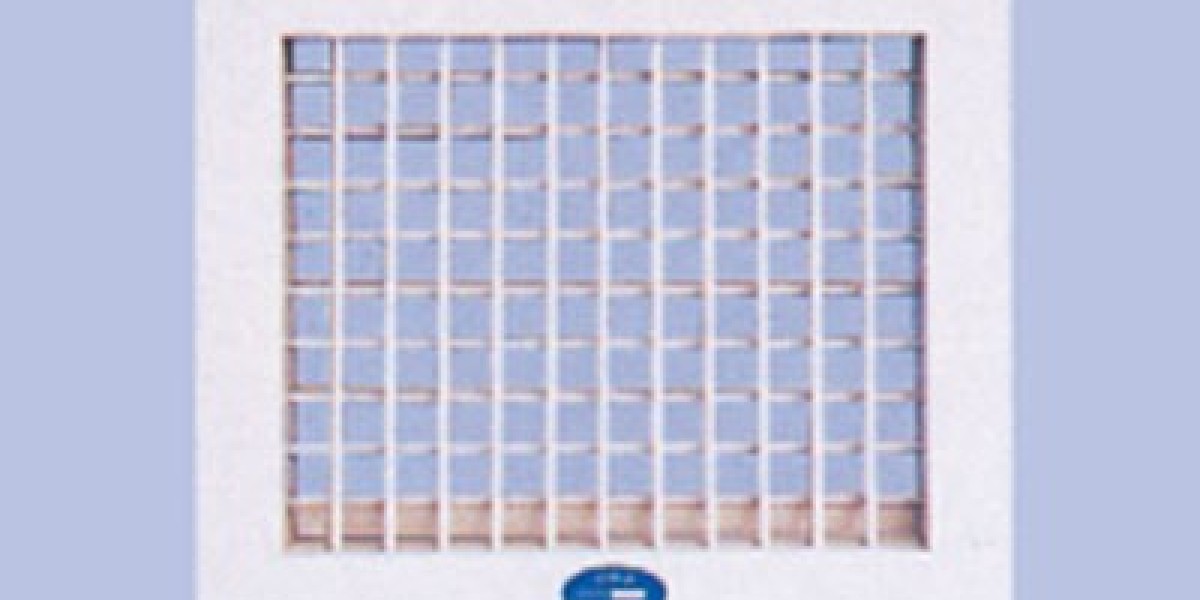

You can own the finest air handling unit on the market, but if the HVAC vent diffuser is placed in the wrong spot, the room will never feel right. Diffuser location determines whether conditioned air reaches the occupied zone or gets sucked straight back into a nearby return grille. Thoughtful placement, guided by the room’s shape and how people use it, turns an average system into one that quietly delivers consistent comfort. Let us walk through the principles that experienced installers use every day.
HVAC Vent Diffuser Placement Relative to Return Grilles
The first rule of HVAC vent diffuser placement is to keep it far enough from return air openings to prevent short circuiting. When a supply diffuser sits right next to a return grille, the freshly conditioned air takes the path of least resistance, flowing directly from one to the other without ever mixing into the room. This leaves the rest of the space starved for airflow. A good guideline is to position the HVAC vent diffuser at least several feet away from any return point, and to direct the air stream away from it. In rectangular rooms, placing the supply diffuser on the opposite wall from the return creates a cross flow that sweeps the entire volume. Hongpeng diffuser models with adjustable throw patterns make it possible to fine tune this directional separation even when architectural constraints force the diffuser and return closer together. Getting this geometry right means every cubic foot of conditioned air does its job before heading back to the unit.
HVAC Vent Diffuser Location Near Windows and Exterior Walls
Windows are the biggest source of thermal discomfort in most rooms, gaining heat in summer and losing it in winter. Placing an HVAC vent diffuser close to the window wall allows the supply air to wash the glass surface, counteracting these loads right at their source. In cooling mode, the cold air stream absorbs the radiant heat coming through the window before it can reach the interior. In heating mode, the warm air rises along the glass, preventing the cold downdraft that makes sitting near a window so unpleasant during winter. Hongpeng provides linear slot diffusers and adjustable louvre face diffusers that can be installed in a continuous run along a window header, creating an invisible thermal curtain. This placement strategy often eliminates the need for separate perimeter heating and simplifies the entire mechanical design while boosting comfort right where people feel the most temperature variation.
HVAC Vent Diffuser Height and Ceiling Type Considerations
The height at which an HVAC vent diffuser is mounted changes everything about how the air behaves. In standard eight to ten foot ceilings, a diffuser with a wide spread pattern works well because the air reaches the walls and rolls down gently. In tall atriums or lobbies with ceilings above fifteen feet, a diffuser needs a much longer throw to push air down to the occupied level. Ceiling shape matters too. Sloped ceilings require the diffuser to be angled so that the air stream projects horizontally rather than hitting the slope and dumping. Hongpeng offers surface mounted and recessed HVAC vent diffuser options with adaptable mounting frames that can accommodate these variations. For drop ceilings, modular diffusers fit directly into the grid, allowing easy repositioning if the interior layout changes later. The goal is always the same: get the air to the people, not leave it lingering in the empty space above.
HVAC Vent Diffuser Layout for Open Plan Areas
Open plan offices and great rooms present a unique challenge because they lack walls to define separate thermal zones. Multiple HVAC vent diffuser units must work together to provide even coverage without creating competing air currents. A common strategy is to lay out the diffusers in a grid pattern, spacing them so that their throw patterns overlap slightly at the edges. This ensures there are no gaps in coverage. In areas with varied occupancy, such as a flexible seating zone, using diffusers with adjustable blades allows the air pattern to be shifted as furniture moves. Hongpeng provides layout guidelines and airflow simulation services to help designers confirm that the proposed HVAC vent diffuser grid will deliver uniform temperatures across the entire floor plate. Proper zoning and damper control further allow different diffuser groups to respond to local temperature sensors, fine tuning the environment without over conditioning unused corners.
HVAC Vent Diffuser Placement to Minimize Noise Disturbance
Noise travels through ducts and radiates from the diffuser face, making placement a key factor in acoustic design. An HVAC vent diffuser installed directly above a bed or a conference table will draw attention to itself every time the fan changes speed. Whenever possible, diffusers should be located away from areas where people sit quietly for long periods, and directed toward circulation zones like hallways or open areas. The duct path leading to the diffuser also affects noise. Straight, smooth ductwork with gradual transitions delivers quieter airflow than tight elbows just before the diffuser. Hongpeng publishes sound data for every HVAC vent diffuser model, allowing designers to select units that meet the noise criteria for the specific space. With careful placement and proper component selection, the ventilation system becomes inaudible, which is the highest compliment a quiet system can receive.
HVAC Vent Diffuser Commissioning After Installation
Once an HVAC vent diffuser is installed, the work is not finished until the system is commissioned. Measuring the actual airflow at each diffuser and comparing it to the design values reveals imbalances that can be corrected by adjusting dampers and fan speeds. A flow hood or anemometer provides the hard numbers. The diffuser blades should be set to the specified angle and locked in place. A smoke test visually confirms that the air is traveling in the intended direction and reaching the occupied zone. Hongpeng recommends documenting these commissioning readings as a baseline for future maintenance checks. When all HVAC vent diffuser units are verified and balanced, the system operates at its peak efficiency, delivering the comfort that was promised on the plans.