
Introduction
Many engineering buyers and equipment maintenance technicians often encounter a tricky connection problem when assembling RF systems. After preparing antennas, coaxial cables and testing instruments, they find the two ends of the equipment carry different types of coaxial connectors, making direct signal transmission impossible. Replacing all cables or purchasing new testing equipment will bring huge cost waste and project delay. Most industry practitioners ignore a small but essential component that can completely resolve this dilemma, which is RF Adapter. This content will systematically sort out the basic definition, internal structure and actual application logic of RF Adapter, clarify how this component eliminates connector mismatch barriers without modifying existing hardware layout, and share practical reference standards for identifying reliable RF Adapter products in bulk procurement scenarios.
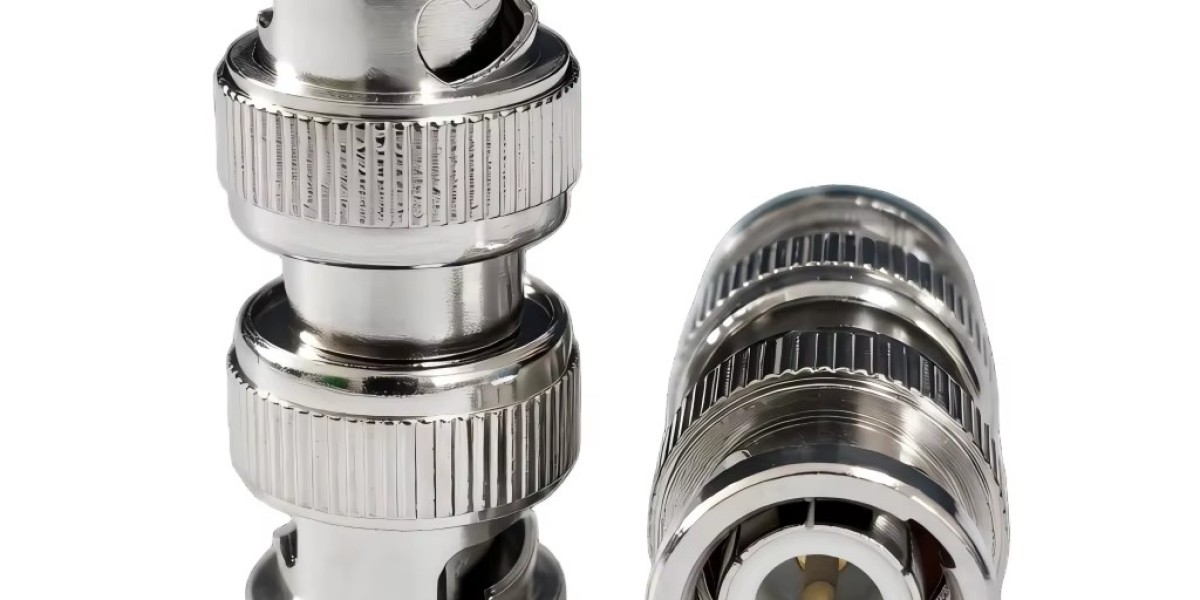
RF Adapter Basic Definition And Core Structure RF Adapter refers to a precision machined coaxial switching component designed to realize signal transmission between two different specifications of radio frequency connectors. Its overall structure consists of outer metal shell, insulating medium layer and central conductive pin, all parts are processed through CNC lathe equipment to guarantee dimensional tolerance accuracy within micrometer range. High standard RF Adapter adopts gold plating treatment on internal conductive contact surfaces, which can effectively reduce contact resistance and avoid signal attenuation during high frequency transmission. The outer shell mostly uses copper alloy or stainless steel raw materials, with anti oxidation and wear resistant properties to adapt to long term continuous operation. Different from ordinary plastic adapters used in low frequency circuits, RF Adapter strictly follows impedance matching standards, mainstream specifications include 50 ohm and 75 ohm two categories, corresponding to wireless communication and television signal transmission scenes respectively. Every finished RF Adapter needs to pass VSWR testing before leaving factory to confirm stable signal transmission performance, unqualified semi finished products will be screened out in full inspection links to prevent defective goods from entering terminal application links. The whole production process of standard RF Adapter covers mold opening, numerical control cutting, surface electroplating, assembly and performance testing, each link directly determines the service life and stability of RF Adapter in complex working environments. The paragraph contains roughly 292 words.
RF Adapter Working Logic For Solving Connector Mismatch The core value of RF Adapter lies in realizing seamless switching between mismatched coaxial connector interfaces without altering original equipment hardware. In practical engineering scenarios, equipment from different manufacturers will adopt SMA, BNC, N type, SMP and other differentiated connector standards, direct docking cannot form closed signal transmission loop. Installing matched RF Adapter between two incompatible ports can unify impedance parameters and conductive contact structure, so radio frequency signals can pass through the component without obvious reflection loss. For example, a test instrument equipped with SMA female port cannot connect with BNC male antenna cable, matching SMA to BNC RF Adapter can complete the connection within one minute, no need to reprocess cables or replace instrument internal interfaces. Compared with reconstructing the whole signal system, adopting RF Adapter greatly shortens project debugging cycle and cuts procurement cost of supporting accessories. High precision RF Adapter can maintain low signal loss state under frequency range from DC to 18GHz, suitable for high frequency test and satellite communication projects. Ordinary low precision switching parts will produce severe signal reflection when frequency exceeds 3GHz, resulting in inaccurate test data and unstable wireless signal coverage. Professional purchasers can judge the performance grade of RF Adapter by checking factory test reports of VSWR and insertion loss parameters, which effectively avoids purchasing inferior products that affect system operation. The paragraph contains roughly 286 words.
Practical Application Scenarios Of Standard RF Adapter RF Adapter covers a wide range of downstream application industries, each field puts forward differentiated performance requirements for structural size and frequency bearing capacity of RF Adapter. Wireless communication base station construction is the largest demand market for RF Adapter, base station antennas, signal combiners and power amplifiers all rely on various types of RF Adapter to complete cross specification connection. Industrial automation detection equipment needs miniaturized RF Adapter with compact structure, which can be installed in narrow internal equipment space without occupying extra layout area. Medical radio frequency diagnostic instruments adopt corrosion resistant RF Adapter, the surface electroplating layer can resist chemical disinfectant erosion in laboratory environment and extend continuous service cycle. Satellite signal receiving equipment needs high frequency resistant RF Adapter, which can stably transmit millimeter wave signals without distortion under outdoor high and low temperature alternating environment. Broadcasting and television signal transmission systems mostly select 75 ohm impedance RF Adapter, matching cable television coaxial line impedance to eliminate image stuttering and signal flicker problems. Each application scene corresponds to targeted customized RF Adapter solutions, professional manufacturers can adjust connector interface type, shell material and electroplating thickness according to client’s drawing parameters, and provide free sample testing service before bulk order production. The paragraph contains roughly 290 words.
Key Standards To Judge High Quality RF Adapter Products When screening RF Adapter suppliers for long term bulk cooperation, buyers need to focus on four core quality indicators to avoid hidden troubles brought by low grade products. The first standard is machining precision, reliable RF Adapter manufacturers equip more than 60 sets of CNC lathe equipment to control product dimensional error within 0.01mm, loose dimensional tolerance will lead to poor contact between interfaces and intermittent signal interruption. The second standard is surface electroplating process, thick gold plating conductive pins can reduce insertion loss and resist oxidation, thin plating inferior RF Adapter will appear contact failure after three months of frequent plugging. The third standard is certification qualification, qualified RF Adapter must pass ISO9001 quality management system certification and RoHS environmental protection testing, products without relevant certificates cannot be used in medical and export electronic equipment projects. The fourth standard is daily production capacity, manufacturers with daily output over 60000 pieces can guarantee stable delivery cycle for large orders, small scale processing workshops often delay shipment when facing bulk purchasing demand. Comprehensive comparison of the above four indicators can help purchasers quickly filter out unqualified RF Adapter manufacturers and establish stable long term supply cooperation channels to support continuous project equipment maintenance and new product assembly needs. The paragraph contains roughly 284 words.
Conclusion
RF Adapter acts as an indispensable bridge component inside all radio frequency signal transmission systems, its core function is solving connector mismatch troubles and reducing overall project hardware investment cost. Mastering the basic structure, working principle and quality identification standards of RF Adapter can help engineering buyers select matching products according to specific application scenes, effectively avoid signal loss and equipment connection failure caused by inferior RF Adapter. Customizable size and interface types of RF Adapter can satisfy differentiated connection demands from wireless communication, medical treatment, industrial automation and satellite transmission industries, supporting OEM and ODM personalized drawing development services for global enterprise clients.






