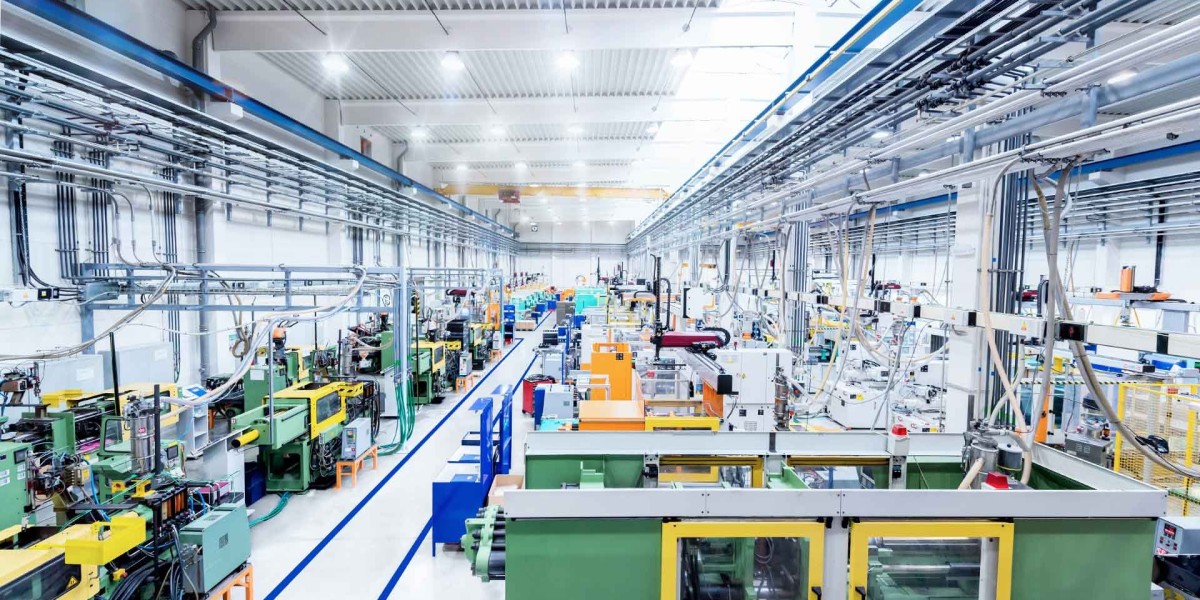

Buying a piece of industrial machinery is rarely a casual decision. It involves budgets, projections, floor space, training, and a fair amount of hope that the equipment will perform the way the brochure promised. Yet so many businesses pour their energy into comparing prices and specifications, only to give little thought to what happens after the machine is switched on for the first time. This is where the real story begins, and it is a story that many buyers don’t pay attention to until something breaks down. When you’re talking to industrial machinery suppliers in Sri Lanka, the conversation should never end at the price tag. It should extend into what happens six months, two years, or five years down the line, because that is when maintenance and after-sales support quietly become the most valuable part of the deal.
The Hidden Cost of Ignoring Support
Most business owners understand depreciation, interest rates, and return on investment. What fewer people calculate properly is downtime cost. A machine that sits idle for three days because a spare part has to be shipped from overseas is not just an inconvenience; it is lost production, missed delivery deadlines, and sometimes damaged client relationships. The cheapest machine on the market can quickly become the most expensive one if the supplier disappears the moment the invoice is paid.
This is particularly true for businesses that depend on continuous operation. A bakery that suddenly loses its mixer mid-shift, a factory whose conveyor belt jams during a peak order period, or a hotel kitchen that finds its dishwasher malfunctioning right before a large event booking, all of these scenarios share one thing in common: the equipment failure itself is rarely the worst part. The worst part is not knowing how quickly help will arrive, or whether it will arrive at all.
Why After-Sales Support Should Influence Your Buying Decision
When evaluating machinery, it helps to ask a few honest questions before signing anything. Does the supplier have a local service team, or will every technical issue require an international call and a long wait for someone to fly in? Are spare parts kept in stock locally, or does every replacement part need a customs clearance process that can stretch for weeks? Is there a warranty that actually means something, with clear terms about what is covered and for how long?
These questions matter more in some industries than others. Take the food and beverage sector as an example. Anyone investing in packaging machines in Sri Lanka knows that production lines often run on tight schedules tied to perishable goods. A delay in packaging is not just a scheduling headache; it can mean spoiled stock and wasted raw materials. In such cases, a supplier who responds within hours rather than days is not offering a luxury service, they’re protecting your bottom line.
The same logic applies to the hospitality industry, where kitchens operate under constant pressure and very little room for error. A commercial oven, a refrigeration unit, or a dishwasher breaking down during service hours can disrupt an entire evening’s operations and frustrate both staff and guests. This is exactly why working with reliable hotel kitchen equipment suppliers in Sri Lanka who offer dependable maintenance contracts is not an optional extra. It is part of what keeps a kitchen functioning smoothly when the pressure is on.
Maintenance Is not Just About Fixing Things
There is a tendency to think of maintenance purely in terms of repairs, as something that only matters once a machine is already broken. But the more valuable side of maintenance is preventive, not reactive. Routine servicing, calibration checks, lubrication schedules, and software updates all extend the working life of equipment and reduce the likelihood of sudden failures. A supplier who offers structured preventive maintenance plans is essentially helping you avoid problems rather than just solving them after the fact.
This becomes especially relevant for specialised equipment that handles delicate or technical processes. Consider vacuum packing machines in Sri Lanka, which are widely used across food processing, pharmaceuticals, and even electronics packaging. These machines rely on precise sealing mechanisms and consistent air extraction to function correctly. Without regular servicing, seals can wear down gradually, vacuum pressure can weaken, and product quality can suffer in ways that are not immediately obvious until customer complaints start coming in. Preventive maintenance here is not about convenience; it is about protecting product integrity and brand reputation.
The Human Side of After-Sales Support
There is also something worth saying about the relationship side of all this. When a supplier genuinely stands behind their products, it builds a kind of trust that goes beyond a transaction. Business owners remember which suppliers picked up the phone during a crisis and which ones left them waiting. They remember who sent a technician on a Saturday and who insisted on following bureaucratic email chains while production stood still. Over time, this trust becomes a competitive advantage for the supplier and a source of operational stability for the buyer.
It also changes how a business plans for the future. Knowing that support is reliable allows companies to take on larger contracts, scale production with more confidence, and avoid the constant anxiety of “what if something goes wrong.” That peace of mind has real value, even if it does not show up neatly on a balance sheet.
Asking the Right Questions Before You Buy
Before finalising any machinery purchase, it is worth treating after-sales support as seriously as the technical specifications. Ask for references from existing customers and actually call them. Ask how many technicians the supplier employs locally and how they handle emergency callouts. Ask what the average turnaround time is for spare parts, and whether that promise has held up in practice rather than just on paper.
A supplier confident in their service quality will usually be transparent about these details, sometimes even proactively. One who hesitates, gives vague answers, or redirects every question back to the machine’s features alone is giving you useful information too, just not the kind they intended to share.
A Long-Term Partnership, Not a One-Time Purchase
Machinery investments are rarely about a single transaction. They are about building a working relationship that will, ideally, last for years. The machine itself is only one half of that relationship. The other half is the people standing behind it once it is running on your factory floor, in your kitchen, or on your production line. Choosing a supplier who treats after-sales support as a core responsibility, rather than an afterthought, often makes the difference between a smooth operation and a string of frustrating setbacks.
In the end, the real value of any machinery purchase is not measured only by what it costs to buy, but by how well it is supported once it becomes part of your daily operations. That distinction is what separates a good purchase from a genuinely smart one.