
Introduction
Industrial wireless communication systems rely heavily on stable signal transmission to support real time data exchange between sensors, controllers and remote monitoring terminals. Many project engineers encounter frequent signal attenuation, loose connection and short service life after choosing low grade RF coaxial connector without full parameter evaluation. Years of manufacturing experience shows that improper connector selection can increase post maintenance cost by over thirty percent and delay equipment delivery cycles. This article sorts out systematic selection logic for RF coaxial connector, covering core performance indicators, material matching rules and customized service channels to help buyers match ideal components for different industrial deployment environments.
Impedance consistency is the core foundation of high efficiency RF signal transmission, and mainstream RF coaxial connector products adopt 50 ohm standard for most wireless communication equipment, while 75 ohm specifications are reserved for video and broadcast signal transmission. Mismatched impedance will generate signal reflection, cause standing wave ratio rise and weaken effective transmission distance of antennas. Reliable RF coaxial connector undergoes full CNC precision machining to guarantee inner and outer conductor dimensional tolerance within micrometer level, avoiding impedance deviation caused by rough processing. All finished products pass strict VSWR testing before leaving production lines, which eliminates hidden troubles of signal loss in long term industrial operation. For harsh vibration industrial workshops, reinforced locking structures of RF coaxial connector can maintain stable contact performance after thousands of plug and pull cycles without metal contact fatigue.
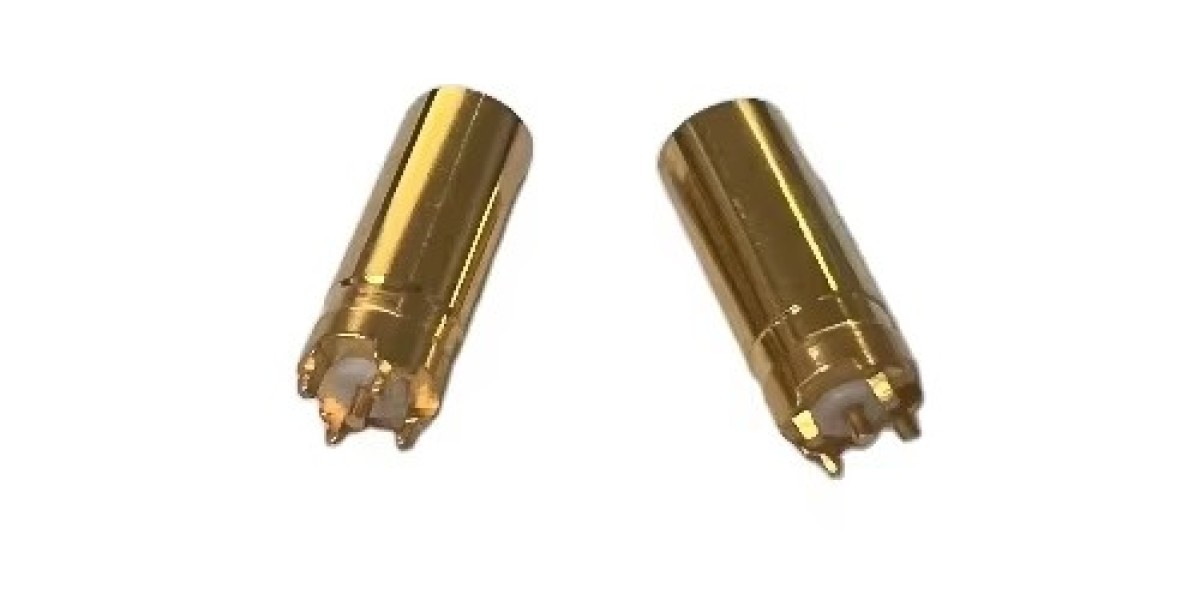
Material composition directly decides corrosion resistance and conductivity of RF coaxial connector in industrial environments. High quality series adopt solid brass body with multi layer gold plating on inner contact pins, which effectively resist oxidation, humidity and chemical dust existing in factory workshops. Low cost thin plating connectors will lose conductive coating after several months of outdoor use, leading to intermittent signal disconnection. The supporting dielectric materials use high temperature resistant PTFE, which adapts to wide temperature fluctuation range from minus fifty five degrees to two hundred degrees without deformation. Mass customized RF coaxial connector can adjust plating thickness and shell material according to client site conditions, such as stainless steel shell for chemical manufacturing workshops with strong corrosive gas, balancing service life and procurement budget reasonably.
Standard RF coaxial connector cannot fully meet all special industrial equipment layout demands, so mature component suppliers provide complete OEM and ODM customization workflow covering drawing design, sample proofing and batch optimization. Engineers can adjust connector shape to straight, right angle or flange mounting types based on internal equipment space, and match corresponding coaxial cable models with different wire diameters. The supporting testing service verifies connector performance under simulated industrial vibration, high temperature and humid environment before mass production, reducing project risk of mass defective goods. The one stop service system integrates technical consultation, parameter optimization and unified packaging shipment, which simplifies procurement procedures for large industrial system integrators and shortens component delivery cycle effectively.
Conclusion
Selecting qualified RF coaxial connector requires comprehensive consideration of impedance, material, mechanical structure and customized matching degree with industrial equipment. Focusing on components with complete quality certification and mature customization capacity can fundamentally reduce system signal failure probability and lower long term operation maintenance expenses. Buyers can submit specific project parameters to obtain targeted RF coaxial connector configuration schemes and sample testing support for verification before formal bulk order placement.