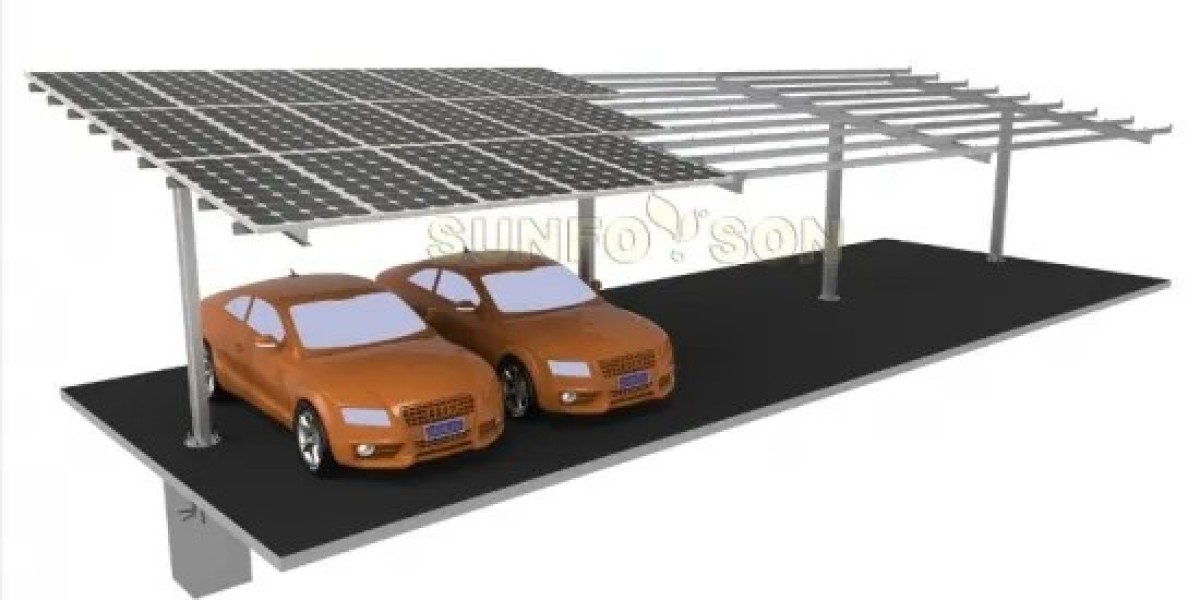

Designing the layout of a ground mount solar racking array is a delicate balance between capturing the most sunlight and using the land efficiently. Pack the rows too close together, and shading kills the afternoon output. Space them too far apart, and land costs eat into your returns. Sunforson has optimized layouts for hundreds of megawatts of solar farms, and the principles are clear.
Determining Tilt Angle for Ground Mount Solar Racking
The tilt angle is the most fundamental layout decision. A ground mount solar racking system set at the wrong angle will underperform for twenty five years. Sunforson uses site specific solar irradiation data and software to calculate the optimal tilt. Generally, an angle close to the site latitude maximizes annual production, but tweaks can favor summer or winter output depending on the energy tariff. For dual use or agrivoltaic projects, a slightly steeper or shallower tilt may allow better light for crops beneath. A correctly chosen tilt pays for itself many times over in additional kilowatt hours.
Row Spacing and Interrow Shading in Ground Mount Solar Racking
To avoid one row shading the next, a minimum distance between rows is required. Sunforson calculates this gap based on the winter solstice sun angle, ensuring the rear row is not shadowed during peak production hours. The ground cover ratio, the ratio of panel area to land area, is a key metric. A well designed ground mount solar racking layout achieves a high ratio without sacrificing performance. Using bifacial modules changes the calculation, because light reflected from the ground between rows can boost rear side generation, allowing slightly closer spacing.
Orientation and Azimuth Considerations for Ground Mount Solar Racking
In the northern hemisphere, true south orientation usually gives the best total yield, but east west oriented ground mount solar racking is gaining popularity. East west rows flatten the daily output curve, producing more energy in the morning and afternoon, which can match load profiles better. Sunforson helps developers model different azimuths against their power purchase agreement rate structures. Sometimes a slightly off south orientation increases revenue even if total kilowatt hours dip slightly, because the energy is generated when the grid pays more.
Topography and Grading Impact on Ground Mount Solar Racking Layout
Natural slopes can be an ally or an enemy. A south facing slope allows tighter row spacing without shading, while a north facing slope forces wider gaps. Sunforson analyzes digital elevation models to place ground mount solar racking blocks along natural contours, minimizing cut and fill. Terrain following racking systems, as discussed earlier, allow the array to flow with the land, preserving drainage and reducing civil works. Smart layout design works with the topography rather than fighting it.
Access Roads and Maintenance Corridors in Ground Mount Solar Racking Layout
A layout optimized purely for energy yield might forget the need for access. Sunforson includes dedicated road space within the ground mount solar racking layout for maintenance vehicles, inverter stations, and emergency access. These corridors are integrated into the row spacing plan so they do not add extra land waste. Turning radii, fencing, and security setbacks are also factored in. A layout that cannot be efficiently cleaned, mowed, or repaired will lose performance gains to operational difficulties.
Software and Simulation Tools for Ground Mount Solar Racking Optimization
Modern layout optimization relies on software like PVsyst and AutoCAD Civil 3D. Sunforson uses these tools to simulate shading, calculate cable losses, and model different racking configurations. The result is a digital twin of the solar farm that can be stress tested before a single pile is driven. This simulation work is a crucial step that transforms a good layout into a great one, squeezing every possible kilowatt hour from the available land.