
Introduction
Central heating communities commercial air conditioning buildings and industrial heat exchange stations require accurate thermal energy metering for fair billing and energy consumption optimization, while traditional mechanical heat meter suffers from internal scale blockage and measurement drift after long term circulation water operation. Ultrasonic heat meter and ultrasonic BTU meter abandon moving measuring components completely, adopting dual ultrasonic sensor transit time technology combined with high precision temperature probes to calculate heat consumption without pipeline flow obstruction. Many heating system designers cannot distinguish functional similarities and minor parameter differences between ultrasonic heat meter and ultrasonic BTU meter, leading to mismatched meter model selection for residential and industrial heating loops. With rich experience supplying thermal metering devices to global heating projects, this article analyzes unified energy calculation logic of two meter types and differentiates their exclusive applicable heating circulation scenarios.
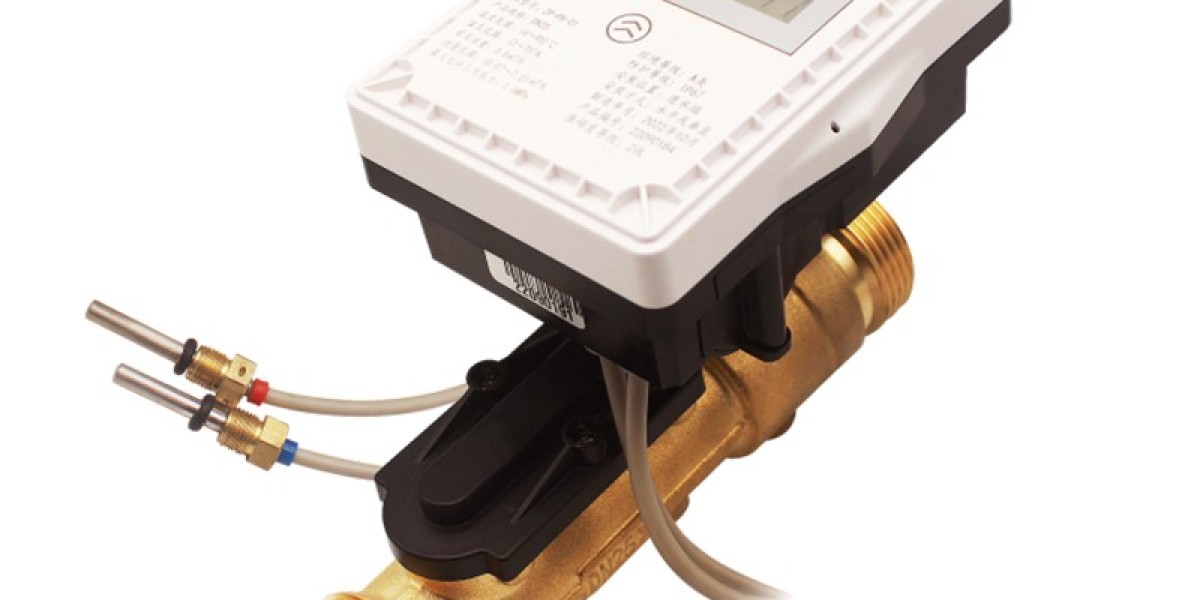
Ultrasonic heat meter installs a pair of ultrasonic transducers on the measuring pipe body, alternately transmitting and receiving sound wave signals along water flow forward and reverse directions. The time difference between upstream and downstream sound wave transmission reflects liquid flow velocity, combined with fixed pipeline cross sectional area to compute real time circulation water volume without internal contact measuring parts. No impeller or baffle exists inside ultrasonic heat meter pipeline, resisting calcium and magnesium scale precipitation from heating circulating water that easily clogs mechanical heat meter to cause reading failure. Class 2 measurement accuracy meets EN1434 and GB/T 32224 international heating metering standards, supporting stable data output under 4 to 95 Celsius heating medium temperature range. Two matched PT1000 temperature probes mount on supply and return pipelines separately to capture real time temperature difference of hot water entering and exiting heating terminals, which forms core calculation variable for total thermal energy accumulation. Long term continuous heating operation will not generate measurement drift due to mechanical wear, greatly extending maintenance free service cycle compared with traditional heat measuring equipment.
Ultrasonic BTU meter shares identical ultrasonic flow and dual temperature detection hardware structure with ultrasonic heat meter, differing only in energy unit display and data output calibration for North American HVAC BTU billing standards. Internal microprocessor integrates flow value supply return temperature difference and water specific heat capacity to accumulate total consumed thermal energy, switching display units between kilowatt hour and BTU according to regional metering standard settings. Ultrasonic BTU meter optimizes data storage algorithm for long cycle air conditioning cooling and heating dual circulation systems, recording positive heat consumption in winter heating mode and negative cold energy data in summer refrigeration mode simultaneously. Multiple communication interfaces including M BUS RS485 LoRaWAN support remote energy data upload to building energy management platforms, helping commercial property teams monitor HVAC energy consumption daily and adjust equipment operation parameters to cut power and heating costs. Large diameter ultrasonic BTU meter matches industrial heat exchange station thick circulation pipelines, while small caliber versions suit single household central heating indoor branch loops.
Ultrasonic heat meter prioritizes European and Asian central heating residential district projects that adopt kilowatt hour energy billing units, with compact DN15 DN20 body sizes fitting household heating pipeline wall mounting installation. Ultrasonic BTU meter targets North American commercial office mall HVAC systems and industrial cooling heat circulation equipment where BTU unit settlement is required. Both meter types support IP65 waterproof casing for indoor heating equipment room installation, with optional IP68 reinforced versions for outdoor buried heat supply pipelines. Industrial heat exchange stations with large circulation flow select big diameter ultrasonic heat meter or ultrasonic BTU meter with split ultrasonic sensor design to adapt thick main pipeline layout without pipeline cutting reconstruction. Heating project designers can confirm local thermal billing unit pipeline caliber and circulation medium temperature range to select matched ultrasonic heat meter or ultrasonic BTU meter models, realizing long term accurate energy measurement without scale blockage faults.
Conclusion
Ultrasonic heat meter and ultrasonic BTU meter adopt the same wear free ultrasonic transit time measuring structure, only differing in energy display unit calibration to adapt regional heating billing standards. Dual PT1000 temperature probes capture supply return water temperature difference for precise thermal energy accumulation calculation, eliminating mechanical scale clogging defects of traditional heat meters. Residential central heating projects prioritize ultrasonic heat meter while commercial HVAC BTU settlement systems deploy ultrasonic BTU meter, with full caliber series customizable communication module options for remote energy data monitoring.