
Table of Contents
Introduction
What Restaurant Catering Actually Involves
Why Halal Status Shapes the Catering Decision
Catering Reach Across Washington D.C., Maryland, and Virginia
Building a Catering Menu That Works for a Group
Expert Insight: How Kitchens Scale for Catering Without Losing Quality
Common Mistakes When Booking Catering
Buying Considerations Before You Confirm a Caterer
Read More
Final Thoughts
Frequently Asked Questions
Hiring a caterer is a different decision than picking a restaurant for dinner. The food has to travel, hold its quality outside a controlled kitchen environment, and satisfy a group whose preferences the host may not fully know in advance. Catering decisions tend to come down to a handful of practical concerns: can the kitchen produce consistent quality at volume, does the menu suit a mixed group of guests, and does the caterer meet any dietary requirements that are non-negotiable for the host. In the DMV, halal status is frequently one of those non-negotiables, which narrows the field of caterers considerably before taste or presentation even enter the conversation. Saahil Restaurant in Sterling, Virginia, operates as a fully halal Pakistani kitchen that extends its dining room menu into catering across the wider region, and understanding how that kind of service actually works helps a host plan an event with fewer surprises on the day.
What Restaurant Catering Actually Involves
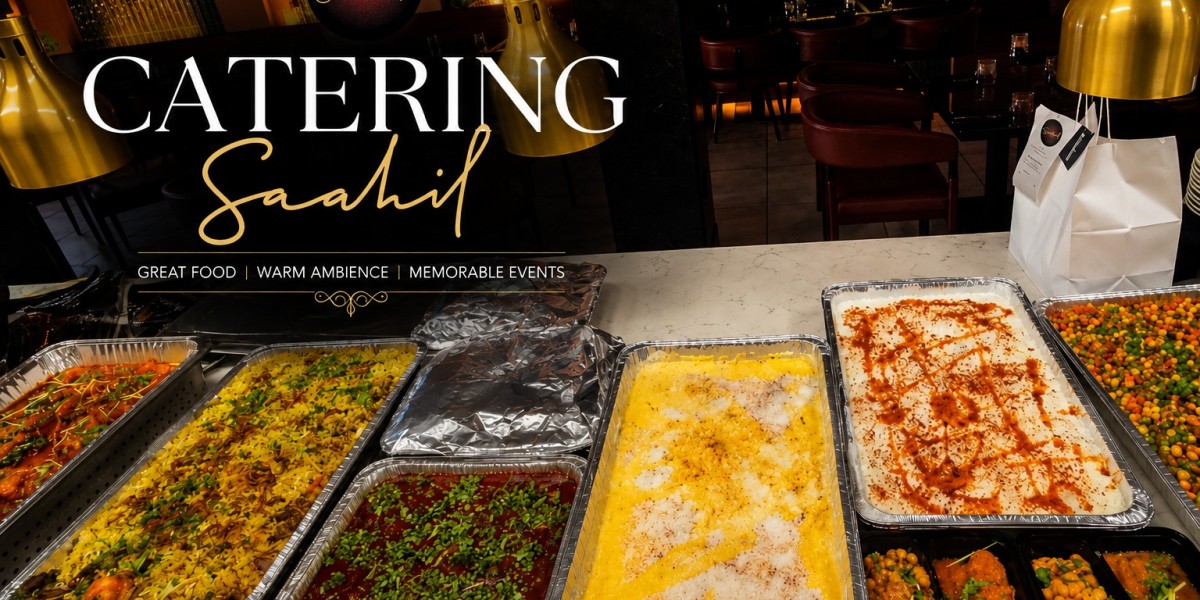
Catering is not simply cooking more food. It requires a kitchen to plan quantities accurately, package dishes so they travel without losing texture or temperature, and often coordinate delivery or setup timing around an event schedule that the restaurant does not control. A curry that tastes right straight off the stove needs to be prepared with reheating or holding in mind if it is going to a venue an hour away. Rice dishes such as biryani need to be cooked so they do not dry out or clump during transport. Restaurants that handle catering well tend to have internal processes built specifically for this, distinct from how they run a normal dinner service, because the margin for error is smaller once food leaves the building.
Why Halal Status Shapes the Catering Decision
For hosts organizing a corporate lunch, a religious gathering, or a family celebration with observant Muslim guests, halal certification is often the first filter applied when shortlisting a caterer, ahead of cuisine type or price. A fully halal kitchen removes the risk of cross-contamination and the awkwardness of asking a caterer to modify a menu on short notice. At Saahil, the entire menu, including everything offered for catering, is prepared under halal standards, which means a host does not need to negotiate a separate halal-only selection or worry that some dishes on offer fall outside that requirement. This single factor is frequently what determines whether a caterer even gets a call in the first place.
Catering Reach Across Washington D.C., Maryland, and Virginia
Catering only has value if it can reach the venue where the event is actually happening. Saahil extends its service beyond its Sterling location to cover Washington D.C., Maryland, and Virginia, serving private receptions, corporate functions, and family gatherings held at venues throughout the region, from Georgetown to broader Northern Virginia. This regional reach matters most for hosts who are not hosting the event at the restaurant itself, such as an office celebration, a rented event space, or a private residence, since it means the same halal Pakistani menu that guests would find in the dining room can be brought directly to the event location.
Building a Catering Menu That Works for a Group
A catering menu needs a different structure than an individual dinner menu. Shareable dishes tend to perform better than single-serving plates, which is part of why starters, house specialties, biryani and pilao selections, and naan or bread options translate well into a catering spread. Dietary range matters just as much here as it does for a sit-down event. A catering menu that clearly identifies vegetarian dishes and can accommodate gluten-free or dairy-free requests gives a host confidence that guests with different needs will still have a proper meal, rather than a single modified plate set apart from everyone else's food.
Expert Insight: How Kitchens Scale for Catering Without Losing Quality
Kitchens that cater successfully tend to rely on techniques that were built for volume from the start rather than dishes that only work well in small batches. Slow-cooked curries, layered biryani, and marinated grilled items generally hold their quality better across a catering-sized batch than delicate, plate-specific preparations do. Saahil's kitchen, guided by its executive chefs, works from traditional Pakistani recipes adapted with refined technique, an approach that tends to scale reasonably well for catering because the underlying cooking methods, such as slow braising and layered rice preparation, were never designed around single portions in the first place. A caterer's ability to hold this consistency between a table for four and a spread for eighty is usually the clearest sign of real catering experience.
Common Mistakes When Booking Catering
Hosts booking catering for the first time tend to make a similar set of errors. Waiting too long to confirm an order is the most common, since a kitchen needs lead time to plan ingredient quantities and prep schedules for a larger batch than normal service requires. Failing to communicate dietary requirements clearly at the time of booking, rather than mentioning them the day before, often leads to last-minute scrambling. Underestimating final guest counts, especially for events where RSVPs are still coming in close to the date, can leave a kitchen either overproducing or falling short. Some hosts also assume all caterers handle delivery and setup logistics the same way, without confirming whether the restaurant provides delivery, chafing equipment, or on-site service, which can create confusion on the day of the event.
Buying Considerations Before You Confirm a Caterer
Before confirming a catering order, it helps to work through a short set of practical questions. Confirm the caterer's halal status directly if that is a requirement, rather than assuming it applies to the entire menu. Ask how far in advance an order needs to be placed, since group-sized quantities generally require more lead time than a standard reservation. Clarify what the catering package actually includes, such as delivery, setup, or serving equipment, since these details vary between restaurants. Establish a realistic deadline for finalizing guest counts, as most kitchens need this locked in several days ahead to plan food quantities accurately. These questions are not exhaustive, but they cover the areas most likely to cause friction if left unaddressed.
Read More
Hosts weighing catering against an on-site gathering may also want to look into private events hosted directly in Saahil's dining room and patio, which suits occasions where guests are comfortable traveling to Sterling rather than having food delivered elsewhere.
Final Thoughts
Choosing a caterer works best when the decision is based on more than menu appeal alone: whether the kitchen can hold quality at volume, whether the food is genuinely suited to travel and reheating, and whether dietary requirements like halal status are built into the entire menu rather than a limited selection. Saahil Restaurant approaches catering through the same halal Pakistani kitchen that runs its Sterling dining room, extending that same menu across Washington D.C., Maryland, and Virginia for hosts who need the food to come to them rather than the other way around. Sterling's position close to Ashburn and the wider Loudoun County community has made it a natural starting point for catering requests from families and companies across Northern Virginia looking for a dependable, halal-friendly option for their next gathering.
Frequently Asked Questions
Does Saahil Restaurant offer halal catering?
Yes, the entire menu, including everything available for catering, is prepared under halal standards, so hosts do not need to request a separate halal-only selection.
What areas does Saahil Restaurant cater to?
Saahil provides catering across Washington D.C., Maryland, and Virginia, serving private and corporate events held at venues throughout the wider DMV region, including Northern Virginia and Georgetown.
Can Saahil accommodate vegetarian or gluten-free guests through catering?
The catering menu includes vegetarian dishes and can accommodate gluten-free and dairy-free requests, allowing hosts to plan for guests with different dietary needs within the same order.
How far in advance should catering be booked with Saahil Restaurant?
Placing an order with adequate lead time allows the kitchen to plan ingredient quantities and prep schedules properly. Hosts should confirm final guest counts and any dietary requirements well ahead of the event date.
Is Saahil Restaurant's catering available in Sterling, VA and the surrounding Loudoun County area?
Yes, Sterling serves as the base for Saahil's catering service, with delivery extending to Ashburn, the broader Loudoun County area, and further into the Washington D.C., Maryland, and Virginia region.