
The appraisal management industry is under more operational pressure than ever. Shrinking margins, rising compliance demands, UAD 3.6 deadlines, and a shortage of qualified appraisal reviewers have forced AMC leaders to make a difficult choice: keep building internal teams or find a smarter way to scale.
For a growing number of AMCs across the U.S., the answer is operational outsourcing. And in 2026, that decision is no longer just about cutting costs. It’s about surviving what is quickly becoming the most demanding compliance environment in the industry’s history.
What Is AMC Back-Office Outsourcing?
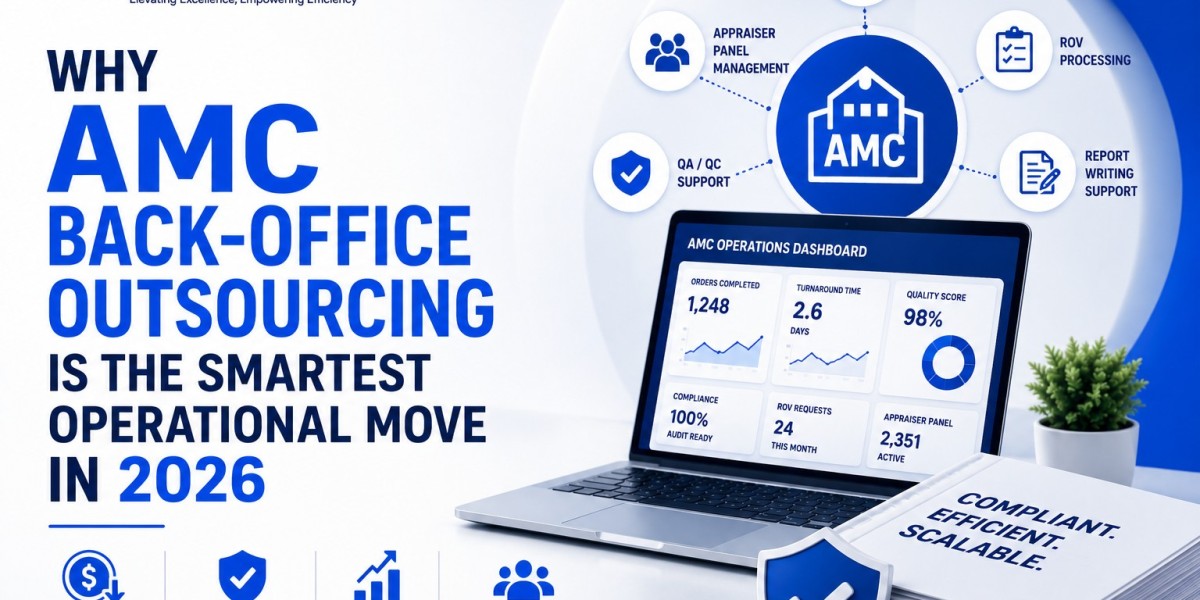
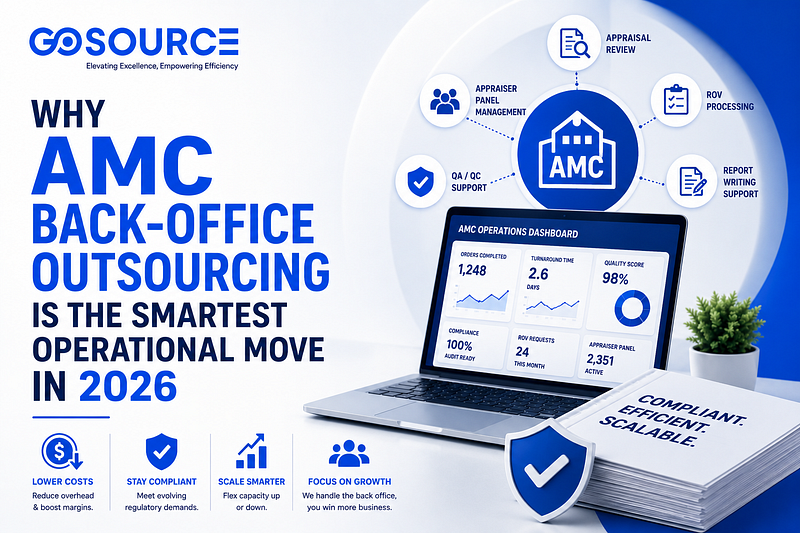
When people hear “outsourcing,” they often think of call centers or data entry. In the appraisal management context, it means something very different. AMC back-office outsourcing refers to delegating core operational functions, appraisal review support, appraiser panel management, reconsideration of value (ROV) processing, report quality control, and technology coordination to a specialized external team.
These aren’t peripheral tasks. They are the operational backbone of every AMC. And they require trained professionals who understand USPAP standards, GSE guidelines, AIR requirements, and the ever-shifting compliance landscape at both the federal and state level.
The Operational Strain AMCs Are Facing in 2026
AMCs today are managing more moving parts than they were even two years ago. A few of the biggest pressure points:
UAD 3.6 Transition Pressure: The UCDP delivery deadline for UAD 3.6-compliant reports is forcing AMCs to verify that every appraisal in their pipeline meets new data field and formatting requirements. This is a quality control challenge, not just a technology challenge. It requires human review bandwidth, a resource most AMCs don’t have in surplus.
State Registration and Audit Exposure: AMCs operating across multiple states must track renewal deadlines, fee disclosures, customary and reasonable fee compliance, and appraiser panel documentation on a state-by-state basis. Falling behind any one state’s requirements can trigger an audit or, in the worst case, a suspension of operations in that market.
Appraiser Panel Maintenance: Managing a compliant appraiser panel means tracking license statuses, E&O insurance renewals, performance scorecards, order acceptance rates, and geographic coverage. This is a full-time operational function that many AMCs are managing with understaffed teams.
ROV Volume Increases: Regulatory attention on the reconsideration of Value workflows has increased significantly since the FHFA guidance updates. AMCs now need documented, structured ROV processes that are auditable and consistent, not ad hoc responses handled by whoever is available.
Why Internal Hiring Alone Doesn’t Solve the Problem
The instinct for most AMC operators is to hire their way out of operational bottlenecks. But in today’s market, this approach comes with real risks.
Qualified appraisal review professionals are hard to find. Training new staff to understand USPAP, AIR, and GSE requirements takes months. And headcount-based scaling creates fixed costs that become liabilities when loan volume dips, which, in a rate-sensitive market, it inevitably does.
Outsourcing converts fixed operational costs into variable ones. It gives AMCs access to a trained, specialized workforce without the overhead of full-time salaries, benefits, or office space. And it allows operations to scale up or down in direct response to order volume a competitive advantage that internal teams simply cannot match.
What Functions Are Best Suited for Outsourcing?
Not every AMC function should be outsourced. Client relationship management, lender communications, and strategic decisions should remain internal. But several back-office functions are both operationally intensive and well-suited for outsourcing:
Appraisal Review Support: Desk reviews, field review coordination, step clearing, and QC checklists can be handled by external review teams trained to meet your standards and your lender clients’ requirements.
Appraiser Panel Management: License verification, performance tracking, onboarding documentation, and geographic coverage mapping are data-heavy functions that dedicated outsourced teams can manage more efficiently than most internal staff.
ROV Processing and Documentation: Structured ROV intake, documentation, communication tracking, and final disposition records are exactly the kind of workflow where an experienced external team can add consistency and audit readiness.
Appraisal Report Writing Support for AMCs that manage hybrid or desktop appraisal products; outsourced report writing support (in full USPAP compliance) can dramatically reduce turnaround time without sacrificing quality.
CRM and Order Management Coordination Data entry, status tracking, order routing, and lender-facing reporting can be managed externally, freeing internal staff to focus on relationship management and exception handling.
The Compliance Advantage of Specialized Outsourcing Partners
One of the most underappreciated benefits of working with an outsourced AMC operations partner is compliance depth. A generalist staffing solution won’t know what an appraisal step is, let alone how to clear one to GSE standards. A specialized outsourcing partner who lives in the AMC industry brings:
— Working knowledge of USPAP standards and how they apply to review assignments
— Familiarity with Fannie Mae and Freddie Mac appraisal guidelines
— Understanding of AIR (Appraiser Independence Requirements) and how they affect order management
— Experience with UAD 3.6 data fields and what reviewers need to look for in the transition period
— Knowledge of ROV regulatory requirements and documentation standards
This compliance fluency is what separates operational outsourcing in the appraisal industry from generic business process outsourcing. The work requires industry-specific expertise, and the right partner brings it ready-built.
What AMC Leaders Should Look for in an Outsourcing Partner
If you’re evaluating operational outsourcing for your AMC, here are the criteria that matter most:
Appraisal-specific experience: Has the team worked in AMC operations before, or are they learning about your industry on your dime?
USPAP and GSE familiarity: Can the team demonstrate working knowledge of the standards that govern your reviews and reports?
Workflow integration capability: Can the partner integrate with your existing order management platform, LOS, or CRM without requiring a full technology overhaul?
Scalability: Can they handle volume increases during purchase season without quality degradation?
Transparency and reporting: Will you have visibility in performance metrics, turnaround times, and quality scores?
The Bottom Line for AMC Operators
The AMCs that will thrive in 2026 and beyond are not necessarily the ones with the largest internal teams. They’re the ones with the most efficient, scalable, and compliance-ready operations. Outsourcing key back-office functions is no longer a cost-cutting shortcut; it’s a strategic infrastructure decision.
If your AMC is struggling with reviewing backlogs, panel management gaps, ROV process inconsistencies, or UAD 3.6 readiness, an operational outsourcing partner may be the most impactful investment you make this year.
Go Source Valuation provides specialized operational support for AMCs across appraisal review, panel management, ROV processing, and report writing, built specifically for the compliance demands of the modern appraisal management industry. Learn more at gosourceval.com.
FAQ Section
Q: What is AMC back-office outsourcing?
A: AMC back-office outsourcing refers to delegating core operational functions such as appraisal review support, appraiser panel management, ROV processing, and report quality control to a specialized external team with expertise in the appraisal management industry.
Q: How does outsourcing help AMCs with compliance?
A: A specialized outsourcing partner brings pre-built knowledge of USPAP, AIR, GSE guidelines, and state registration requirements. This reduces the risk of compliance gaps caused by undertrained internal staff or high turnover in operational roles.
Q: Can outsource teams work with my existing AMC technology platform?
A: Yes. Experienced AMC outsourcing partners can typically integrate with common order management platforms, LOS systems, and CRM tools without requiring a full technology migration.
Q: Is AMC operational outsourcing suitable for smaller AMCs?
A: It is often more beneficial for smaller and mid-size AMCs than for large ones. Smaller AMCs face the same compliance requirements as large AMCs but without the headcount to manage them internally. Outsourcing gives them enterprise-level operational capacity without enterprise-level overhead.
Q: What’s the difference between outsourcing and offshoring in the AMC context?
A: Outsourcing refers to delegating functions to a specialized external partner. That partner may be U.S.-based or internationally located. The key differentiator in the AMC context is industry expertise, not geography.