
Table of Contents
Introduction
What Warehouse Storage Solutions Actually Involve
Climate Control and Product Integrity
Inventory Rotation and Reducing Waste
How Storage Capacity Affects Distribution Speed
Storage Considerations for Frozen Versus Shelf-Stable Products
Common Mistakes Businesses Make When Evaluating Storage Providers
Buying Considerations for Retailers and Food Brands
Local Relevance: Warehouse Storage Solutions in the Canadian Market
Read More
Final Thoughts
Frequently Asked Questions
Behind every well-stocked grocery aisle or convenience store shelf sits a warehouse that most customers never see. The way that facility handles temperature, inventory rotation, and order accuracy has a direct effect on what eventually reaches the retail floor. Choosing the right warehouse storage solutions is one of the more overlooked decisions a food business or retailer makes, yet it shapes everything from product freshness to how quickly a store can restock a popular item. PNF Distributor operates warehousing and distribution services for branded food products moving through the Canadian, American, and UAE markets. Understanding what proper warehouse storage actually requires, beyond simply having space to hold inventory, helps businesses evaluate whether a storage partner is equipped to protect product quality and support consistent supply.
What Warehouse Storage Solutions Actually Involve
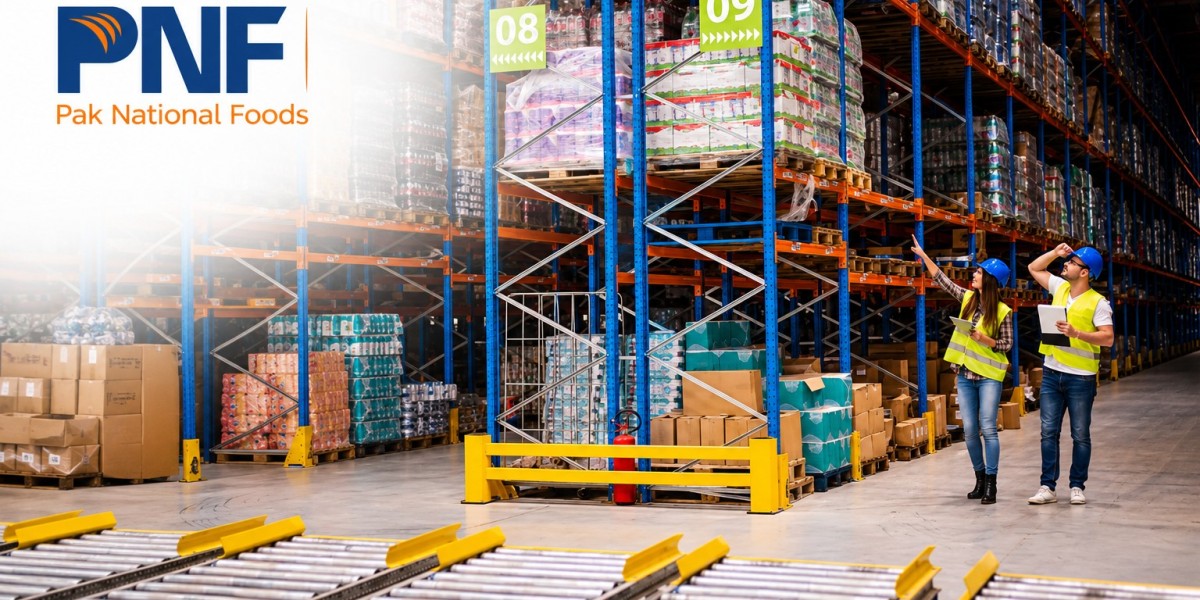
Warehouse storage is often reduced to a single idea, a building where products sit until they are needed. In practice, it involves several coordinated functions. Receiving processes verify that incoming shipments match purchase orders and arrive undamaged. Storage systems organize inventory by category, turnover rate, and handling requirements, so that high-demand items remain accessible while slower-moving stock does not create congestion. Outbound processes prepare orders for shipment with accurate picking, packing, and documentation. Each of these functions affects how reliably a business can fulfill orders and how well product quality is preserved between manufacturing and final sale.
Climate Control and Product Integrity
Temperature and humidity control are central to warehouse storage, even for products that are technically shelf-stable. Packaged foods stored in facilities without consistent climate control can experience texture changes, flavor degradation, or packaging damage over time, particularly during seasonal temperature swings. For frozen products, climate control is not optional. Consistent sub-zero storage throughout the receiving, holding, and outbound stages is necessary to maintain food safety standards and prevent quality loss from partial thawing and refreezing. A facility's ability to maintain stable conditions across its full storage footprint, not just in select zones, is one of the clearer indicators of a well-managed warehouse.
Inventory Rotation and Reducing Waste
Effective warehouse storage relies on systems that track expiration dates and manage stock rotation, typically on a first-in, first-out basis. Without this discipline, older inventory can sit behind newer shipments, increasing the risk that products reach or pass their best-before date before being sold. Accurate inventory tracking also gives businesses earlier visibility into slow-moving stock, allowing decisions about promotions, reallocation, or order adjustments before waste becomes unavoidable. For food brands and retailers working with tight margins, this kind of inventory discipline has a measurable effect on reducing shrinkage and protecting profitability.
How Storage Capacity Affects Distribution Speed
Storage and distribution are closely linked. A warehouse positioned with sufficient capacity and located near major transportation routes can move inventory to retail points faster than one operating at capacity limits or in a less accessible location. Businesses distributing across multiple provinces benefit from storage facilities that support coast-to-coast fulfillment, since centralized inventory reduces the delays associated with sourcing from multiple regional points. Order tracking throughout the fulfillment process also plays a role here, giving businesses visibility into shipment timing and helping them plan inventory replenishment more accurately.
Storage Considerations for Frozen Versus Shelf-Stable Products
Not all products require the same storage approach. Shelf-stable packaged goods generally need dry, climate-controlled space with attention to humidity and light exposure, while frozen products require dedicated cold storage with continuous temperature monitoring. Businesses that carry both categories need a storage provider capable of managing distinct handling requirements within the same operation, without cross-contamination risk or inconsistent temperature zones. This distinction matters when evaluating a warehousing partner, since a facility built primarily for dry goods may not offer the same reliability for frozen or perishable inventory.
Common Mistakes Businesses Make When Evaluating Storage Providers
A common oversight is focusing entirely on storage cost per pallet or square foot without assessing whether the facility maintains consistent climate control across its full capacity. Another mistake is failing to ask about inventory tracking systems, which can lead to poor visibility into stock levels and rotation practices. Some businesses also underestimate the importance of a warehouse's geographic location relative to their distribution needs, choosing a lower-cost facility that ultimately adds transportation time and delivery delays. Overlooking a provider's experience with specific product categories, such as frozen goods, is another gap that often surfaces only after quality issues arise.
Buying Considerations for Retailers and Food Brands
When selecting a warehouse storage provider, businesses should evaluate climate control capabilities across both dry and frozen storage, the rigor of inventory rotation and tracking systems, and the facility's location relative to key distribution routes. It is also worth confirming whether the provider offers order tracking and documentation support, particularly for businesses managing cross-border shipments. A provider experienced in handling the specific product categories a business carries, whether ambient snacks, frozen goods, or a mix of both, reduces the risk of quality issues down the line.
Local Relevance: Warehouse Storage Solutions in the Canadian Market
Canada's retail and food service sectors depend on warehousing infrastructure that can support both dense urban demand and wider regional distribution. In Ontario, and particularly across the Greater Toronto Area, businesses need storage partners capable of fast turnaround given the concentration of retail points in the region. PNF Distributor is headquartered in Mississauga, Ontario, placing its warehousing operations within reach of this high-density retail corridor. Established in 1999, the company has built its warehousing and distribution capabilities over more than two decades, supporting branded food products across more than a thousand retail points in Canada, with additional reach into the United States and United Arab Emirates. For businesses operating in or around the GTA, working with a storage provider based within the region can shorten delivery timelines and simplify coordination compared to relying on facilities located further afield.
Read More
Businesses evaluating storage options may also want to look into frozen products delivery and cold chain distribution, since the handling requirements for temperature-sensitive inventory often intersect directly with broader warehouse storage decisions.
Final Thoughts
Warehouse storage solutions are not a background detail in food distribution, they are a factor that directly shapes product quality, order accuracy, and how reliably a business can keep its shelves stocked. Evaluating a storage provider means looking past square footage and cost to assess climate control, inventory rotation practices, and how well the facility supports distribution timelines. PNF Distributor's warehousing operations, built on more than two decades of experience in food distribution, support branded product movement across a wide network of Canadian retail points. For businesses in Mississauga, throughout the Greater Toronto Area, and across other parts of Canada, choosing a storage partner positioned within the local market can make inventory planning more predictable and help maintain the product quality customers expect on the shelf.
Frequently Asked Questions
What should businesses look for in warehouse storage solutions?
Businesses should assess climate control consistency, inventory rotation practices, and the provider's location relative to distribution routes. Order tracking and documentation support are also important, particularly for companies managing cross-border or multi-province shipments.
Why does climate control matter for shelf-stable products?
Even shelf-stable goods can be affected by temperature swings and humidity, which may alter texture, flavor, or packaging condition over time. Consistent climate control helps preserve product quality between manufacturing and final sale.
How does inventory rotation reduce waste in warehouse storage?
First-in, first-out rotation ensures older stock is sold before newer shipments, reducing the risk of products expiring on the shelf. Accurate tracking also gives businesses earlier visibility into slow-moving inventory.
Do frozen products require different storage than shelf-stable goods?
Yes. Frozen products need dedicated cold storage with continuous temperature monitoring, while shelf-stable goods require dry, climate-controlled space with attention to humidity and light exposure.
Where is PNF Distributor's warehousing based, and how does that support Canadian businesses?
PNF Distributor is headquartered in Mississauga, Ontario, positioning its warehousing operations near the Greater Toronto Area's retail corridor. This location supports faster distribution timelines for businesses across Ontario and other parts of Canada, alongside the company's broader reach into the United States and United Arab Emirates.