
Let’s be completely transparent: corporate HR used to be notorious for clunky, fragmented systems. You had one tool for payroll, a completely different software for recruiting, and a literal spreadsheet for performance reviews.
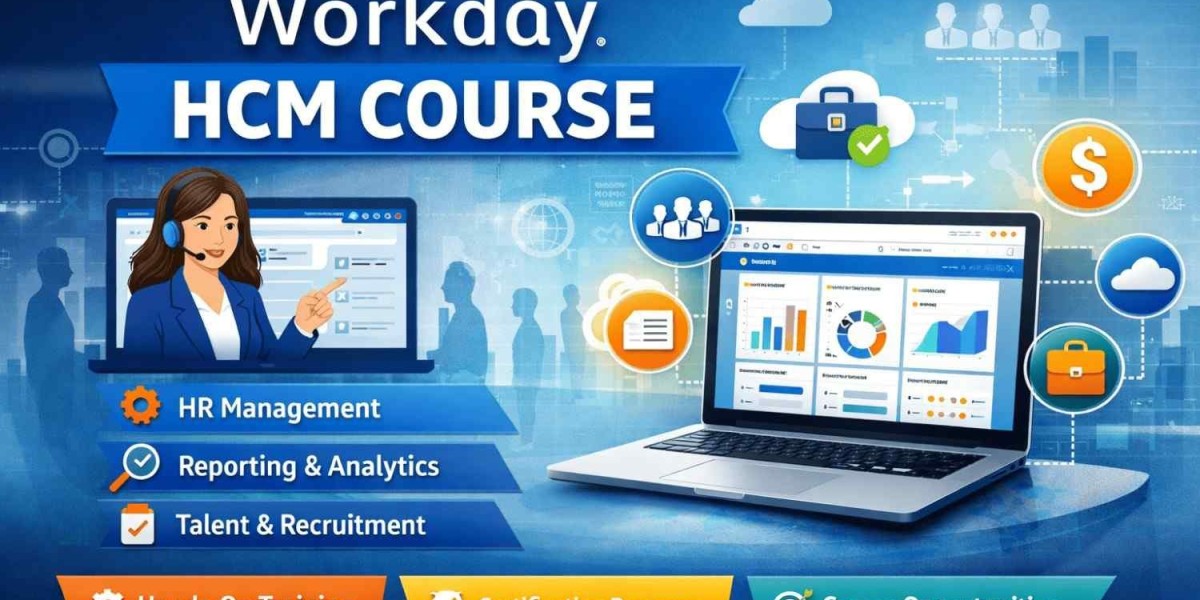
Then Workday Human Capital Management (HCM) entered the chat. By putting everything—talent, payroll, time tracking, and analytics—into one single cloud database, it completely flipped the script on how massive companies manage their people.
Today, if a company has thousands of employees, there is a massive chance they are running on, or migrating to, Workday. Because of this massive shift, Workday HCM online training has become one of the hottest skill sets on the market. It is one of those rare areas where both HR professionals and tech-heavy IT folks are fighting for the exact same training.
Here is a realistic look at why this specific training is in such high demand from both sides of the aisle.
The HR Side: From Paper Pushers to Strategic Data Drivers
For HR professionals, learning Workday isn't just about figuring out how to approve a vacation request. It is about completely changing their career trajectory.
Moving Beyond Basic Administration
Historically, HR spent a lot of time trapped in administrative loops—manually transferring data between systems or chasing down signatures. Workday automates those headaches. HR professionals who take the time to go through structured online training learn how to design advanced business processes. They go from being the people who enter data to the people who architect how employee data flows through the company.
The Power of "People Analytics"
Executives don't just want to know headcount anymore; they want predictive insights. They want to know attrition risks, diversity metrics, and recruiting bottlenecks. Workday's reporting and analytics engines are incredibly powerful, but they aren't exactly intuitive for a beginner. Online training teaches HR pros how to build custom reports and dashboards.
When an HR manager can look at a dashboard they built and tell the C-suite exactly why a specific department is losing talent, their value to the company skyrocketing.
The IT Side: Bridging the Gap Between Code and People
For IT professionals, cloud ERP (Enterprise Resource Planning) systems are where the money is right now. But Workday is a unique beast that requires a specific kind of tech skill.
Workday is an Entire Ecosystem
Workday doesn't use standard relational databases (like SQL) in the traditional sense; it operates on an object-oriented model. For an IT engineer, system administrator, or developer, you can't just wing it. Online training is essential to understand Workday Integrations, Studio, and Enterprise Interface Builders (EIBs). IT professionals need to know how to securely connect Workday to external systems like third-party benefits vendors, banks, and identity management tools.
The High-Paying "Business Analyst" Sweet Spot
There is a massive, incredibly lucrative sweet spot right now for IT professionals who understand business logic, and Workday sits right in the middle of it. By taking HCM training, an IT pro learns the actual language of HR. They learn what a "supervisory organization" means or how a compensation grade profile works. An IT specialist who speaks fluent HR is a rare commodity, and companies are willing to pay top dollar for them to act as internal consultants.
Why Online Training Specifically Is Exploding
It isn't just that people want to learn Workday—it is how they are choosing to learn it.
The Safe "Sandbox" Sandbox: Workday is notoriously protective of its software. You can't just download a free version to practice on your laptop. High-quality online training courses provide access to tenant environments (essentially a practice version of the live software). This lets professionals configure organizations, run payroll cycles, and test integrations without the terrifying risk of messing up a real company's live data.
Keeping Up with Weekly Updates: Unlike old-school software that updated once every few years, workday online training pushes continuous updates and major features twice a year. Online training platforms can pivot and update their modules instantly, ensuring learners aren't mastering outdated interfaces.
The Currency of Certification: Because Workday controls its ecosystem so tightly, formal training is often the only viable stepping stone to getting "Workday Certified"—a credential that almost instantly guarantees recruiters will start spamming your LinkedIn inbox.
The Bottom Line: At the end of the day, companies aren't moving away from the cloud; they are doubling down on it. Whether you approach it from the human side (HR) or the technical side (IT), mastering Workday HCM through structured online training removes you from the "easily replaceable" tier of employment and anchors you firmly into core, strategic enterprise operations.