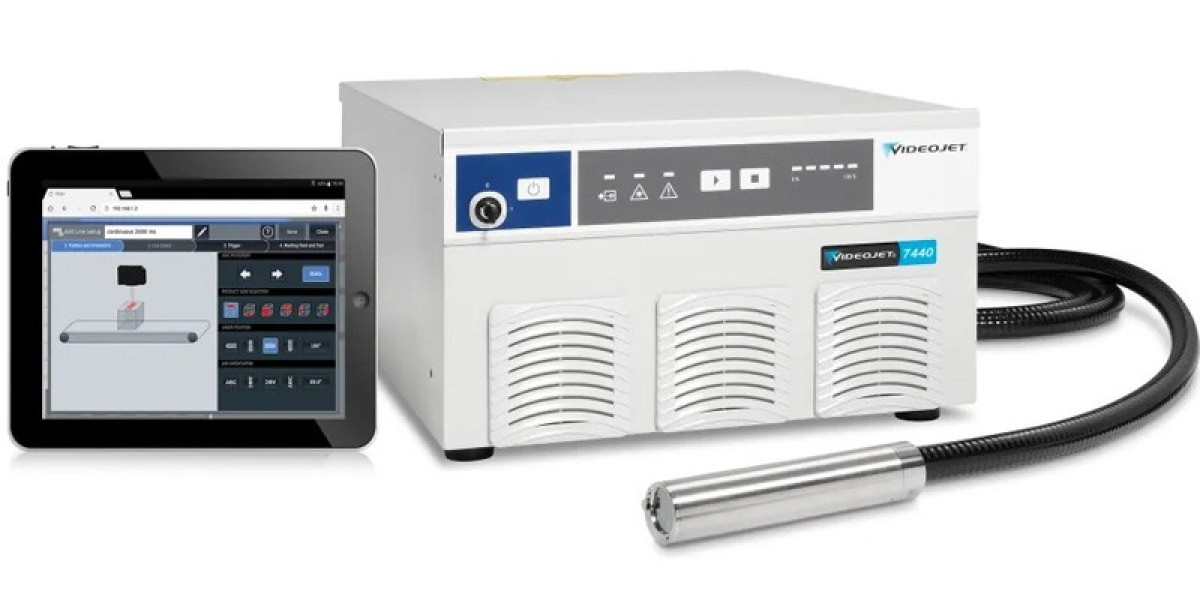

Industrial procurement teams often hesitate between laser printer and continuous inkjet printer when updating workshop marking equipment. Both types belong to mainstream marking equipment but carry totally different technical logic and applicable limits. Wrong equipment selection leads to extra long term operating expense and unqualified product marking effect. This detailed comparison covers all practical production dimensions to distinguish unique advantages and limitation of two coding devices for various manufacturing sectors.

Marking Permanence Gap Between Laser Printer And Continuous Inkjet Printer
Laser printer creates permanent identification through high energy beam physical ablation on product surface. Marked patterns and numbers integrate with base materials, resisting friction, high temperature and chemical solvent erosion without fading for decades. Continuous inkjet printer relies on ink adhesion to form surface codes, which may wear off after long term transport, repeated wiping or low grade solvent contact. Laser printed codes meet strict traceability standards of automobile spare parts and precision electronics, while inkjet coding fits disposable outer packaging that does not require long term storage identification.
Consumable And Maintenance Cost Contrast
Laser printer nearly eliminates recurring consumable cost except daily power consumption, with optical core components reaching over one hundred thousand working hours before replacement. Daily maintenance only includes simple lens dust removal, cutting manual labor input largely. Continuous inkjet printer needs regular replenishment of ink, solvent and cleaning liquid, forming fixed monthly recurring expenditure. Weekly nozzle flushing and pipeline viscosity calibration become necessary routine work, increasing stable labor cost for production workshops. Factories with long production cycles and high output volume gain obvious cost advantage by deploying laser printer marking equipment.
Applicable Material Scope Difference
Laser printer has material selection limits based on laser wavelength types. Fiber laser variants perform best on metal and hard plastic, CO2 laser suits paper, wood and soft plastic packaging. Laser beams cannot form clear marks on transparent thin film and flexible composite packaging. Continuous inkjet printer adapts to almost all industrial packaging materials including glass, metal, plastic film and paper cartons, showing stronger material compatibility. Factories producing mixed soft and hard packaging products tend to choose continuous inkjet printer to unify whole workshop marking process.
Production Line Speed Adaptability
Continuous inkjet printer owns absolute advantage on ultra fast packaging conveying lines. Steady ink droplet ejection maintains clear coding under six hundred meters per minute line speed without pause. Laser printer requires slight processing pause for high precision complex patterns, with maximum matching speed lower than CIJ devices. For beverage, dairy and snack mass production lines pursuing maximum hourly output, continuous inkjet printer serves as primary marking equipment. Laser printer fits low to medium speed assembly lines focusing on high precision permanent component coding.
Factory Customization Solution Matching Two Marking Equipment
Qualified marking equipment supplier provides separate customized development for laser printer and continuous inkjet printer. Laser devices support laser power adjustment and automatic positioning module addition for automated assembly lines. Continuous inkjet models can upgrade variable data printing and multi color ink switching functions. Combined mixed equipment orders receive unified packaging and delivery schedule to simplify factory equipment procurement management. Professional technical consultants analyze workshop production flow free of charge to recommend matched coding equipment combination plans for maximum marking efficiency.