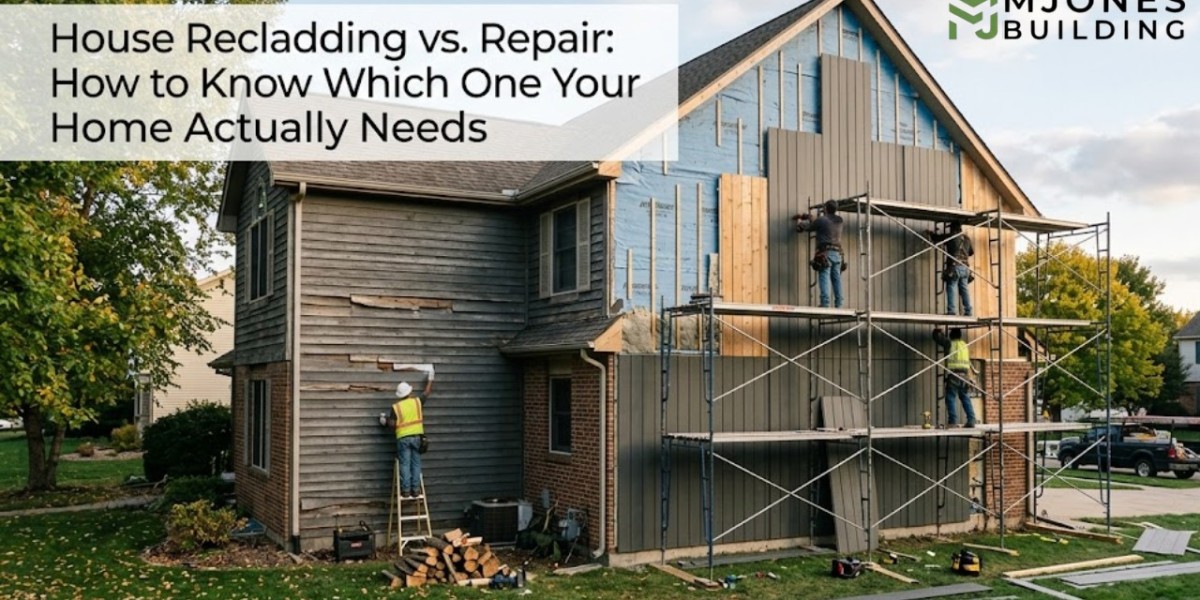

If your home's exterior is showing signs of wear, you might be wondering whether a quick fix will do the job or if it is time for a full reclad. The answer depends on a few key factors, and getting it right could save you thousands of dollars and a whole lot of stress down the track.
What Is the Difference Between House Recladding and Repair?
Before you can decide which route to take, it helps to understand what each one actually involves.
House recladding means removing the existing cladding on your home entirely and replacing it with new material. It is a significant building project, but when done right, it gives your home a fresh start, both structurally and aesthetically.
Cladding repair, on the other hand, involves fixing specific problem areas without replacing the whole system. This could mean patching damaged sections, resealing joints, or replacing isolated boards or panels.
Both are valid solutions. The key is knowing which one fits your situation.
When Repair Is Likely Enough
Not every cladding issue calls for a full replacement. In many cases, targeted repairs are not only sufficient but also the smarter financial choice.
Repair is usually the right call when the damage is isolated to a small area, such as one or two cladding panels that have been physically impacted or have started to separate. It also makes sense when the cladding system is relatively new, and the rest of the exterior is still in sound condition.
If your home has been well-maintained and you are just dealing with minor surface issues like fading, small cracks, or sealant that needs refreshing, repairs can extend the life of your cladding significantly.
A good rule of thumb: if less than 20 to 25 percent of your cladding shows signs of deterioration, repair is often the more practical path.
When Recladding Is the Better Investment
There are situations where patching things up simply delays the inevitable, and sometimes makes the problem worse.
Recladding becomes the right move when moisture damage has spread behind the cladding and is affecting the wall framing. This is a serious issue, particularly in New Zealand, where homes are exposed to significant rainfall and coastal conditions. According to the New Zealand Building Code, exterior cladding must protect the structure from moisture for the life of the building, which means hidden water damage is not something you can afford to ignore.
You should also consider a full reclad when the existing cladding material has reached the end of its useful life, when there have been repeated repairs to the same areas, or when the cladding was part of a broader weathertightness issue affecting the whole home.
Homes built between the late 1980s and early 2000s in New Zealand, often referred to as "leaky homes," are a common candidate for recladding. Many of these properties used monolithic cladding systems that, combined with design features of the era, allowed water to enter and become trapped behind the walls.
If you are unsure whether your home falls into this category, a building inspection from a qualified professional is a smart first step.
The Real Cost of Waiting
One of the biggest mistakes homeowners make is putting off a decision because they want to avoid the upfront cost. The problem is that moisture damage does not sit still. What starts as a soft spot in the wall framing can progress into rot, mould, and structural compromise, and the repair bill grows with every passing season.
A targeted repair done at the right time is far cheaper than a full structural remediation a few years down the track. And a well-timed reclad, while a bigger investment upfront, can dramatically increase the value of your home and give you genuine peace of mind.
How to Actually Know Which One You Need
The only reliable way to know whether you need repair or recladding is to have your home assessed by someone who knows what to look for. A surface inspection is not enough. A thorough evaluation looks at the condition of the cladding, the flashing details, the junctions around windows and doors, and if necessary, what is happening behind the cladding itself.
At MJones Building, we have worked on homes across Waiheke Island and the wider Auckland region, and we have seen firsthand how often what looks like a simple repair issue turns out to be a sign of something deeper. We have also seen cases where homeowners assumed they needed a full reclad but actually just needed well-targeted repair work.
The point is, it is not always obvious from the outside, and that is why getting the right eyes on the problem matters.
What to Think About When Choosing a Cladding Material for a Reclad
If you do go down the recladding path, choosing the right cladding material for your home's location and style is important. Some of the most commonly used options in New Zealand include:
Fiber cement is durable, low-maintenance, and handles moisture well, making it a popular choice for coastal and high-rainfall environments.
Weatherboard (either timber or composite) gives a classic New Zealand look and performs well when properly maintained and painted.
Metal cladding, such as corrugated or standing seam profiles, is growing in popularity for its longevity and modern aesthetic.
Brick veneer offers excellent durability and is a solid long-term investment, though it comes at a higher installation cost.
Each material has its own maintenance requirements, lifespan, and suitability depending on your home's exposure to wind, salt, and moisture. A good building professional will help you weigh up the options based on your specific situation.
FAQs
How long does a full house reclad take? It depends on the size of the home and the extent of any underlying damage discovered during the process. A straightforward reclad on a medium-sized house typically takes several weeks. If significant framing repairs are needed, the timeline will extend.
Do I need consent for house recladding? In most cases, yes. Recladding is considered building work under the New Zealand Building Act, and a building consent is typically required. Your builder should handle this process on your behalf. You can learn more about consent requirements through Building Performance New Zealand.
Can I stay in my home during recladding? Usually yes, though it depends on the scope of work. Your builder should give you a clear picture of what to expect before work begins.
How do I know if my home has a weathertightness issue? Common signs include musty smells inside the home, soft or spongy wall areas, visible mould on interior walls, and staining around windows or at the base of walls. If you notice any of these, it is worth getting a professional assessment sooner rather than later.
Will recladding increase my home's value? It often does, particularly if the existing cladding was a known issue. Buyers and their banks tend to be cautious about homes with cladding problems, so resolving the issue can open up your potential buyer pool and support a stronger sale price.
How do I find a trustworthy builder for recladding? Look for a Licensed Building Practitioner (LBP) with specific experience in cladding and weathertightness work. Ask for examples of previous projects and check that they will manage the consent process for you. You can read more about our team and the experience behind MJones Building here.
Conclusion
House recladding and repair are both legitimate solutions, and neither is the right answer in every situation. What matters most is making the decision based on an accurate picture of what is actually going on with your home, not just what you can see from the street.
If your home is showing signs of cladding failure or you are just not sure what you are dealing with, do not wait until the problem gets bigger. Getting a proper assessment now gives you the information you need to make a smart, confident decision.
If you are based on Waiheke Island or the greater Auckland region and want an honest, experienced opinion on what your home actually needs, contact us at MJones Building, and we will help you figure out the right path forward.