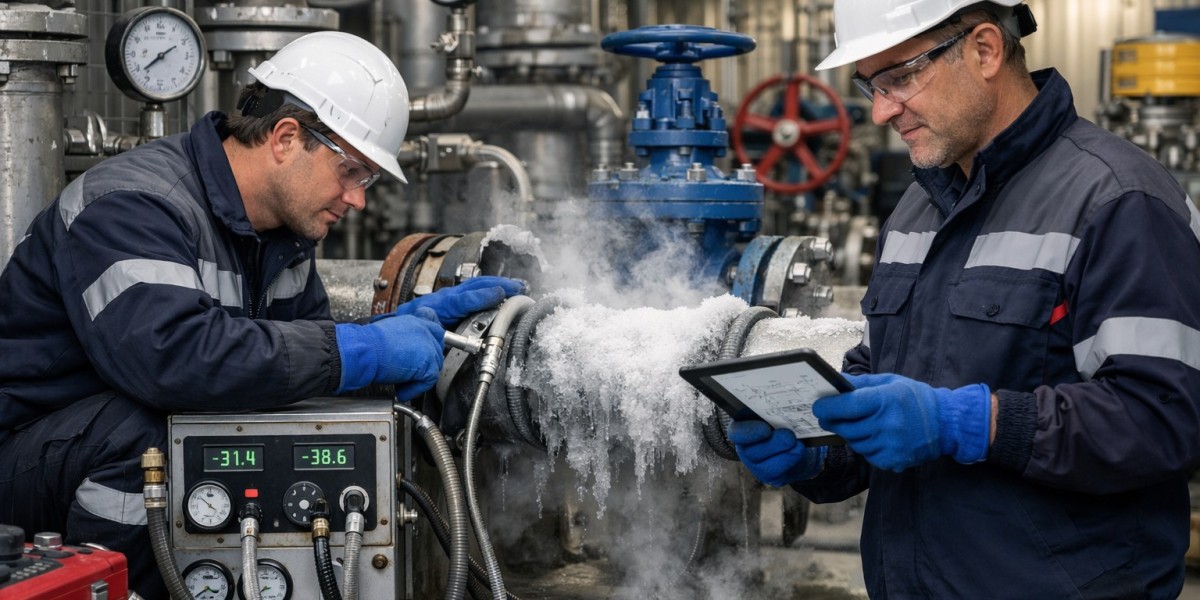

Maintenance work on pipelines often requires temporary isolation of a section of pipe. In many situations, the traditional method is to drain the entire system before repairs or modifications begin. However, this process can take time, waste resources, and interrupt operations. This is why many industries now consider Pipe freezing services in Sharjah when a temporary isolation method is needed without emptying the whole system.
Pipe freezing creates a temporary ice plug inside a pipe. This ice plug blocks the flow of liquid, allowing technicians to work on a specific section while the rest of the system remains operational. Understanding when this method is more suitable than draining a system can help facility managers and maintenance teams make informed decisions.
Understanding How Pipe Freezing Works
Pipe freezing is a controlled process that freezes the liquid inside a section of pipe. Special equipment lowers the temperature around the pipe until an ice plug forms. This plug acts as a temporary barrier and stops the movement of liquid through the system.
Once the maintenance work is completed, the freezing equipment is removed. The ice plug gradually melts, and the system returns to normal operation without permanent changes to the pipeline.
This method is commonly used in water systems, cooling systems, and other liquid-filled pipelines where temporary isolation is required.
When Draining a System Becomes Difficult
Draining a system may sound simple, but it can be challenging in many situations. Large industrial systems often contain significant amounts of liquid. Removing this liquid takes time and may require storage, treatment, or disposal.
In some facilities, draining can also create operational delays because equipment connected to the system may need to be shut down. Refilling the system after maintenance can add more time and effort.
When these challenges exist, pipe freezing can provide a practical alternative by isolating only the section that requires attention.
Situations Where Pipe Freezing Is a Better Choice
There are several situations where pipe freezing may be preferred over draining a system.
One common example is when a facility needs to replace a valve. Draining an entire network to change a single component may not be efficient. A temporary ice plug can isolate the area and allow the replacement work to proceed.
Another situation involves systems that must remain operational. Hospitals, manufacturing plants, and commercial buildings often rely on continuous water or cooling services. Pipe freezing can help reduce interruptions while maintenance is carried out.
It can also be useful when access to drain points is limited or when draining would require extensive preparation work.
Reducing Downtime During Maintenance
Downtime is a major concern in many facilities. Every hour of interruption can affect operations, productivity, and maintenance schedules.
Pipe freezing helps reduce downtime because technicians do not need to wait for the entire system to drain and refill. Work can often begin sooner, and normal operations can resume more quickly after maintenance is completed.
This efficiency makes the method valuable in locations where continuous service is important.
Preventing Water Loss
Draining a system can result in the loss of large volumes of water or other liquids. In large facilities, this can become a significant concern.
By isolating only a specific section of pipe, pipe freezing minimizes the amount of liquid that must be removed. This approach helps conserve resources and reduces the effort needed to refill the system after repairs.
For facilities focused on resource management, this can be an important advantage.
Suitable Applications for Pipe Freezing
Pipe freezing is commonly used in a variety of applications.
Water distribution systems often use this method during valve replacements and pipe modifications. Cooling systems may also benefit from temporary isolation without shutting down the entire network.
Commercial buildings, industrial facilities, and utility systems frequently use pipe freezing when maintenance work must be completed quickly and efficiently.
The method is particularly useful when the pipe contains a liquid that can freeze and form a stable ice plug.
Important Factors to Consider
Although pipe freezing offers many benefits, it is not suitable for every situation. The condition of the pipe, the type of liquid inside, and the operating pressure must all be evaluated before work begins.
Proper planning is important to ensure the ice plug remains stable throughout the maintenance process. Qualified technicians typically assess the system and determine whether pipe freezing is a suitable option.
Understanding these factors helps ensure safe and effective results.
Comparing Pipe Freezing and System Draining
Both methods have their place in maintenance operations. Draining may be appropriate when extensive repairs are required across a large section of the system. However, when work is limited to a specific area, pipe freezing often provides a more targeted solution.
It can reduce downtime, minimize water loss, and avoid the effort associated with emptying and refilling an entire network. These advantages explain why many facilities continue to explore Pipe freezing services in Sharjah when temporary pipeline isolation is required.