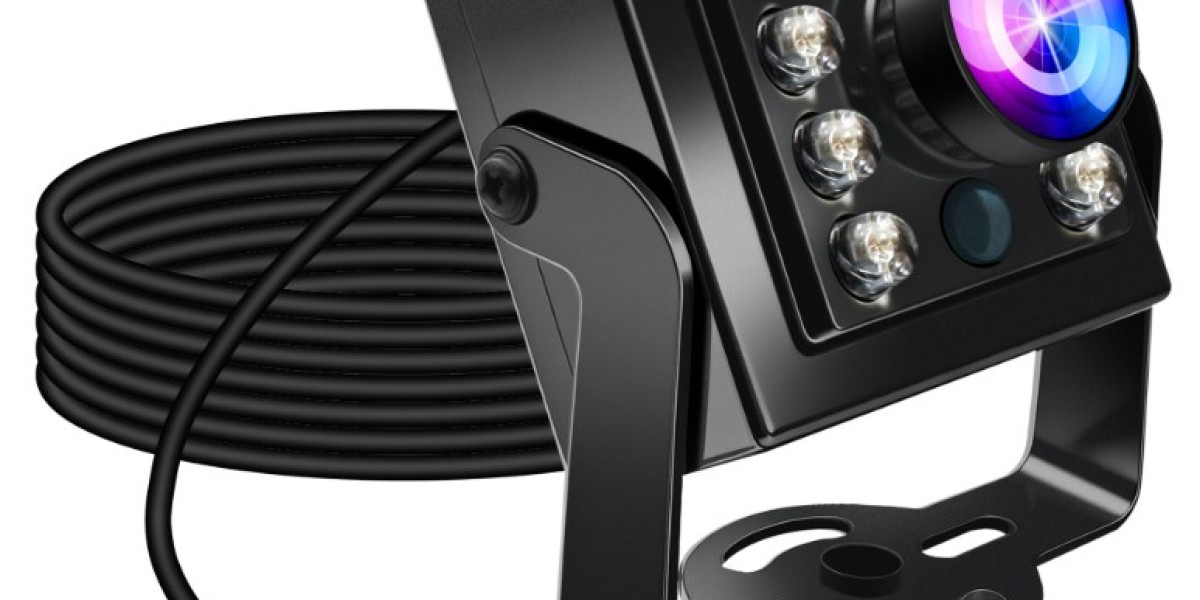

As industries accelerate their adoption of automation, artificial intelligence, and smart monitoring technologies, imaging devices have become a critical component in countless systems. From industrial equipment monitoring and robotics to security solutions and embedded electronics, camera modules are now expected to deliver reliable image quality while remaining compact, cost-effective, and easy to integrate.
Among the many available imaging options, the ELP 2MP Wide Angle USB Camera stands out as a practical solution for developers and system integrators seeking a balance between performance, flexibility, and deployment simplicity.
Rather than focusing solely on resolution, modern vision applications increasingly prioritize factors such as field of view, system compatibility, integration efficiency, and long-term stability. This is where wide-angle USB camera modules continue to provide significant value.
Why Sensor Selection Matters
The performance of any camera module starts with its image sensor.
The ELP 2MP Wide Angle USB Camera incorporates image sensor technology from OmniVision, a well-known manufacturer in the imaging semiconductor industry. High-quality sensor integration contributes to several important performance characteristics, including:
- Stable image output
- Consistent color accuracy
- Reduced image noise
- Reliable operation under changing lighting conditions
For developers building products that require dependable image capture over long operating periods, sensor quality often has a greater impact on system performance than simply increasing resolution.
The Advantages of a Wide-Angle Viewing Perspective
One of the most important features of this camera module is its wide-angle lens design.
In many embedded vision applications, maximizing scene coverage is more valuable than increasing pixel count. A wider field of view allows a single camera to monitor larger areas, reducing the need for additional imaging hardware.
This approach offers several practical benefits:
Improved Coverage
Wide-angle optics enable broader visual monitoring, making them useful for:
- Indoor surveillance systems
- Smart home devices
- Warehouse monitoring
- Industrial workstations
Reduced System Complexity
By covering more area with a single camera, designers can simplify system architecture and reduce installation costs.
Enhanced Environmental Awareness
For robotics and autonomous devices, a wider viewing angle helps improve spatial perception and navigation capabilities.
Simplified Integration Through USB Connectivity
One reason USB cameras remain popular across multiple industries is their ease of deployment.
The ELP camera utilizes a standard USB interface, allowing rapid integration with a wide range of platforms.
Typical advantages include:
- Plug-and-play operation
- Broad operating system compatibility
- Faster development cycles
- Lower integration costs
Developers working with Windows, Linux, Android, and various embedded computing platforms often prefer USB cameras because they eliminate many of the challenges associated with proprietary interfaces.
For prototyping and proof-of-concept development, USB connectivity significantly shortens project timelines.
Compact Design for Space-Constrained Applications
Modern electronic products are becoming smaller and more compact, creating new challenges for hardware designers.
The compact form factor of the ELP 2MP Wide Angle USB Camera allows it to be integrated into applications where installation space is limited.
Common examples include:
- Embedded industrial controllers
- Portable inspection equipment
- Smart vending machines
- Access control terminals
- Medical diagnostic devices
- Educational development kits
Its lightweight construction also makes it suitable for mobile and battery-powered systems.
Is 2MP Resolution Still Relevant?
With the growing popularity of 4K and ultra-high-resolution cameras, some may question whether a 2MP camera remains competitive.
In reality, many industrial and embedded applications do not require extremely high resolutions.
A 2MP imaging system often provides sufficient detail for:
- Visual monitoring
- Object detection
- Process observation
- Video communication
- Basic machine vision tasks
Additionally, lower image resolution offers several operational advantages:
- Reduced processing requirements
- Lower bandwidth consumption
- Faster image transmission
- Reduced storage demands
For many practical applications, these benefits outweigh the need for additional pixels.
Common Application Areas
The versatility of the ELP 2MP Wide Angle USB Camera allows it to serve a broad range of industries and technical projects.
Security and Surveillance
Wide-angle coverage makes the camera suitable for monitoring entrances, offices, classrooms, and retail environments.
Industrial Equipment Monitoring
Manufacturers increasingly use USB camera modules to observe machinery, production lines, and automated systems in real time.
Robotics and Intelligent Systems
Robotics developers frequently integrate compact USB cameras into navigation, object recognition, and machine learning projects.
Video Communication Equipment
The camera can be incorporated into communication terminals, conferencing systems, and custom video devices.
Education and Research
Universities, laboratories, and engineering teams often use USB camera modules for experimentation, prototyping, and technology validation projects.
The Growing Importance of Wide-Angle Imaging
As vision systems become more intelligent, cameras are expected to capture more contextual information from their surroundings.
Wide-angle imaging supports this trend by enabling:
- Larger monitoring zones
- Improved situational awareness
- Better environmental mapping
- Enhanced AI vision capabilities
For developers building next-generation smart devices, the ability to gather more visual information from a single camera module can significantly improve overall system performance.
ELP's Approach to Practical Imaging Solutions
Over the years, ELP has established itself as a supplier focused on practical and reliable USB camera technologies.
Its camera modules are widely used in industrial automation, embedded systems, smart devices, and research projects because they emphasize several key engineering priorities:
- Stable imaging performance
- Easy deployment
- Broad compatibility
- Compact hardware design
- Long-term operational reliability
Rather than pursuing specifications that offer little practical value, ELP focuses on delivering solutions that meet real-world integration and performance requirements.
Final Thoughts
As embedded vision technology continues to expand into new industries, the demand for compact, reliable, and easy-to-integrate imaging solutions remains strong.
The ELP 2MP Wide Angle USB Camera demonstrates how a well-designed camera module can deliver meaningful performance without unnecessary complexity. Its combination of wide-angle coverage, dependable sensor technology, USB connectivity, and compact construction makes it suitable for a diverse range of applications—from industrial monitoring and robotics to security systems and development projects.
For engineers, system integrators, and product designers seeking a flexible imaging solution, wide-angle USB camera modules continue to offer an effective balance between performance, simplicity, and deployment efficiency.