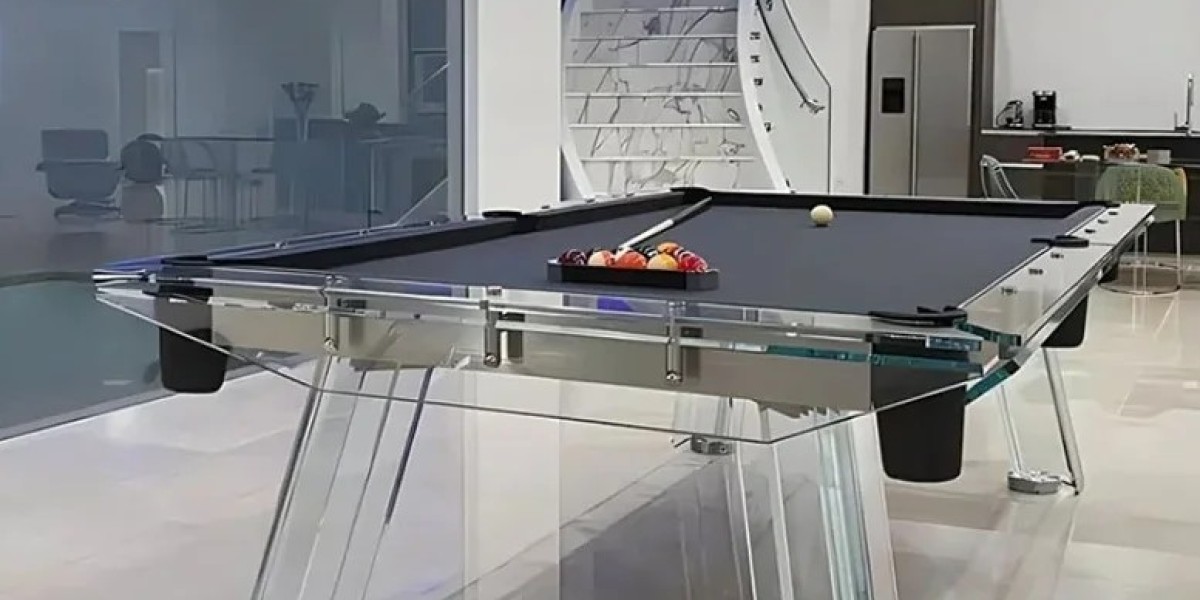

For generations, slate pool tables have dominated both professional billiards venues and luxury residential game rooms. Their reputation for stability and consistent ball roll has made them the benchmark for serious play. However, as modern architecture increasingly embraces minimalism, transparency, and open spatial design, traditional slate tables can sometimes feel visually heavy and out of place.
This has led to growing interest in a new category of premium gaming furniture: the glass pool table.
Far from being a decorative novelty, today's high-quality glass pool tables combine advanced materials engineering, structural design, and precision manufacturing to deliver a playing experience that rivals traditional tables while offering a completely different visual impact. Manufacturers such as WANYAJU have helped demonstrate how glass can evolve from a purely architectural material into a fully functional gaming surface suitable for luxury interiors.
Rethinking the Durability of Glass Pool Tables
One of the first questions people ask is simple: can a glass pool table really withstand regular gameplay?
The concern is understandable. Many associate glass with fragility, but the materials used in premium billiard tables are vastly different from standard architectural glass.
Modern glass pool tables typically utilize ultra-clear tempered low-iron glass that undergoes specialized thermal strengthening processes. These treatments significantly increase impact resistance and structural load capacity compared with ordinary glass products.
The result is a surface capable of handling:
- Repeated billiard ball impacts
- Daily recreational use
- Long-term structural loading
- Environmental fluctuations
In practice, the engineering challenge is not simply preventing breakage. It is ensuring that the playing surface remains stable, level, and responsive over many years of use.
How Glass Achieves Professional-Level Playability
A billiard table's performance depends on much more than visual appearance.
Professional players evaluate:
- Ball roll consistency
- Cushion rebound accuracy
- Spin response
- Surface friction characteristics
To address these requirements, many high-end glass pool tables incorporate a specialized transparent polymer playing layer bonded directly to the glass surface.
This engineered layer serves several functions:
- Replicates the rolling resistance of traditional cloth
- Provides predictable cue ball control
- Protects the glass from surface wear
- Enhances shot consistency
As a result, advanced glass pool tables can deliver surprisingly familiar gameplay while maintaining their distinctive transparent appearance.
The Architectural Benefits of a Glass Pool Table
While performance is critical, the biggest difference between slate and glass often comes down to visual impact.
Creating a Sense of Space
Traditional billiard tables are visually dominant pieces of furniture. Their large wooden frames and solid construction naturally draw attention and can make a room feel smaller.
A glass pool table creates a very different effect.
Because light passes through the structure, sightlines remain open throughout the room. This transparency helps preserve the perception of space and allows surrounding design elements—such as flooring, lighting, and architectural features—to remain visible.
For luxury apartments, penthouses, and modern villas, this can dramatically improve the overall interior atmosphere.
Integrating Lighting Into the Design
Another advantage of transparent construction is the ability to incorporate custom lighting solutions.
Many designers integrate:
- LED edge lighting
- Color-changing ambient systems
- Architectural floor illumination
- Decorative lighting effects
The interaction between light and glass creates visual depth that conventional billiard tables cannot achieve. In many installations, the table becomes both a recreational feature and a statement piece of functional art.
Structural Engineering Behind the Frame
No matter how advanced the playing surface may be, overall performance still depends on frame stability.
A premium glass pool table requires a supporting structure capable of maintaining absolute rigidity under load.
Manufacturers such as WANYAJU often utilize:
- Aircraft-grade aluminum frameworks
- Precision-machined steel structures
- Multi-point leveling systems
- CNC-manufactured support components
These systems help prevent even minor flexing that could affect ball trajectory.
Precise leveling remains one of the most important aspects of installation, and modern adjustment mechanisms allow technicians to fine-tune the table to extremely tight tolerances.
Cushion Technology Still Matters
Many people focus exclusively on the glass surface, but the cushions play an equally important role in gameplay quality.
Professional-grade tables commonly use K-66 profile rubber cushions, which are widely recognized for delivering consistent rebound characteristics.
When properly engineered, these cushions provide:
- Accurate bank shots
- Predictable energy transfer
- Consistent rebound angles
- Tournament-style playing characteristics
Combined with a stable playing surface, they help ensure that aesthetics do not come at the expense of performance.
Maintenance Advantages Over Traditional Tables
One often overlooked benefit of glass pool tables is ease of maintenance.
Traditional felt-covered tables can be vulnerable to:
- Liquid spills
- Stains
- Dust accumulation
- Fabric wear
- Humidity-related issues
Glass surfaces offer several practical advantages:
Easier Cleaning
Most spills can simply be wiped away without damaging the playing surface.
Moisture Resistance
Glass and metal structures are less affected by humidity fluctuations than wood-based systems.
Reduced Long-Term Maintenance
Without traditional cloth surfaces, owners can avoid many of the maintenance tasks associated with re-felting and fabric repair.
These characteristics make glass pool tables particularly attractive for:
- Coastal properties
- Luxury yachts
- Open-concept entertainment areas
- Commercial hospitality spaces
More Than a Game Table
The appeal of a glass pool table extends beyond billiards itself.
For many buyers, the table functions as:
- A centerpiece of interior design
- A conversation piece
- A luxury entertainment feature
- An example of modern engineering craftsmanship
Rather than hiding within a dedicated game room, glass pool tables are increasingly becoming integrated into living spaces, executive lounges, and high-end hospitality environments.
Final Thoughts
The evolution of the glass pool table demonstrates how traditional recreational equipment can be reimagined through advanced materials and contemporary design thinking.
What was once considered impossible—a transparent billiard table capable of delivering professional-level performance—is now a reality thanks to developments in tempered glass technology, structural engineering, and precision manufacturing.
Companies such as WANYAJU continue to push this category forward, proving that luxury furniture and functional gaming equipment no longer need to exist as separate concepts. For homeowners, designers, and architects seeking something beyond the conventional, the modern glass pool table offers a compelling blend of performance, innovation, and visual sophistication.
https://www.wanyajubilliardtable.com/the-engineering-behind-high-quality-glass-pool-tables.html