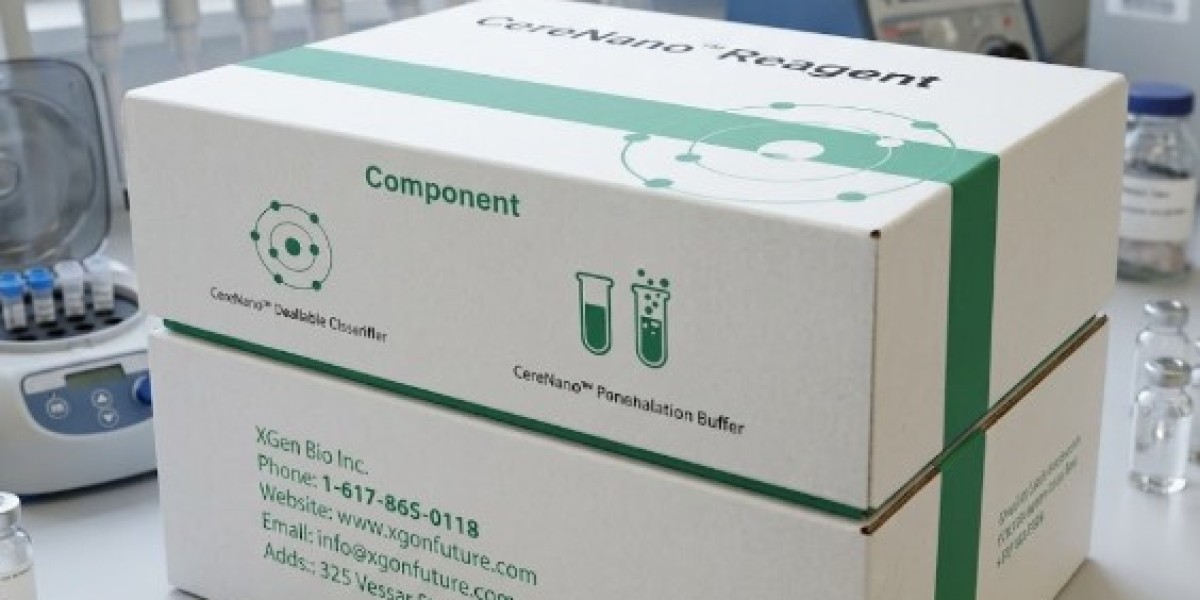

The remarkable growth of mRNA vaccines, gene therapies, RNA interference technologies, and genome-editing platforms has elevated lipid nanoparticle (LNP) technology from a niche research area to one of the most important delivery systems in modern biotechnology. While advances in nucleic acid science continue to generate new therapeutic opportunities, the challenge of safely and efficiently delivering these fragile biological molecules remains a critical hurdle.
This is where lipid nanoparticle formulation kits have become indispensable. By providing researchers with optimized lipid components, validated formulation protocols, and reproducible preparation workflows, these kits help simplify nanoparticle development while improving consistency across research and translational applications.
As the demand for scalable nucleic acid delivery solutions continues to rise, companies such as XGen Bio are helping bridge the gap between laboratory innovation and clinical development through advanced lipid nanoparticle formulation technologies.
The Growing Importance of Lipid Nanoparticles in Drug Delivery
Nucleic acids such as mRNA, siRNA, and plasmid DNA offer enormous therapeutic potential. However, these molecules are inherently unstable and highly susceptible to degradation by enzymes present throughout biological environments. Without adequate protection, therapeutic payloads often fail to reach their intended targets.
Lipid nanoparticles solve this problem by encapsulating genetic material within carefully engineered lipid structures. These nanoscale carriers shield sensitive payloads from degradation while facilitating cellular uptake and intracellular delivery.
Over the past decade, LNP technology has emerged as the preferred delivery platform for numerous applications, including mRNA vaccine development, gene therapy research, CRISPR-based genome editing, cancer immunotherapy, and RNA interference therapeutics. As a result, the ability to formulate reliable and reproducible nanoparticles has become a key requirement for both academic researchers and biopharmaceutical developers.
Why Standardized Formulation Kits Matter
Developing lipid nanoparticles from scratch can be a highly complex process. Researchers must optimize multiple variables simultaneously, including lipid composition, particle size, encapsulation efficiency, mixing conditions, and buffer chemistry. Even minor changes can significantly influence biological performance.
Without standardized formulation systems, laboratories often encounter inconsistent particle formation, poor reproducibility, and lengthy optimization cycles. These challenges can slow research progress and increase development costs.
Modern lipid nanoparticle formulation kits address these issues by providing pre-validated lipid combinations and optimized preparation protocols. Rather than spending months troubleshooting formulation variables, scientists can focus more directly on evaluating therapeutic performance and advancing promising candidates toward clinical development.
This standardization has become especially valuable in collaborative research environments where reproducibility across different laboratories is essential.
Key Factors That Influence LNP Performance
The success of any lipid nanoparticle formulation depends on several interconnected physicochemical properties. Among these, particle size remains one of the most critical parameters.
Nanoparticles typically ranging from 50 to 150 nanometers often demonstrate favorable cellular uptake and biodistribution characteristics. Achieving a narrow particle size distribution helps improve consistency and therapeutic predictability.
Encapsulation efficiency is another crucial consideration. Efficient encapsulation ensures that a larger percentage of the therapeutic payload is successfully incorporated into nanoparticles, reducing material waste and improving overall manufacturing economics.
Surface charge, commonly measured as zeta potential, also plays an important role in determining nanoparticle stability, circulation behavior, and interactions with biological membranes. Meanwhile, precise lipid molar ratios directly affect structural integrity, payload release characteristics, and transfection efficiency.
Because these variables are highly interdependent, formulation kits designed around validated lipid compositions can significantly improve development outcomes.
Supporting mRNA Vaccine Development
The global success of mRNA vaccines highlighted the critical role of lipid nanoparticles in modern medicine. While the mRNA molecule itself carries the therapeutic instructions, it relies entirely on an effective delivery vehicle to reach target cells and initiate protein expression.
Lipid nanoparticle formulation kits have therefore become essential tools for vaccine researchers seeking to optimize delivery efficiency while maintaining formulation stability. By providing carefully balanced lipid systems, these kits help ensure reliable encapsulation and reproducible performance during preclinical and clinical development.
As vaccine research expands beyond infectious diseases into oncology and personalized medicine, demand for advanced mRNA delivery formulation kits continues to grow.
Accelerating Progress in Gene Therapy and Gene Editing
Beyond vaccines, lipid nanoparticles are increasingly being used in gene therapy and genome editing applications. Technologies such as CRISPR require highly efficient intracellular delivery mechanisms capable of transporting gene-editing components into specific cells without causing excessive toxicity.
Researchers working in these fields often require precise control over formulation parameters to achieve targeted delivery and sustained biological activity. Standardized lipid nanoparticle preparation systems help simplify this process while improving experimental consistency.
By reducing formulation variability, scientists can more accurately evaluate therapeutic outcomes and accelerate the transition from proof-of-concept studies to translational research programs.
The Need for Scalable Formulation Solutions
As promising therapies move from research laboratories into clinical development, scalability becomes a major concern. Formulations that perform well in small experimental batches must eventually be reproduced consistently at larger manufacturing volumes.
Scalable lipid nanoparticle formulation kits provide a foundation for this transition. Standardized lipid compositions and optimized workflows help maintain nanoparticle quality across different development stages, reducing risks associated with process transfer and scale-up.
This capability is increasingly important as more biotechnology companies seek efficient pathways from discovery to commercialization.
How XGen Bio Supports Modern Nanoparticle Development
As the demand for advanced nucleic acid delivery systems continues to expand, XGen Bio remains focused on developing formulation technologies that improve reproducibility, stability, and translational success.
The company's approach emphasizes formulation consistency, application-specific optimization, and scalable development strategies that support both research and manufacturing environments. Through continuous innovation in lipid chemistry and nanoparticle engineering, XGen Bio helps researchers overcome common formulation challenges while accelerating therapeutic development timelines.
Whether supporting mRNA vaccines, gene therapies, RNA-based medicines, or emerging precision medicine applications, the company’s formulation solutions are designed to meet the evolving needs of modern biotechnology.
Looking Ahead: The Future of Lipid Nanoparticle Technology
The future of lipid nanoparticle science extends far beyond current applications. Emerging innovations are expected to introduce increasingly sophisticated delivery systems capable of targeting specific tissues, improving therapeutic precision, and expanding treatment possibilities.
Artificial intelligence is already being explored as a tool for formulation optimization, helping researchers identify ideal lipid combinations more rapidly than traditional experimental methods. At the same time, automated microfluidic manufacturing platforms are improving formulation consistency and enabling higher-throughput development workflows.
Additional advances in thermostable formulations, personalized medicine, and tissue-specific lipid design are likely to further strengthen the role of LNP technology within the pharmaceutical industry.
Conclusion
Lipid nanoparticle formulation kits have become a foundational technology for modern biotechnology. By simplifying nanoparticle preparation, improving reproducibility, and supporting scalable development, these systems enable researchers to focus on therapeutic innovation rather than formulation complexity.
As mRNA therapeutics, gene editing technologies, and RNA-based medicines continue to reshape healthcare, the importance of reliable and standardized LNP formulation solutions will only increase.
Through its commitment to formulation science, process consistency, and application-focused innovation, XGen Bio continues to contribute to the advancement of next-generation nucleic acid delivery technologies, helping researchers transform scientific discoveries into real-world therapeutic solutions.
https://www.xgenbiologics.com/a-deep-dive-into-lipid-nanoparticle-formulation-technologies.html