
Battery cover sealing is one of the most sensitive and failure-critical stages in lead-acid and VRLA battery manufacturing. Although often underestimated, this process directly determines whether a battery maintains long-term hermetic integrity or develops delayed electrolyte leakage months after deployment.
Traditional manual epoxy application methods introduce unavoidable variability—mixing ratios fluctuate, dispensing volume is inconsistent, and positioning accuracy depends heavily on operator skill. In high-volume production of batteries such as 12V100Ah models, even a small deviation in epoxy dosage (±5%) can compromise sealing performance and significantly increase warranty risks.
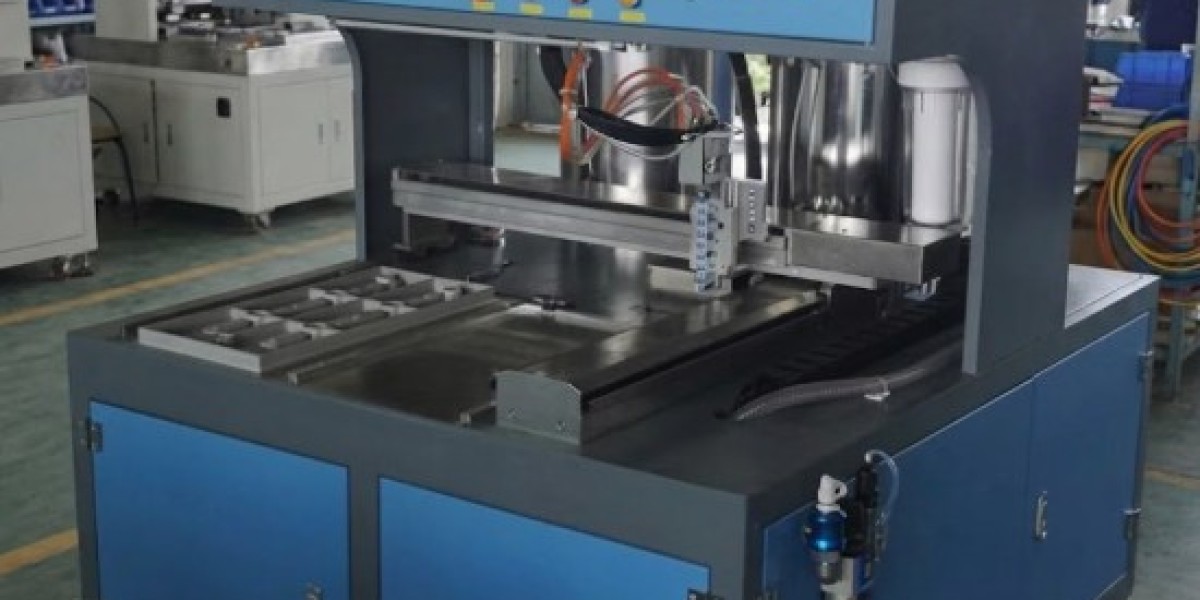
This is why modern production lines are rapidly shifting toward fully automated solutions such as the Automatic Cover Epoxy Dispenser Machine developed by Nexa Battery Technology.
1. Why Battery Cover Epoxy Sealing Requires Absolute Precision
Unlike general adhesive applications, battery cover sealing operates under strict chemical and mechanical constraints:
- Exposure to sulfuric acid vapor inside the battery
- Long-term thermal cycling under load conditions
- Constant vibration in automotive and industrial environments
- Requirement for absolute leakage prevention over multi-year lifecycles
Any inconsistency in epoxy application can lead to:
- Micro-channel leakage paths
- Weak bonding at cover joints
- Terminal contamination
- Premature structural fatigue
For this reason, epoxy dispensing must transition from a manual craft into a controlled engineering process.
2. Core System Architecture of Automatic Epoxy Dispensing
The Automatic Cover Epoxy Dispenser Machine integrates a fully controlled metering and mixing system designed for industrial-grade repeatability.
2.1 Dual-Component Precision Metering System
At the heart of the system is a servo-driven gear pump dosing architecture, which replaces traditional pneumatic or gravity-fed systems.
Key advantages include:
- Stable ratio control across viscosity fluctuations
- Adjustable mixing ratios from 100:100 to 100:10
- Dispensing accuracy maintained within ±3%
- Continuous flow stability during long production cycles
This ensures epoxy consistency regardless of temperature or material batch variation.
2.2 Static Mixing Technology for Material Integrity
Unlike dynamic mixers that introduce shear stress and air bubbles, the system uses a static mixing structure, which:
- Preserves epoxy chemical structure
- Prevents air entrapment
- Maintains adhesive strength
- Improves long-term sealing reliability
This design is particularly important for high-performance battery-grade epoxy formulations.
2.3 Vacuum-Assisted Material Supply System
To ensure uninterrupted production, the machine integrates:
- Vacuum pressure feeding
- Temperature-controlled SUS304 storage tanks
- Anti-degassing stabilization system
This prevents epoxy stratification and maintains uniform viscosity during extended operations.
A Y-type filtration valve further blocks particulate contamination, reducing pump wear and minimizing downtime risks.
3. Full Automation Workflow: From Loading to Final Unloading
The major advantage of Nexa Battery Technology’s system is not just dispensing accuracy—but full-process automation.
3.1 Automated Positioning and Loading
Battery covers are automatically transferred into a precision-controlled working zone with:
- X/Y/Z axis positioning accuracy up to ±0.02mm
- Stable fixture alignment for consistent sealing paths
- Reduced manual handling error
This ensures epoxy is applied exactly at the cover-container interface.
3.2 Intelligent Dispensing Control Modes
Through an industrial HMI interface, operators can select multiple dispensing strategies:
- Fixed-point sealing
- Linear bead application
- Variable volume dispensing
- Multi-segment path programming
This flexibility allows adaptation to different battery designs without hardware modification.
3.3 Real-Time Process Monitoring and Protection
The PLC control system continuously monitors:
- Air pressure stability
- Epoxy flow rate
- Pump load conditions
- Material supply status
If abnormal conditions occur, the system automatically:
- Stops dispensing
- Triggers alarms
- Prevents incomplete sealing cycles
This eliminates defective units caused by partial or inconsistent epoxy application.
3.4 Automatic Cleaning and Idle Protection System
After each cycle, the system performs:
- Automatic nozzle cleaning
- Residual epoxy purging
- Anti-curing intermittent dispensing during idle time
This prevents clogging and ensures stable performance across continuous production shifts.
4. Why Automation Is Now Essential in Battery Manufacturing
The industry is rapidly moving toward zero-defect manufacturing models driven by automotive and industrial standards such as ISO 9001 and IATF 16949.
Manual epoxy dispensing fails to meet modern requirements in three key areas:
- Lack of repeatability
- Absence of traceable production data
- High dependency on operator skill
In contrast, automated systems generate full production records including:
- Dispensing volume per unit
- Cycle time tracking
- Material consumption logs
- Alarm and maintenance history
This creates a complete digital audit trail for quality assurance and compliance.
5. Structural Design and Industrial Durability
The mechanical structure of the system is engineered for long-term industrial operation:
- Heavy-duty aluminum profile frame with electrophoresis coating
- SUS304 stainless steel epoxy contact components
- Corrosion-resistant material path design
- Industrial-grade stability for continuous shifts
These design choices ensure reliability even in chemically aggressive environments.
6. Nexa Battery Technology Engineering Approach
Nexa Battery Technology, founded in 2025 and based in Nanjing, Jiangsu Province, specializes in automated lead-acid battery production equipment.
The Automatic Cover Epoxy Dispenser Machine reflects the company’s engineering philosophy:
- Precision-driven automation
- Production consistency over operator dependency
- Modular system scalability
- Integration-ready industrial architecture
The system also supports multiple product recipes, allowing fast changeover between different battery models without mechanical recalibration—an essential advantage in diversified production environments.
7. Conclusion: From Manual Process to Data-Driven Manufacturing
Battery cover epoxy sealing is no longer a manual assembly step—it is a precision-controlled manufacturing process that directly impacts product reliability and lifecycle performance.
The Automatic Cover Epoxy Dispenser Machine transforms this critical stage into a fully automated, data-driven operation with:
- High-accuracy mixing and dispensing
- Real-time monitoring and fault protection
- Full production traceability
- Stable long-term operation
For manufacturers aiming to improve consistency, reduce defects, and achieve scalable production efficiency, automation is no longer optional—it is the new industry baseline.
With advanced engineering solutions from Nexa Battery Technology, battery production lines can achieve a higher level of reliability, precision, and operational stability, ensuring every sealed battery meets long-term performance expectations.