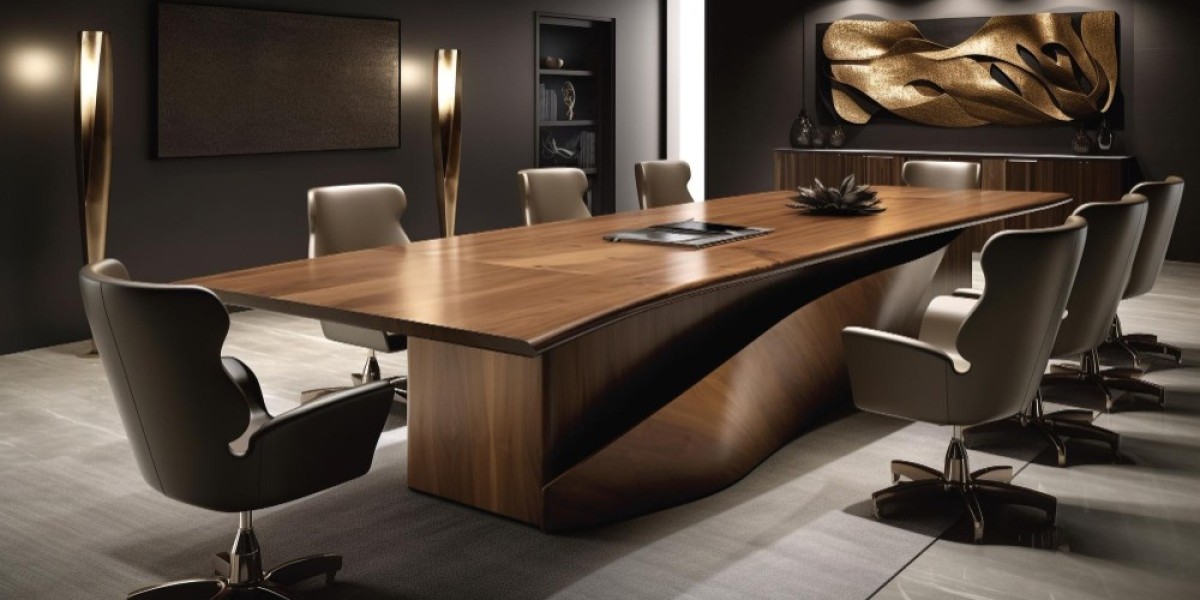

Custom Studio Office Furniture Built for Brand Identity
Walk into almost any office built in the last decade and you'll notice the same thing: rows of identical desks, the same gray panel systems, the same furniture catalog every competitor down the street ordered from too. It's not bad furniture, exactly. It's just forgettable. And in a hiring market where company culture and physical workspace have become genuine recruiting tools, forgettable is a real cost.
This is the gap that custom office furniture is built to close, and it's worth understanding why more US companies, from law firms to tech studios to consulting groups, are walking away from catalog purchasing altogether in favor of pieces designed specifically around how their teams actually work.
Why Off-the-Shelf Furniture Stops Working at Scale
Catalog furniture is built for a hypothetical average user in a hypothetical average office. It assumes your conference rooms are the same proportions as everyone else's, your reception area greets visitors the same way every other firm's does, and your team collaborates the exact same way another company's team does three states over. None of that is actually true.
When a growing company tries to force its real workflows into furniture designed for nobody in particular, friction shows up everywhere. Desks that don't account for how a creative team actually spreads out project materials. Breakout furniture that looks good in a rendering but gets ignored because it doesn't match how people genuinely take a fifteen-minute break. A lobby that says nothing about who the company is, because it's the same modular seating system sitting in a dozen other lobbies across town.
Custom studio office furniture solves this by starting from the opposite direction. Instead of asking "what's available," the question becomes "what does this specific team, in this specific space, actually need to do their best work." That single shift in starting point changes everything downstream.
The Strategic Case for Custom, Not Just the Aesthetic One
It's tempting to think of custom furniture purely as a design flex, something nice to have if budget allows. But the strategic value runs much deeper than aesthetics.
Brand Identity Lives in the Details
Every client meeting, every interview, every new hire's first day starts with a physical impression of the company. A reception desk built to reflect a firm's actual brand language tells a visitor something a generic check-in counter never could. This is exactly why a custom reception desk has become one of the most requested pieces in modern office buildouts. It's the literal first touchpoint, and companies are realizing it shouldn't look like an afterthought.
Workflow-Specific Design Pays for Itself
Furniture designed around how a team genuinely operates reduces the small daily frictions that add up over months. A law firm with confidential document handling needs different storage and surface configurations than a creative agency running constant whiteboard sessions. Custom design accounts for that from the very first sketch instead of forcing a retrofit later.
Scalability Without Starting Over
One of the smarter advantages of working with a design-and-build studio rather than a one-off custom shop is repeatability. Once a piece has been engineered and fabricated correctly, it exists as a reproducible design, meaning a company opening its fifth office location doesn't need to reinvent furniture from scratch. The same quality and design language can scale to ten units or a thousand, which matters enormously for companies expanding across multiple US markets.
What the Design Process Actually Looks Like
Companies considering custom furniture for the first time often assume it means a slower, more chaotic process than ordering from a catalog. In practice, a well-run studio runs this through a structured sequence that's faster and more predictable than most people expect.
It typically starts with a discovery phase, where the design team spends real time understanding the organization's structure, brand identity, and daily culture, not just measuring square footage. From there, a clear design direction gets defined, concepts get developed, and rapid prototypes get built so the client can physically interact with a piece before committing to full production. Adjustments happen at the prototype stage, where they're cheap and easy, rather than after a hundred units have already shipped.
Once a design is approved, production drawings get issued to fabrication partners, and the studio manages everything through delivery and installation. The entire arc, from first conversation to a finished space, often moves faster than companies assume, frequently landing in the range of a few months depending on scope.
Sustainability Has Become Part of the Conversation
US companies, especially those courting younger talent or operating in industries with public sustainability commitments, are paying closer attention to how their furniture is made, not just how it looks. Materials with high recycled content, low-VOC finishes, and regional manufacturing partnerships that cut down on shipping emissions are no longer niche requests. They're becoming standard parts of the conversation when companies sit down to plan an office buildout.
This matters for custom furniture specifically because design-driven studios can choose fabrication partners and materials project by project, rather than being locked into whatever a mass manufacturer happens to stock. That flexibility means sustainability goals can actually get built into the furniture itself, not bolted on as a marketing claim afterward.
Who Custom Furniture Actually Makes Sense For
Custom isn't only for massive headquarters buildouts. It makes sense any time a company's space needs to do something a catalog simply can't deliver: a reception area that needs to make a specific first impression, a collaborative workspace built around an unusual team structure, a multi-location rollout that needs consistent branding across very different floor plans, or simply a leadership team that's decided the office itself should be a recruiting and retention tool rather than an afterthought.
Companies across legal services, technology, consulting, entertainment, and professional services throughout the United States have increasingly landed in this category, not because custom is trendy, but because the return on a workspace that genuinely fits the people in it is measurable in ways that go beyond square footage cost per desk.
Bringing It Back to Your Space
If your office still looks like everyone else's, that's not a small detail. It's a missed opportunity to communicate exactly who your company is, in the one physical space every employee and client experiences daily. Custom studio office furniture isn't about spending more for the sake of it. It's about making sure every desk, surface, and reception piece actually earns its place in your space.