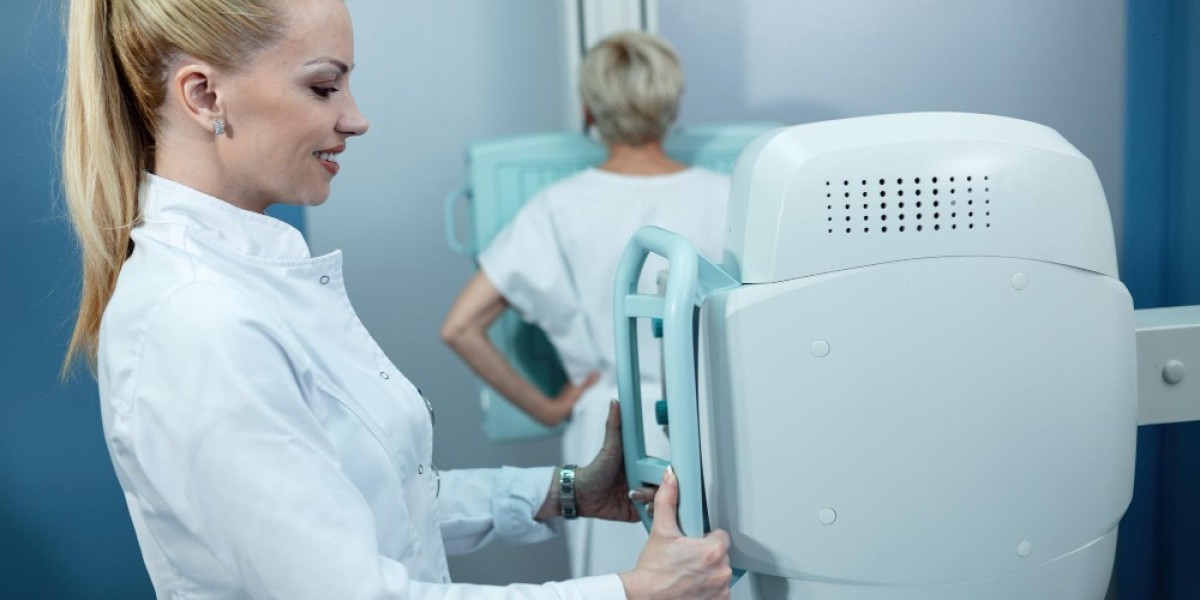

3D Breast CT: What to Expect From Your Scan
If you've ever been told to come back for "additional imaging" after a mammogram, you already know that particular kind of waiting-room anxiety. The not-knowing. The mental math of worst-case scenarios while you wait for a callback. For a lot of women across the United States, that waiting period is exactly where 3D breast CT enters the picture, and understanding what the technology actually is, and what your appointment will look like, can take a surprising amount of the fear out of the process.
This isn't a replacement for your regular mammogram. Think of it instead as the next, clearer step when your provider needs more information than a standard 2D image can give them.
What 3D Breast CT Actually Is
A 3D breast CT scan uses a dedicated breast computed tomography system, like the Koning Vera, to build a true three-dimensional image of breast tissue. That distinction matters more than it might sound. Traditional mammography, and even 3D tomosynthesis, compress the breast and capture a series of flattened or sliced images. Dense or overlapping tissue can still hide things behind other tissue, which is part of why dense breasts are so notoriously difficult to read on a standard mammogram.
A dedicated breast CT system instead rotates around the breast and captures it from every angle, building a genuinely isotropic 3D dataset rather than a stack of 2D slices. Radiologists can then scroll through that breast from any direction, rotating and examining it the way you'd turn an object over in your hands, instead of being limited to the angles the original films happened to capture.
Why "No Compression" Is a Bigger Deal Than It Sounds
Ask any woman who dreads her annual mammogram why, and compression is almost always the answer. The breast has to be flattened between two plates to get a usable image, and for women with sensitive tissue, fibrocystic changes, or simply lower pain tolerance, that part of the exam can range from uncomfortable to genuinely painful enough that some women delay or skip their imaging altogether.
No compression breast imaging removes that step entirely. With a dedicated breast CT system, the breast hangs naturally through an opening in the table while the detector rotates around it, capturing a full 3D dataset without any plates pressing the tissue flat. For women who've avoided follow-up imaging specifically because of compression discomfort, that single design difference can be the thing that finally gets them back into a scanner.
This matters for accuracy too, not just comfort. Compression can distort tissue and occasionally obscure the very abnormality a provider is trying to evaluate. A scan that captures tissue in its natural shape, from every angle, gives radiologists a more complete picture to work from.
Who Actually Gets Referred for This Scan
3D breast CT isn't a general screening tool yet in the United States. It's a diagnostic step, meaning a physician orders it after something specific has come up. The most common reasons women get referred include an abnormal or unclear finding on a previous mammogram, dense breast tissue that made earlier imaging difficult to interpret, breast implants that complicate standard mammography, a known BRCA1 or BRCA2 mutation, a history of chest radiation before age 30, or symptoms like a palpable lump, nipple changes, or persistent focal pain.
Women who've been placed on a six-month follow-up schedule for a BI-RADS 3 finding, meaning something probably benign but worth monitoring, are also frequently good candidates. Instead of repeating the same imaging that flagged the original finding, a 3D scan can offer a clearer, more complete look at whatever's being tracked.
What the Appointment Itself Looks Like
This is usually where the relief sets in for most patients, once they understand the actual logistics. The scan itself takes around seven to ten seconds per breast, with a full bilateral exam typically wrapping up in under five minutes. There's no compression, no repositioning between multiple views, and far less of the back-and-forth that can stretch a standard mammogram appointment out.
Radiation exposure is comparable to a standard 2D mammogram and falls well within federal Mammography Quality Standards Act limits. For context, the non-contrast version of this scan delivers a radiation dose that's actually lower than the average American's natural background radiation exposure over the course of a year. For biopsies guided by this technology, radiation exposure runs roughly 50% lower than traditional stereotactic biopsy methods.
Once the scan is complete, images are reviewed by a board-certified radiologist, with results typically delivered within 72 hours if your prior imaging is readily available, or up to two weeks if older films need to be tracked down first.
Where This Technology Fits Into Your Bigger Picture
It's worth being direct about this: a 3D breast CT scan is designed to complement mammography, not replace it. Annual screening mammograms remain the standard first step for most women. What this technology offers is a more detailed, more comfortable next step when your provider needs additional clarity, whether that's resolving an ambiguous finding, working around dense tissue or implants, planning a biopsy with more precision, or tracking how a known area of concern is responding to treatment over time.
For women in Southern California, this kind of advanced imaging is increasingly available through community-based mobile units, meaning you don't necessarily need to travel to a major hospital system to access it. A licensed provider still needs to order the scan, but for women without an existing primary care relationship, telehealth options now exist specifically to make that referral process faster.
A Quieter Kind of Reassurance
The hardest part of any follow-up imaging request usually isn't the scan itself. It's the stretch of time between hearing "we need another look" and actually getting the answer. 3D no compression breast imaging was built specifically to shorten and soften that stretch, giving physicians a clearer dataset to work from and giving patients an exam that doesn't add physical discomfort on top of the emotional weight of waiting.
If you've been asked to return for additional imaging, or you've simply been putting off a mammogram because compression is genuinely difficult for you to tolerate, it's worth asking your provider directly whether a 3D breast CT scan makes sense for your situation.