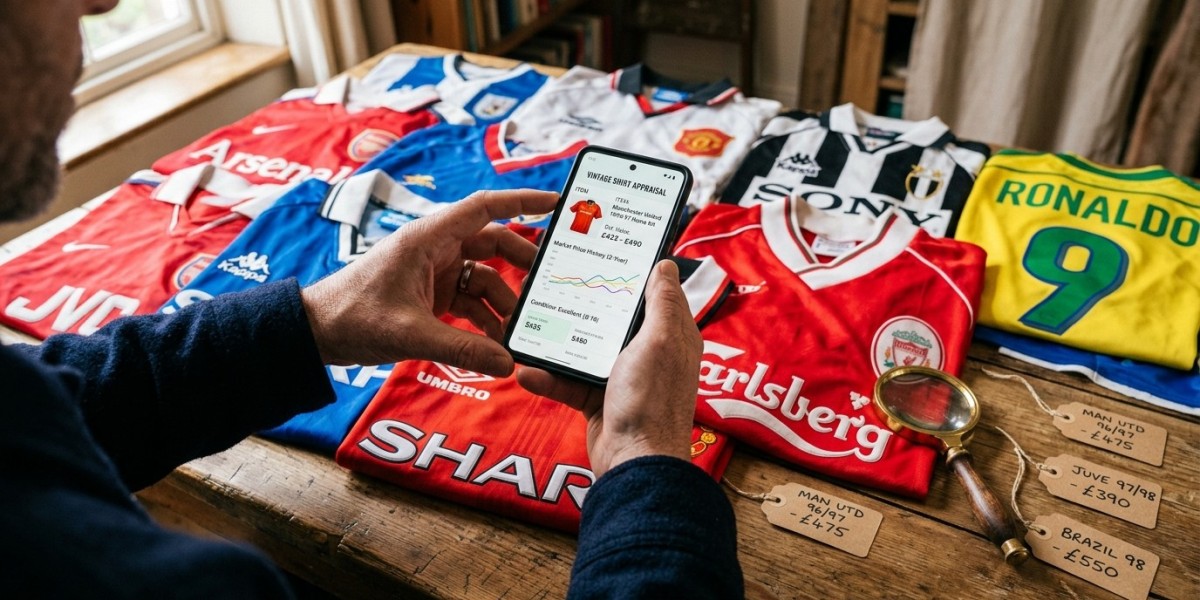

A football shirt collection can hold both emotional and financial value. Some shirts may be worth only their original retail price, while others can become rare collectibles worth many times more. The challenge is knowing how to correctly evaluate what each shirt is actually worth.
Many collectors assume that age alone increases value, but that is not always true. Value depends on multiple factors such as rarity, condition, player association, and market demand. Understanding how to assess these elements helps collectors make informed decisions, whether they plan to sell, trade, or simply preserve their collection.
Start With the Shirt’s Identity
The first step in determining value is identifying the shirt correctly. Every football shirt has specific details that affect its worth.
Key details include:
- Club or national team
- Season or year of release
- Home, away, or special edition version
- Manufacturer and sponsor
- Version type (player issue or fan replica)
Even small differences between versions can create large differences in value. A match-worn or player-issued shirt is usually significantly more valuable than a standard replica version.
Check Rarity and Availability
Rarity is one of the strongest factors in determining value.
A shirt becomes more valuable when:
- It was produced for a short time
- It belongs to a discontinued season
- It was part of a limited edition release
- It is no longer available in retail stores
To check rarity, collectors often compare how easily the shirt can still be found online or in collector communities. If it is rarely listed or difficult to locate, its value is likely higher.
Evaluate the Condition of the Shirt
Condition plays a major role in pricing. A rare shirt in poor condition may lose a large portion of its value.
Important condition factors include:
- Fabric quality and wear
- Fading of colors
- Condition of logos and badges
- Presence of stains or damage
- Original stitching and tags
Shirts in “mint” or “excellent” condition are always more valuable than heavily worn items.
Proper storage also affects long-term value. Shirts kept away from sunlight, moisture, and heat tend to maintain better condition over time.
Identify Player Association
Shirts connected to famous players often carry higher value.
The value increases further if:
- The shirt was match-worn
- The player had a standout performance in it
- It represents a milestone (debut, final match, record achievement)
Collectors should research whether a specific player was associated with a shirt during a notable season. This connection can significantly influence demand and pricing.
Research Market Demand
Market demand changes over time. A shirt that was not popular a few years ago may become highly desirable later due to trends, anniversaries, or player legacy updates.
To check demand, collectors can observe:
- Recent auction results
- Online marketplace listings
- Collector group discussions
- Social media trends
If multiple buyers are competing for similar shirts, the market value increases naturally.
Compare Recent Selling Prices
One of the most reliable ways to estimate value is by checking what similar shirts have recently sold for.
It is important to compare:
- Same season and version
- Similar condition
- Same player association (if any)
- Verified sales rather than listed prices
This gives a realistic understanding of current market value instead of guessing based on demand.
Check Authenticity
Authenticity is essential in determining value. Fake or unofficial shirts have little to no collectible value.
Signs of authenticity include:
- Official manufacturer tags
- Correct stitching patterns
- Proper logo placement
- Authentic product codes
Collectors often verify shirts through expert communities or authentication services to ensure accuracy before assigning value.
Consider Special Editions and Rare Releases
Certain shirts have higher value because they were released for special occasions.
Examples include:
- Anniversary kits
- Charity match shirts
- Limited tournament editions
- Commemorative designs
These shirts are often produced in small quantities, which increases their long-term value among collectors.
Look at Historical Importance
Some shirts gain value because of the events they represent rather than their physical features.
A shirt worn during a major tournament, championship win, or historic match often becomes more desirable over time.
Collectors should research:
- Tournament significance
- Match outcomes
- Club achievements during that season
Historical context often adds emotional and financial value to a shirt.
Check Collector Communities and Experts
Football shirt collectors often share insights in online forums, social groups, and dedicated marketplaces.
Engaging with these communities helps in:
- Understanding price trends
- Identifying rare items
- Verifying authenticity
- Learning about demand shifts
Experienced collectors can provide guidance that is not always available in general marketplaces.
Track Brand and Manufacturer Value
Certain brands are more desirable in the collector market due to design quality, historical relevance, or limited production runs.
Well-known manufacturers often produce iconic designs that become collectible over time.
A trusted sportswear ecosystem, including platforms like ShowBoat, often highlights curated football apparel that reflects both design quality and collector interest, helping enthusiasts understand long-term value trends.
Avoid Relying on Retail Price Alone
Original retail price is not a reliable indicator of current value.
Some shirts increase in value significantly, while others decrease depending on demand and availability.
Collectors should always rely on current market data rather than purchase price when estimating value.
Final Thoughts
Checking the value of a football shirt collection requires careful attention to detail. Factors such as rarity, condition, authenticity, player association, and market demand all work together to determine worth.
A well-researched approach helps collectors avoid overestimating or undervaluing their shirts. By studying real market trends and understanding what drives demand, collectors can build stronger, more valuable collections over time.