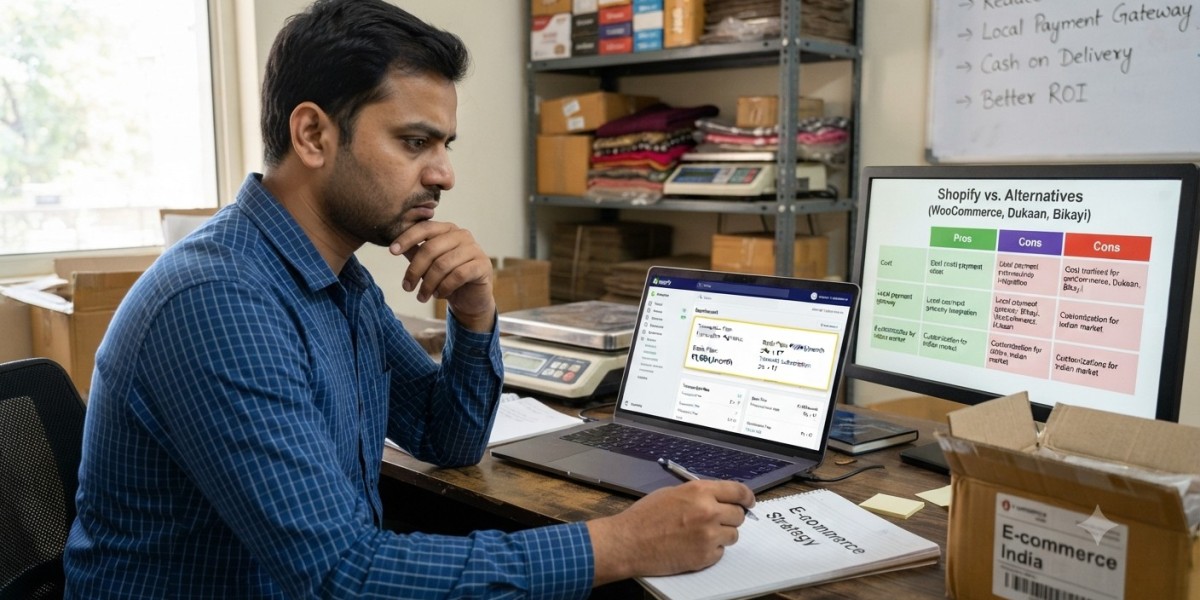

India's ecommerce market is booming. With over 900 million internet users and a rapidly growing base of digital-first consumers, there has never been a better time to sell online. Yet, despite this opportunity, thousands of Indian entrepreneurs find themselves frustrated with the tools they are using especially Shopify.
Shopify is undeniably one of the world's most recognized ecommerce platforms. But "globally recognized" doesn't always mean "locally suited." Indian sellers are discovering this the hard way, and many are now actively searching for shopify alternatives india that better align with their business realities.
This article explores the core reasons behind this shift and what Indian entrepreneurs are looking for instead.
The Shopify Promise vs. The Indian Reality
Shopify markets itself as a platform for everyone. And to be fair, it delivers on many fronts clean storefronts, robust app integrations, and reliable uptime. But when an Indian seller sits down to actually run their business on it, friction starts to appear quickly.
Currency and Payment Complications
One of the first pain points Indian sellers encounter is around payments. Shopify Payments the platform's native payment solution is not available in India. This means sellers must rely on third-party gateways like Razorpay or PayU, which adds integration complexity and extra transaction fees on top of Shopify's own monthly charges.
For a small business operating on thin margins, every percentage point matters.
Pricing That Doesn't Scale Well in INR
Shopify's plans are priced in USD. For Indian sellers, this creates a dual problem: the cost itself feels steep, and it also fluctuates with the rupee-dollar exchange rate. A plan that costs $79/month can feel very different in January versus July when the INR weakens.
Beyond the base plan, Indian sellers often end up paying for multiple third-party apps to get features that should come standard adding up to a surprisingly high monthly bill for what is, at its core, a basic online store.
What Indian Sellers Actually Need
Understanding why sellers are leaving Shopify requires understanding what Indian ecommerce actually looks like on the ground.
Local Payment Gateway Support
Indian buyers use a wide variety of payment methods UPI, net banking, wallets like Paytm and PhonePe, EMI options, and cash on delivery. A platform that doesn't natively support these options creates unnecessary drop-offs at checkout.
Sellers need a best ecommerce website builder that integrates Indian payment ecosystems out of the box, not as an expensive add-on.
Vernacular and Regional Commerce
India isn't a single market it's dozens of micro-markets spread across languages, buying habits, and logistics networks. A platform designed for Western audiences often lacks the nuance needed to serve sellers in Tier 2 and Tier 3 cities, where much of India's ecommerce growth is now happening.
Simpler Onboarding for Non-Technical Founders
Many Indian small business owners are first-generation digital entrepreneurs. They are excellent at their craft whether that's handloom textiles, artisanal food, or custom furniture but they aren't developers. They need platforms that let them launch quickly without writing a single line of code.
This is where AI-powered tools are changing the game entirely.
The Rise of AI-Powered Store Building
A growing category of platforms is now using artificial intelligence to dramatically simplify store creation and management. Rather than spending weeks setting up product pages, configuring themes, and writing descriptions, sellers can now get a fully functional store live in a fraction of the time.
The atlas ai store builder approach is particularly interesting. By using AI to automate the most time-consuming parts of store setup from product descriptions to layout recommendations these tools are putting ecommerce within reach of sellers who would have previously found the technical barrier too high.
This isn't just about convenience. It's about democratizing ecommerce for a generation of Indian sellers who have real products, real customers, and real ambitions but limited time and technical bandwidth.
Why the "Best Shopify Alternative" Search Is Spiking in India
If you look at search trends, queries around best shopify alternatives have seen a consistent rise in India over the past two years. This isn't coincidental it reflects a maturing market of sellers who have tried Shopify, hit its limitations, and are now ready to explore what else is out there.
Common Reasons Sellers Cite for Switching
High cumulative costs when factoring in apps, transaction fees, and monthly plans
Lack of India-specific features like COD reconciliation, GST-ready invoicing, and regional shipping integrations
Customer support limitations during Indian business hours
Complexity that slows down sellers who just want to sell
What They Want in a Replacement
Sellers aren't abandoning ecommerce they're upgrading their approach. The ideal alternative, from their perspective, is a platform that:
Offers competitive pricing in INR
Supports Indian payment gateways natively
Provides AI-assisted setup and content generation
Integrates with Indian logistics providers
Requires minimal technical knowledge to operate
Evaluating Your Options: What to Look For
If you're an Indian seller considering a move, here's a practical checklist to evaluate any alternative platform.
1. Total Cost of Ownership
Don't just look at the base monthly plan. Factor in the cost of any apps you'll need, payment gateway fees, and transaction charges. A platform that appears cheaper upfront can quickly become more expensive once you add necessary integrations.
2. Payment Ecosystem Compatibility
Verify that the platform supports the payment methods your customers actually use. UPI and COD support aren't optional in the Indian market they're essential.
3. Ease of Use
Can you set up a product page, configure shipping, and launch a promotion without calling a developer? If not, you'll be spending money on technical support instead of growth.
4. Local Support and Community
Platforms with India-based support teams and active local seller communities will serve you better than those with generic, timezone-mismatched help desks.
5. Scalability
Your platform should grow with you. Look for solutions that can handle increased traffic, larger product catalogs, and more complex operations without requiring a complete migration down the line.
The Broader Shift Happening in Indian Ecommerce
What's unfolding in India isn't just a platform preference shift it's a structural change in how Indian entrepreneurs approach online selling.
The seller of 2025 is more informed, more cost-conscious, and more demanding than ever before. They've done their research, they know what they need, and they're no longer willing to settle for a platform that wasn't designed with them in mind.
This is driving innovation across the entire ecommerce tools landscape. Platforms that can genuinely serve Indian sellers with local integrations, AI-powered efficiency, and pricing that makes sense in rupees are gaining ground fast.
Conclusion
Shopify has played an important role in introducing thousands of Indian sellers to the world of online commerce. But as the market matures, the mismatch between a globally-oriented platform and India's unique commerce ecosystem is becoming harder to ignore.
From payment complications to pricing pressures to the need for AI-assisted simplicity, the reasons Indian sellers are seeking alternatives are legitimate and well-founded.
The good news? The alternatives are getting better. Platforms built with the Indian seller in mind offering smart onboarding, local payment support, and AI-powered tools are making it easier than ever to build a successful online store without the compromises.
If you're at the crossroads, now is a great time to explore what's available. The right platform won't just save you money it'll save you time, reduce frustration, and give your business the foundation it deserves.
Frequently Asked Questions
1. Why is Shopify not ideal for Indian sellers?
Shopify Payments isn't available in India, which means sellers must use third-party gateways at additional cost. Combined with USD-based pricing and limited local integrations, it can be expensive and cumbersome for Indian businesses.
2. What should I look for in a Shopify alternative for India?
Prioritize platforms that support Indian payment methods (UPI, COD, net banking), offer INR-based pricing, integrate with local logistics providers, and provide easy-to-use interfaces without needing technical expertise.
3. Are AI-powered ecommerce builders reliable for serious sellers?
Yes. Modern AI store builders have matured significantly and can handle everything from product descriptions to store layout recommendations. They're particularly useful for sellers who want to launch quickly without a development team.
4. Is it difficult to migrate from Shopify to another platform?
The complexity depends on your store size and the platform you're moving to. Most modern alternatives offer migration tools or support to help transfer your product catalog, customer data, and order history.
5. What are the cost advantages of switching from Shopify?
By moving to a platform with lower base fees, built-in Indian payment integrations, and fewer required third-party apps, many Indian sellers report significant monthly savings often reducing their total platform costs by 30–50%.