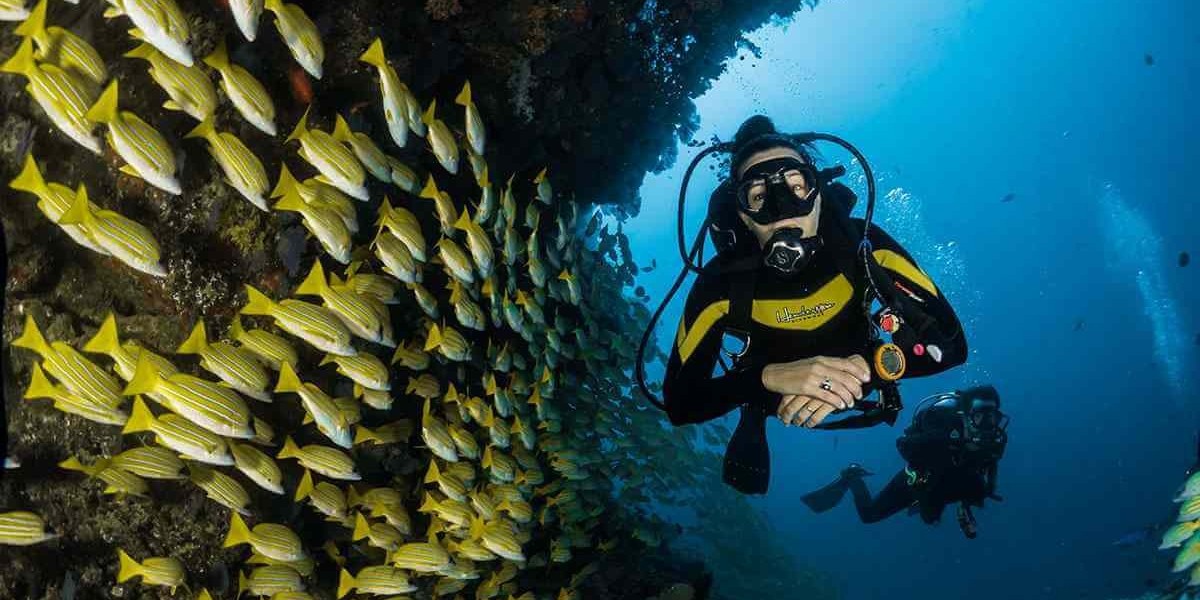

If you have ever done PADI diving in Trincomalee — slipping beneath the warm, turquoise surface with a rented wetsuit that fits a little too loosely and fins that threaten to slide off your feet — you will know exactly the kind of low-grade frustration that borrowed gear introduces into an otherwise perfect dive. The ocean is breathtaking, the marine life is extraordinary, and somewhere in the back of your mind, you are wondering who wore this mask before you and whether the seal is going to hold. It is a small thing, but it chips away at the experience.
Owning your own dive equipment changes that equation entirely. It is one of those decisions that divers often put off because the upfront cost feels significant, but almost universally look back on and wish they had made sooner. This is not about gear snobbery or spending money for the sake of it — it is about diving better, diving more comfortably, and diving with confidence every single time you enter the water.
The Fit Problem That Rental Gear Can Never Solve
Dive centres do their best. They stock a range of sizes, maintain their equipment diligently, and genuinely want you to have a good experience. But the fundamental limitation of rental gear is that it was designed to fit a spectrum of people adequately, rather than any one person perfectly. Masks are the clearest example of this. A mask that does not conform precisely to the contours of your face will leak — not dramatically, but just enough to require clearing every few minutes, just enough to draw your attention away from the reef below you and back to the minor annoyance on your face.
Your own mask, properly fitted and chosen for your specific facial structure, creates a seal the first time and every time. You stop thinking about your mask entirely, which is exactly the point. The same logic applies to wetsuits, which need to fit closely to actually insulate you, and to fins, where the wrong size or stiffness can leave your legs burning through a dive that should have felt effortless.
When you own your equipment, you learn it. You know how much force your BCD inflator needs, how your regulator breathes, where the buckles on your harness sit. That familiarity reduces the cognitive load of diving, leaving your mind free for the things that actually matter — the hawksbill turtle moving through the coral, the school of jacks catching the morning light, the particular quality of silence sixty feet below the surface.
Hygiene Is a Real Consideration
It does not get discussed as openly as it probably should, but shared dive equipment carries a genuine hygiene dimension. Regulators go in your mouth. Wetsuits are worn against skin. Masks press against your face. The equipment is rinsed between users, but rinsing is not sterilising, and rental gear sees a lot of use across a lot of different people in a lot of different conditions. For most divers, this is a background concern rather than a serious health risk — but it is a concern nonetheless. Having your own regulator, your own mask, and your own wetsuit eliminates that uncertainty completely.
The Economics Actually Work in Your Favour
The rental fees at most dive operations add up faster than people expect. A typical equipment rental — mask, fins, wetsuit, BCD, and regulator — can run anywhere from fifteen to forty US dollars per dive depending on the operation and location. If you dive twenty or thirty times a year, which is not unreasonable for someone who lives near the ocean or travels to dive regularly, you will cover the cost of a decent mid-range equipment set within a couple of seasons. After that, every dive is effectively free from an equipment standpoint.
The calculus shifts even more in your favour if you dive in a place like Sri Lanka, where Trincomalee diving has become increasingly popular with both local divers and visiting enthusiasts. The dive season here runs long, the conditions are genuinely exceptional, and the underwater topography — seamounts, caves, and rich coral gardens — rewards repeat visits. Divers who base themselves here, or return season after season, are the ones who feel the rental costs most acutely, and who benefit most from the transition to personal gear.
Travel Becomes Easier, Not Harder
There is a common misconception that travelling with dive gear is cumbersome. In practice, travelling divers have been doing it for decades, and the gear industry has responded with lightweight BCD designs, compact regulators, and travel-friendly wetsuits that pack down considerably. Airlines that cater to dive destinations — and Sri Lanka is very much one — are generally familiar with the requirements.
More importantly, when you arrive at a dive site with your own equipment, you skip the fitting process entirely. You don't spend the first twenty minutes of your morning wrestling with rental fins or adjusting a BCD that was sized for someone else. You suit up in gear you know, configure it the way you always do, and walk to the water. This matters more than it sounds, especially on liveaboards or early-morning boat dives where time is tight and the dive briefing is waiting.
Local Diving Unlocks Spontaneity
One of the genuinely underappreciated pleasures of owning your own gear is spontaneous diving. When conditions turn perfect — glassy water, exceptional visibility, a report of something unusual in the water — a diver with their own equipment can simply go. There is no call to the dive centre to check rental availability, no waiting for the operation to open, no possibility that the medium wetsuit is already out with another group.
This kind of spontaneity is particularly meaningful along Sri Lanka's east coast, where snorkelling in Nilaveli draws visitors to some of the clearest, warmest water in the Indian Ocean. The reef systems here are close to shore and remarkably accessible, and the difference between watching a season pass from the beach and actually getting in the water whenever the moment is right often comes down to whether you have your own mask and fins sitting in your room or whether you are dependent on someone else's schedule.
The Learning Curve of Equipment Matters
Diving is a technical activity, and your gear is not passive. The way a regulator delivers air, the buoyancy characteristics of a particular BCD, the resistance of different fin styles — these things affect your diving in measurable ways, and learning to work with your specific equipment makes you a meaningfully better diver. Instructors at PADI diving centres in Nilaveli and across the island will tell you that students and fun divers who use consistent equipment simply develop skills faster. They are not recalibrating to a new setup every time they enter the water. They are building on accumulated experience with a system they know.
This is why many serious instructors encourage students to invest in at least the personal basics — mask, fins, and wetsuit — early in their diving journey, and to move towards a complete personal kit as their diving develops. The gear becomes an extension of the diver rather than a variable to manage.
Starting Your Own Kit: A Practical Approach
The idea of acquiring a full set of dive equipment can feel overwhelming, but most experienced divers recommend building a kit incrementally. Start with the items that are most personal and most affected by fit: a mask is usually the first investment, followed by fins and a wetsuit suited to the water temperatures you typically dive in. Regulators and BCDs can come later, and many divers use rental BCDs and regulators for a year or two while they learn their preferences before committing to a purchase.
Buying from reputable dealers — ideally those connected to established training agencies or with strong technical knowledge — ensures that you are getting equipment that is appropriate for your diving level and properly configured. It is worth spending more time than money initially: talk to instructors, dive with different gear where you can, and resist the temptation to buy based purely on price. Good dive equipment, properly maintained, lasts for many years and thousands of dives. It is genuinely a long-term relationship.
The Intangible Returns
None of the practical arguments above fully captures what happens psychologically when you own your own gear. There is a sense of commitment to the craft, a deepening of identity as a diver. The equipment becomes associated with specific dives, specific moments, specific places. The fins you were wearing the first time you saw a whale shark. The mask that stayed perfectly sealed during your deepest dive. These objects accumulate meaning in a way that rented equipment simply cannot.
Diving is already one of the more remarkable things a human being can do — entering a world that is genuinely alien, moving through it in something approaching silence, encountering life forms that have no equivalent on land. Your equipment makes that possible. Owning it, knowing it, trusting it, is a way of taking that experience seriously, of saying that this is something you do, not just something you have tried.
The ocean will wait. But the seasons are long in Sri Lanka, the conditions can be extraordinary, and there is no good reason to spend another dive adjusting a rental mask that does not quite fit.