
Introduction
Every Workday implementation begins with one essential element—the Workday tenant. Whether an organization is hiring employees, configuring business processes, managing security, or generating reports, everything happens within a Workday tenant. This makes tenant management and configuration two of the most important skills for any Workday HCM consultant.
Many beginners assume that Workday implementation is simply about entering employee information or creating reports. In reality, consultants spend a significant amount of time configuring the Workday environment according to business requirements. They define organizational structures, create staffing models, configure business processes, assign security roles, and ensure that all HR operations function correctly within the tenant.
Tenant management also involves understanding different Workday environments, testing new configurations, validating changes before deployment, and supporting users after implementation. Without proper tenant management, even small configuration mistakes can affect multiple HR processes across an organization.
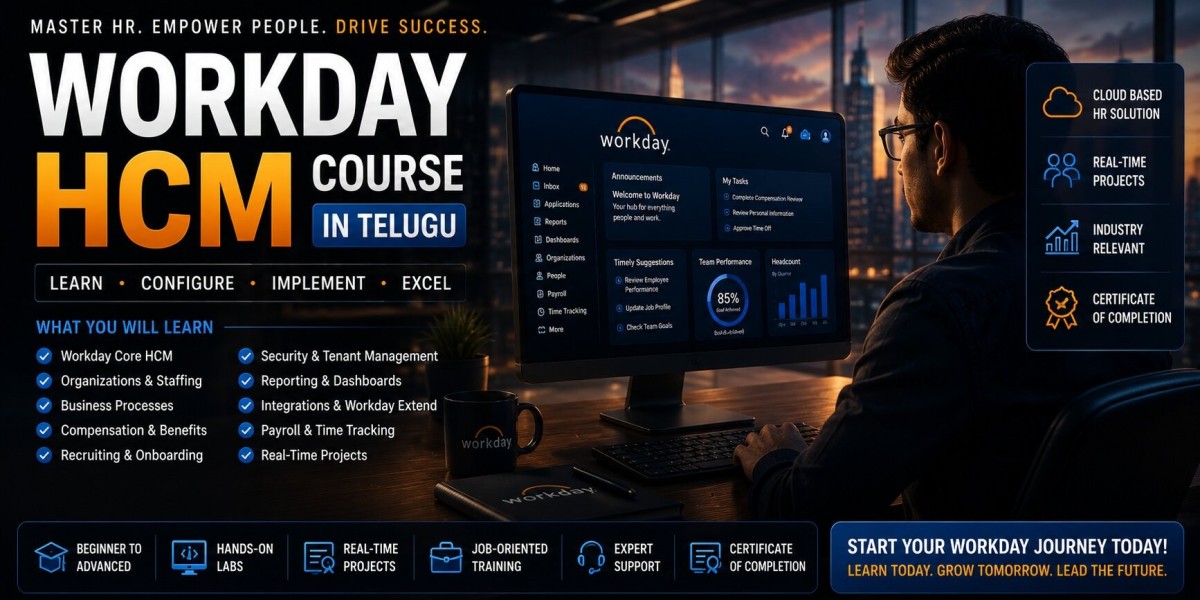
A Workday HCM Course in Telugu helps learners understand Workday configuration and tenant management through practical exercises, implementation scenarios, and real-world examples that prepare them for professional consulting roles.
What is a Workday Tenant?
A Workday tenant is a dedicated cloud environment where an organization stores its Workday application, employee information, configurations, business processes, reports, and security settings.
Think of a tenant as a secure workspace that belongs to a specific organization. Every company using Workday has one or more tenants depending on its implementation and testing requirements.
Each tenant contains:
Organizational data
Worker records
Business process configurations
Security settings
Reports
Integrations
Custom configurations
Consultants perform all implementation activities within these environments.
Types of Workday Tenants
During implementation and ongoing support, organizations use different types of tenants for different purposes.
Implementation Tenant
This is where consultants configure the system during the initial implementation.
It is used for:
Configuration
Testing
Validation
User demonstrations
Sandbox Tenant
A Sandbox tenant is used for experimentation and training.
Consultants can:
Test new configurations
Try different business process changes
Validate reports
Practice without affecting live business data
It provides a safe environment for learning and development.
Production Tenant
The Production tenant is the live environment used by employees and HR teams every day.
Activities performed here include:
Hiring employees
Promotions
Payroll processing
Performance management
Reporting
Changes made to Production directly impact business operations, so they are carefully controlled.
Understanding Configuration in Workday
Configuration means customizing Workday according to an organization's HR policies and business requirements.
Unlike traditional software development, Workday relies primarily on configuration rather than coding.
Common configuration tasks include:
Creating organizations
Defining staffing models
Configuring job profiles
Assigning compensation grades
Setting approval workflows
Creating security groups
Understanding configuration is one of the primary responsibilities of a Workday Functional Consultant.
Configuring Organizations
Organizations are among the first components configured during implementation.
Examples include:
Company
Supervisory Organization
Cost Center
Department
Region
Location
These organizational structures determine reporting relationships, workforce planning, and business process routing.
Proper organization configuration forms the foundation of every Workday implementation.
Managing Business Processes
Business Processes automate organizational workflows.
Configuration includes:
Approval routing
Notifications
Task assignments
Validation rules
Workflow conditions
Examples include:
Hiring
Job Change
Promotion
Leave Approval
Employee Transfer
Consultants configure these workflows according to organizational policies.
Security Configuration
Security ensures employee information remains protected.
Typical configuration activities include:
Creating Security Groups
Assigning user roles
Configuring Domain Security Policies
Managing Business Process Security
Testing user permissions
Strong security management protects confidential HR information while allowing authorized users to perform their responsibilities.
Tenant Management Best Practices
Successful consultants follow several best practices when managing Workday tenants.
These include:
Always test changes in Sandbox before Production.
Maintain proper documentation for every configuration.
Validate security after every major change.
Test business processes thoroughly.
Follow organizational change management procedures.
Monitor system performance regularly.
These practices reduce implementation risks and improve system reliability.
Common Mistakes Beginners Make
While learning Workday, beginners often:
Configure directly without understanding business requirements.
Ignore organizational hierarchy.
Skip testing before deployment.
Assign incorrect security roles.
Make undocumented configuration changes.
Following structured implementation practices helps avoid these mistakes.
Practical Exercises
To build confidence, learners should practice:
Creating organizations
Configuring staffing models
Building business processes
Creating security groups
Managing worker records
Testing tenant configurations
Validating approval workflows
Hands-on exercises strengthen implementation skills.
Career Opportunities
Professionals skilled in configuration and tenant management are highly valued because these responsibilities exist in almost every Workday implementation.
Possible career roles include:
Workday HCM Consultant
Workday Functional Consultant
Workday Configuration Consultant
Workday Administrator
HRIS Consultant
With experience, professionals can specialize in advanced configuration, integrations, reporting, or Workday Security.
Conclusion
Configuration and tenant management are among the most valuable skills in the Workday ecosystem. Understanding how tenants function, how organizations are configured, and how business processes and security are managed enables consultants to build efficient and reliable HR solutions for organizations.
A Workday HCM Course in Telugu provides practical training in tenant management and configuration, helping learners develop implementation-ready skills through real-world scenarios, hands-on exercises, and industry-focused projects.