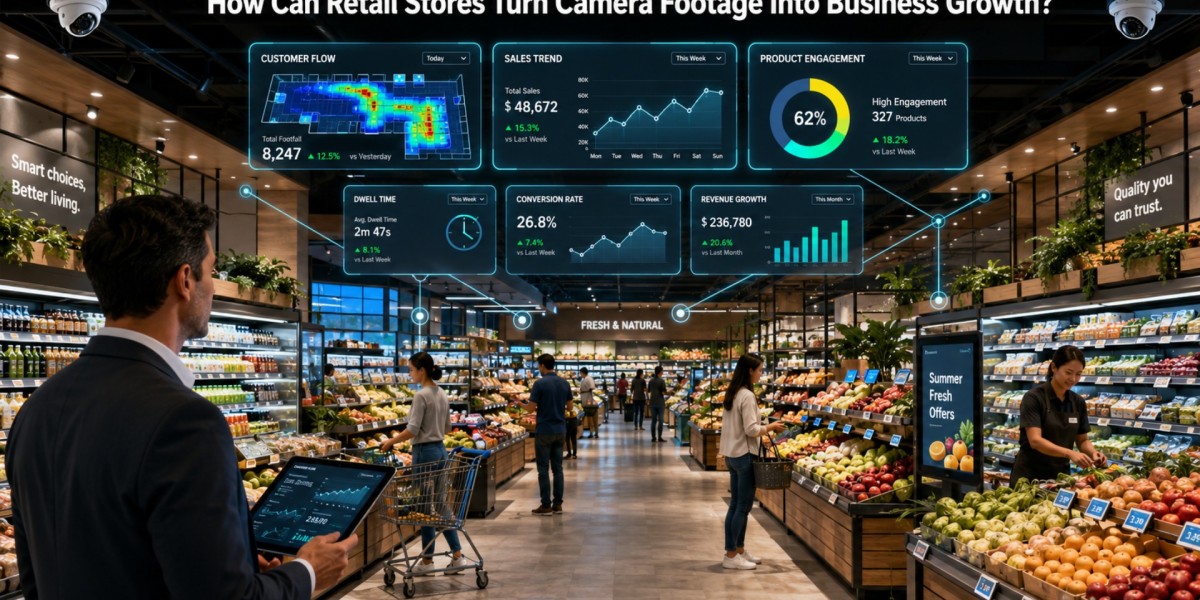
Have you ever wondered how some retailers seem to know exactly when to add staff, rearrange products, or launch promotions? The answer is increasingly found in video analytics for retail stores.
Video analytics uses artificial intelligence and computer vision to analyze footage from in-store cameras and convert it into actionable business insights. Instead of simply recording events, modern systems can track customer movement, measure dwell time, identify queue build-up, monitor shelf activity, and detect unusual behavior in real time.
For retailers, this means better customer experiences, improved operational efficiency, stronger security, and higher profitability.
What Is Video Analytics in Retail?
Video analytics refers to software that processes video feeds and automatically identifies patterns, behaviors, and events. For video analytics for retail stores , the technology can:
- Count visitors entering and leaving the store.
- Measure how long shoppers stay in specific areas.
- Analyze customer flow through aisles.
- Monitor checkout queues.
- Detect suspicious activity.
- Generate reports for managers.
Unlike traditional surveillance systems, analytics platforms focus on business intelligence, not just security.
Why Retailers Are Investing in Video Analytics
Retail margins are often tight, making data-driven decisions essential. Video analytics helps retailers answer critical questions such as:
- Which displays attract the most attention?
- Where do customers abandon their shopping journey?
- When are peak traffic hours?
- How many staff members are needed at a given time?
- Which areas require stronger monitoring?
These insights help reduce guesswork and improve day-to-day operations.
Key Benefits for Retail Stores
1. Understand Customer Behavior
Retailers can see how shoppers move through the store, which products attract attention, and where customers spend the most time.
This data helps optimize:
- Store layout
- Product placement
- Promotional displays
- Seasonal merchandising
2. Reduce Checkout Wait Times
Long queues are a major cause of customer frustration. Analytics systems can detect growing lines and alert managers to open additional checkout counters before delays become severe.
3. Improve Staff Allocation
By analyzing traffic patterns, managers can schedule employees more effectively. Staff can be assigned based on actual customer demand rather than estimates.
4. Strengthen Loss Prevention
Modern analytics tools can identify unusual behaviors such as loitering, restricted-area access, or potential shoplifting patterns. This helps security teams respond more quickly.
Many retailers already use cameras security systems for surveillance, but adding analytics transforms those cameras into proactive business tools.
5. Measure Marketing Performance
Retailers can evaluate whether a promotion or display actually increases engagement. Instead of relying solely on sales data, they can measure customer attention and interaction.
How Video Analytics Works
A typical retail analytics system includes:
Video Capture
Cameras installed throughout the store collect footage.
AI Processing
Algorithms analyze movement, objects, and behavior patterns.
Event Detection
The system identifies events such as queue formation, crowding, or unusual activity.
Reporting Dashboard
Managers receive visual reports, alerts, and performance metrics.
Common Retail Use Cases
Footfall Counting: Track the number of visitors entering the store.
Heat Mapping: Identify the most visited areas.
Queue Management: Monitor checkout congestion.
Shelf Monitoring: Detects low-stock situations or product interactions.
Occupancy Monitoring: Measure real-time store capacity.
Theft Detection: Flag suspicious behavior for review.
The Future of Retail Video Analytics
Technology is evolving rapidly. Future systems are expected to offer:
- Predictive demand forecasting.
- Personalized in-store experiences.
- Automated inventory insights.
- Integration with point-of-sale data.
- Advanced AI behavior analysis.
As retailers seek more efficient operations, video analytics is becoming a strategic tool rather than a niche technology. Combined with modern security cameras, it helps businesses move from passive monitoring to intelligent decision-making.
Choosing the Right Solution
When evaluating a platform, retailers should consider:
- AI accuracy
- Real-time alert capabilities
- Integration with existing systems
- Cloud vs. on-premise deployment
- Data privacy compliance
- Scalability across multiple locations
Privacy and Compliance Considerations
Retailers must balance analytics with customer privacy. Best practices include:
- Using anonymized data where possible.
- Displaying clear camera notices.
- Following local data protection regulations.
- Limiting access to recorded footage.
You can also watch: VideoraIQ | Turn Your CCTV Into Real-Time AI Threat Detection
Short Summary
Video analytics for retail stores enables retailers to transform camera footage into actionable insights. It helps improve customer experience, optimize staffing, reduce losses, manage queues, and measure marketing effectiveness. By combining AI with existing camera infrastructure, retailers can make smarter, data-driven decisions that improve both operations and profitability.
Frequently Asked Questions
What is video analytics in retail?
It is AI-powered software that analyzes store camera footage to provide insights about customer behavior, traffic patterns, queues, and security events.
Can video analytics increase retail sales?
Yes. By improving store layout, staffing, and customer experience, retailers can increase conversions and revenue.
Do retailers need new cameras?
Not always. Many analytics platforms can work with existing IP camera systems.
Is video analytics only for large retailers?
No. Small and mid-sized stores can also benefit from visitor counting, queue monitoring, and loss prevention features.
How does video analytics help reduce theft?
The system can detect unusual behaviors and alert staff to potential security incidents in real time.