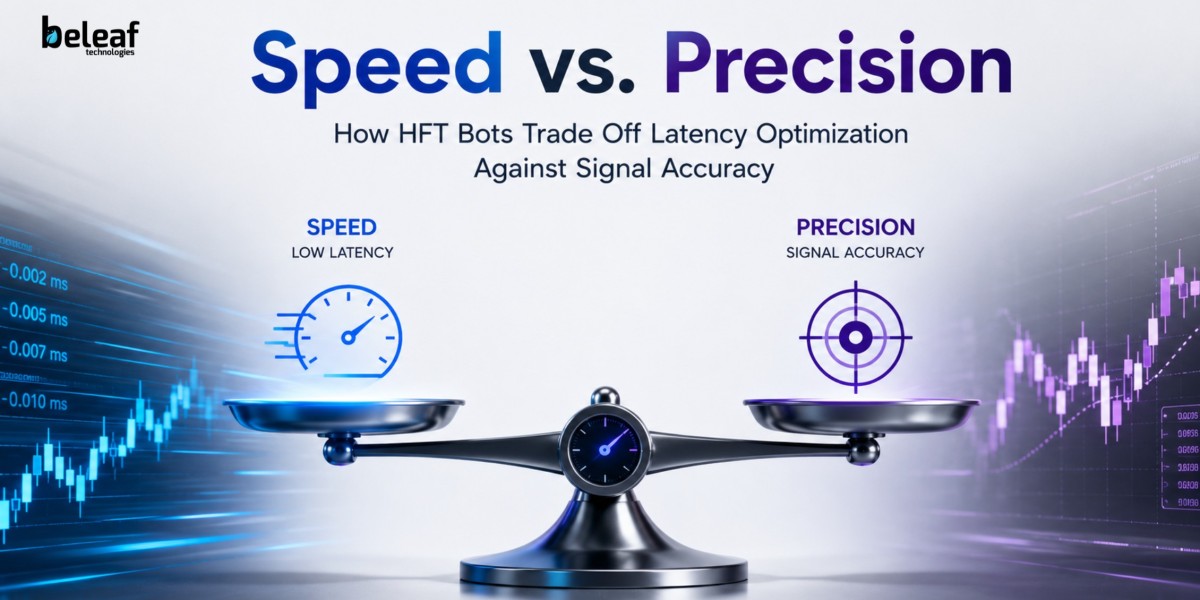

Why This Tension Never Goes Away
Every HFT trading bot lives inside a contradiction. Going faster means reacting before the data is fully understood. Going deeper means understanding the data after the moment to act has already passed. Neither extreme survives long in live markets; bots that only chase speed get picked apart by noise, and bots that only chase accuracy show up late to the trade.
What Latency Actually Buys You
Latency isn't speed for its own sake, it's the difference between catching a price before it moves and reacting after everyone else already has.
Colocated servers cut the physical distance data has to travel
Stripped-down network stacks remove unnecessary processing hops
Hardware tuned for a single job beats general-purpose systems every time
But latency only pays off when there's something worth acting on quickly. Speed without a good signal just means losing faster.
What Precision Actually Buys You
Precision is what keeps a fast bot from being a reckless one. A signal is only useful if it consistently points in the right direction more often than chance.
Clean, well-maintained data feeds reduce false positives
Thoughtful feature selection matters more than feature volume
Models built for this market's behavior outperform generic ones borrowed from elsewhere
A bot with excellent signals but slow execution still loses but a bot with instant execution and weak signals loses faster, and more often.
Where Most Bots Get the Balance Wrong
The mistake isn't picking the wrong side, it's treating speed and precision as if they have to compete for the same resources.
Running every decision through one heavy pipeline, even simple ones
Adding complexity to the real-time loop instead of the analysis layer
Optimizing hardware while ignoring stale or noisy data feeding it
No fallback when a precise signal arrives a few milliseconds too late
A Smarter Way to Structure the Bot
The strongest systems don't choose between speed and depth; they separate the work so each layer does what it's best at.
Fast layer handles obvious, low-risk decisions instantly using simple, well-tested rules. No heavy computation, no second-guessing.
Precision layer works in parallel, refining or correcting positions once deeper analysis is ready. This layer can take a little longer because it's not the one racing the clock.
Fallback layer protects the system when the precise signal doesn't arrive in time. Better to skip a trade than execute blindly on incomplete information.
This isn't a compromise. It's two systems working at different speeds toward the same goal.
How to Know If Your Bot Is Actually Balanced
Forget chasing the lowest possible latency number as a badge of honor. Watch what actually matters:
How often the bot's signals turn out correct, not just how fast they fire
Slippage between intended price and executed price
How performance holds up during volatility spikes, not just calm markets
Whether the fast layer and precision layer are actually working together, or just sitting next to each other
Key Takeaway
Speed gets you to the trade. Precision decides whether that trade was worth taking. Neither one wins alone; the bots that last are the ones built so both can do their job without stepping on each other.
Get Started Today>>
https://www.beleaftechnologies.com/hft-trading-bot-development
WhatsApp : +91 8056786622
Reach us : https://www.beleaftechnologies.com/contact-us