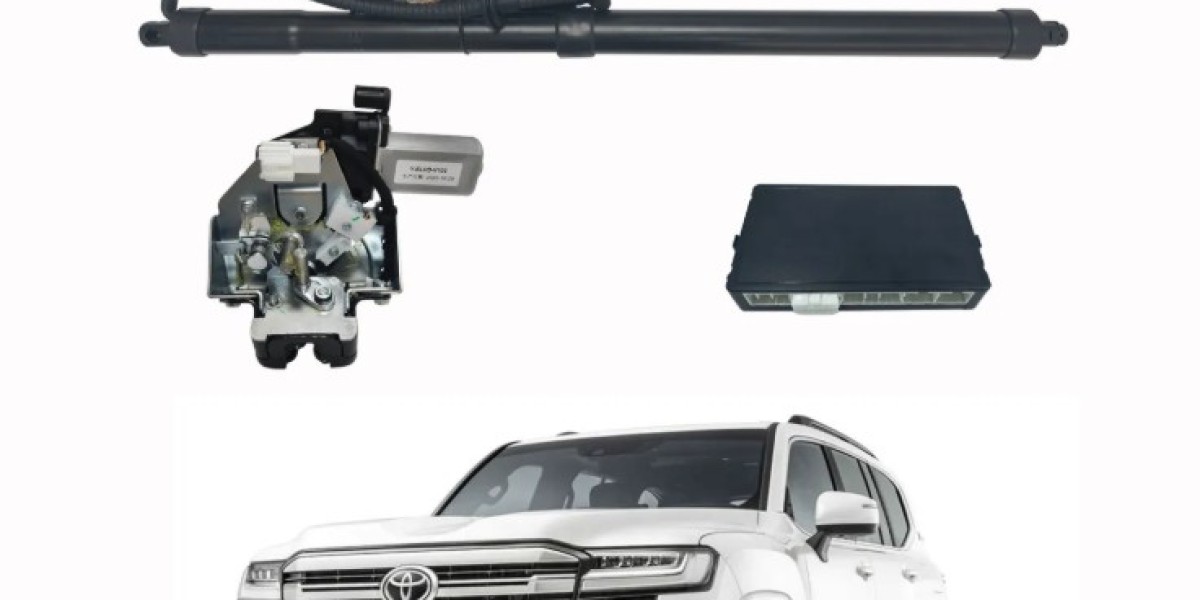

Many global auto parts distributors and car owners confuse power liftgate and automatic tailgate when sourcing aftermarket retrofit kits. The two terms frequently appear in search results, yet their internal structures and functional focus carry subtle differences. This article sorts out core differences from product structure, application range and market positioning, helping buyers quickly judge which product matches their sales demands and vehicle modification needs.
Power liftgate adopts double silent electric struts as main driving components, equipped with built-in height memory modules and anti-collision sensors. Most power liftgate kits target large SUVs and MPVs with heavy rear hatches, supporting remote key, cabin button and foot sensor triple control modes. The whole mechanical structure bears larger load, adapting to heavy tailgate panels of mid and large vehicles, and delivers smoother lifting and lowering strokes without obvious jitter during operation.
Automatic tailgate leans to compact crossover and sedan aftermarket modification, with simplified strut structure and basic electric control modules. It retains core automatic opening and closing functions while cutting extra auxiliary modules to control overall cost. Most automatic tailgate sets only support key fob and internal button operation, lacking hands free foot sensing function, which suits cost sensitive retail buyers and small scale auto repair shops.
Power liftgate fits family outdoor travel, commercial delivery vehicles and large SUV modification markets, pursuing comprehensive safety and intelligent functions. Automatic tailgate matches daily commuter compact cars and entry level vehicle retrofit projects, focusing on basic automatic convenience with lower budget threshold. Distributors can match corresponding products according to local consumer vehicle models and consumption levels to boost sales conversion rate.