
Introduction
Manufacturing has entered an era where precision is no longer a competitive advantage—it is a fundamental requirement. As product designs become increasingly complex and tolerances continue to tighten, traditional inspection techniques are struggling to keep pace with modern production demands.
Conventional measurement methods have served industries well for decades. However, manual inspections and contact-based measurement systems often require significant time, skilled labor, and repeated setups, making them less suitable for today's fast-paced manufacturing environments.
Modern 3d scanning services have transformed quality inspection by delivering high-speed, non-contact, and highly accurate digital measurements. From product development to production validation, these technologies provide manufacturers with reliable data that supports better decision-making and consistent quality.
The Limitations of Traditional Inspection
Traditional inspection relies heavily on manual measuring instruments, gauges, calipers, micrometers, and coordinate measuring machines (CMMs). While these tools remain valuable for specific applications, they often struggle with intricate geometries and large-scale components.
Complex surfaces, freeform shapes, and internal features require multiple measurements and repositioning. This increases inspection time while introducing the possibility of human error.
Manual inspection also depends significantly on operator expertise. Even experienced inspectors may produce slight measurement variations that affect consistency across production batches.
As manufacturing volumes increase, these limitations become more apparent, especially where speed and repeatability are essential.
Why Manufacturing Demands Have Changed
Today's manufacturers are expected to deliver products faster while maintaining exceptional quality standards. Product customization, shorter development cycles, and global competition have significantly raised quality expectations.
Industries such as aerospace, automotive, medical devices, energy, and heavy engineering require dimensional verification with micron-level precision.
Traditional inspection methods often become bottlenecks because they cannot generate comprehensive measurement data within the required timeframe.
Digital manufacturing environments demand inspection processes that are equally digital, automated, and scalable.
The Rise of Modern 3D Scanning Services
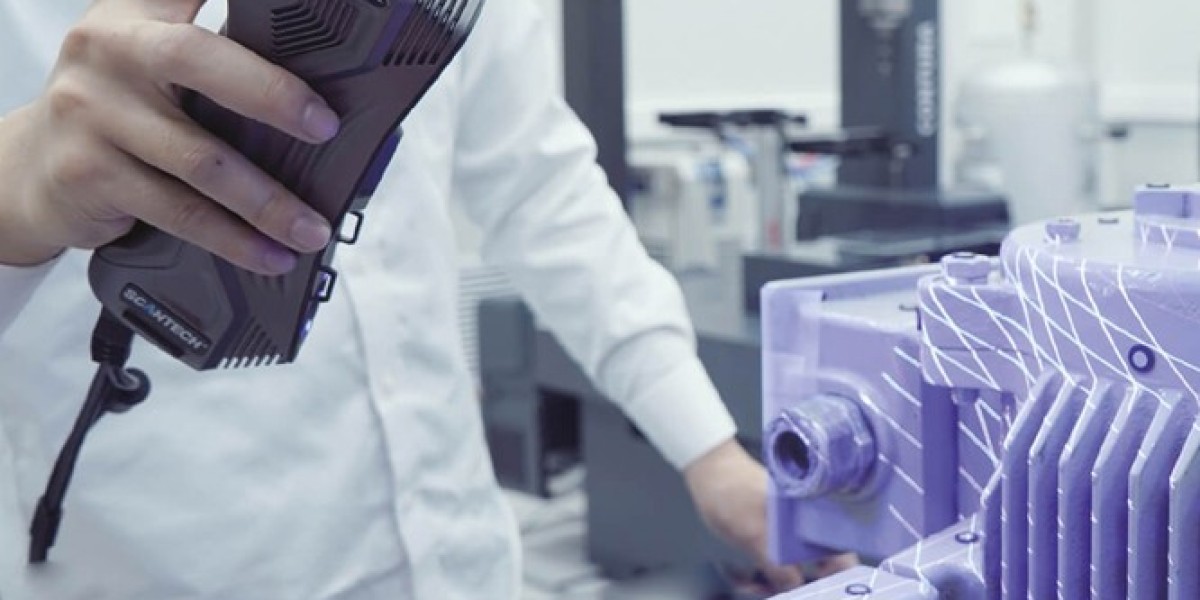
Modern 3d scanning services capture millions of measurement points within seconds, creating accurate digital representations of physical objects.
Unlike conventional measurement tools that record individual dimensions, laser scanners collect complete surface geometry in a single scan.
This comprehensive dataset allows engineers to evaluate every visible feature rather than relying on selected measurement points.
The result is a richer understanding of product quality and dimensional accuracy.
Complete Surface Measurement Instead of Sampled Data
Traditional inspection typically measures predefined dimensions specified on engineering drawings.
Although these measurements confirm critical features, they cannot reveal deviations across the entire component.
Modern scanning technologies generate dense point clouds that represent the entire object's surface.
This enables full-field inspection, helping engineers detect deformation, warpage, wear, and manufacturing defects that conventional methods may overlook.
Faster Inspection Without Sacrificing Accuracy
Inspection speed directly affects production efficiency.
Manual measurement often requires repeated setups, repositioning, and physical contact with the component.
High-resolution laser scanning significantly reduces inspection time by capturing complete datasets in only a few scans.
Manufacturers can inspect more components while maintaining high levels of dimensional accuracy.
Improved Inspection of Complex Geometries
Modern products increasingly feature organic shapes, internal channels, lattice structures, and intricate contours.
These geometries are difficult to measure using conventional tools.
Advanced laser scanners capture complex surfaces without requiring physical contact, making inspection simpler and more reliable.
This capability is especially valuable in additive manufacturing and precision engineering applications.
Reduced Human Error
Manual inspection depends heavily on operator judgment, measurement techniques, and documentation.
Even minor inconsistencies can affect quality reports and downstream processes.
Digital scanning automates much of the inspection workflow, reducing subjective interpretation and improving repeatability.
Standardized inspection procedures produce more reliable quality data across multiple operators and facilities.
Better Integration with Digital Manufacturing
Manufacturing is increasingly driven by digital workflows.
Inspection data must integrate seamlessly with CAD software, simulation platforms, and quality management systems.
Modern scanning solutions generate digital models that support reverse engineering, CAD comparison, digital twins, and manufacturing analytics.
This connectivity improves collaboration between design, production, and quality teams.
Comprehensive Deviation Analysis
Traditional inspection reports often consist of dimensional tables with measured values.
While useful, these reports provide limited visualization of product deviations.
Modern scanning software compares scanned models directly against CAD data using color deviation maps.
Engineers can immediately identify areas that exceed tolerance limits and determine the root cause of manufacturing issues.
Visual analysis accelerates quality decision-making while simplifying communication across departments.
Supporting Reverse Engineering
Many manufacturers continue operating legacy equipment for which original CAD models no longer exist.
Traditional measurement methods make recreating these components both time-consuming and resource-intensive.
Laser scanning captures complete geometry rapidly, providing accurate digital models for reverse engineering projects.
This approach reduces downtime while supporting equipment modernization and spare part production.
Non-Contact Inspection Protects Sensitive Components
Certain components cannot tolerate physical contact during measurement.
Thin materials, soft surfaces, delicate assemblies, and polished finishes may become damaged through conventional inspection methods.
Non-contact laser scanning eliminates this risk while maintaining exceptional measurement accuracy.
This makes it suitable for industries where product integrity is essential.
Scalability Across Industries
One of the greatest strengths of modern scanning technology is its versatility.
Small precision components, automotive assemblies, aircraft structures, industrial equipment, pipelines, molds, dies, and architectural assets can all be inspected using the same fundamental technology.
This flexibility allows organizations to standardize inspection processes across multiple production environments.
Supporting Predictive Quality Management
Quality inspection is no longer limited to identifying defective products after manufacturing.
Manufacturers increasingly use inspection data to predict process variation before defects occur.
Digital measurement datasets enable statistical analysis, trend monitoring, and continuous process improvement.
This proactive approach reduces scrap, minimizes rework, and enhances production stability.
Data-Driven Decision Making
Manufacturing leaders rely on accurate information to improve operational performance.
Traditional inspection provides limited datasets that may not fully represent product behavior.
Modern scanning generates comprehensive digital information that supports engineering decisions, process optimization, supplier validation, and compliance documentation.
Better data ultimately leads to better manufacturing outcomes.
Why Local Expertise Matters
For organizations seeking 3d scanning services in Chennai, selecting experienced technical specialists ensures that inspection projects are completed efficiently and accurately.
Local expertise provides faster project execution, easier collaboration, and greater familiarity with regional manufacturing requirements.
Whether supporting reverse engineering, dimensional inspection, or digital documentation, professional 3d scanning services in Chennai help manufacturers modernize quality processes while reducing project timelines.
The Future of Industrial Inspection
Manufacturing continues to evolve through automation, artificial intelligence, digital twins, and smart factories.
Inspection technologies must evolve alongside production systems.
Modern 3D scanning provides the digital foundation required for connected manufacturing environments, enabling accurate data capture throughout the product lifecycle.
Organizations adopting advanced inspection technologies are better positioned to improve quality, accelerate innovation, and remain competitive in increasingly demanding markets.
Conclusion
Traditional inspection methods remain valuable for specific measurement tasks, but they can no longer address the growing complexity, speed, and precision requirements of modern manufacturing.
Comprehensive digital measurement, faster inspection cycles, reduced human error, and seamless integration with digital engineering workflows have established modern 3D scanning as the preferred approach for industrial quality assurance.
R M Engineering Technologies is a specialist provider of on-site, mobile laser scanning services. We deliver a fast and cost-effective solution for the collection of physical data of an object in any desired environment.







