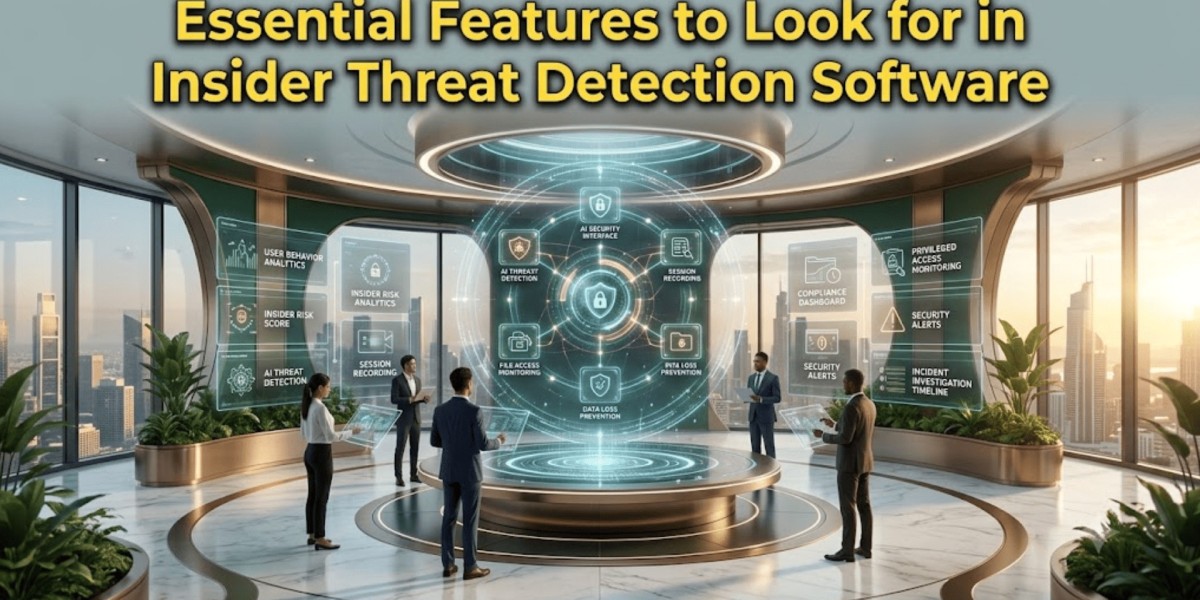

Organizations often focus on external cyberattacks, but many security incidents begin from within. Employees, contractors, vendors, or business partners with legitimate access can accidentally or intentionally expose sensitive information. Insider threat detection software helps organizations identify suspicious activities, monitor risky behavior, and respond before minor incidents become costly data breaches.
Whether the goal is protecting intellectual property, meeting compliance requirements, or reducing financial risk, choosing the right solution starts with understanding the features that matter most.
What Is Insider Threat Detection Software?
Insider threat detection software is a security solution designed to monitor user activities across an organization's systems, networks, and devices. It analyzes user behavior, detects unusual actions, and alerts security teams when activities indicate potential insider threats.
Common risks include:
- Unauthorized access to confidential files
- Large-scale data downloads
- Suspicious file transfers
- Privilege misuse
- Credential compromise
- Negligent employee actions
Modern solutions combine behavioral analytics, machine learning, and real-time monitoring to detect these risks before they escalate.
Key Features Every Insider Threat Detection Software Should Have
Real-Time User Activity Monitoring
Real-time visibility is the foundation of effective insider threat prevention.
Look for software that continuously monitors:
- File access
- Application usage
- USB device activity
- Cloud storage interactions
- Login behavior
- Network activity
Immediate alerts enable security teams to investigate incidents while they are still in progress.
User Behavior Analytics (UBA)
Every employee develops a normal pattern of work. User Behavior Analytics compares current activity against historical behavior to identify unusual actions.
Examples include:
- Accessing sensitive files outside working hours
- Downloading unusually large amounts of data
- Logging in from unfamiliar locations
- Accessing systems unrelated to job responsibilities
Behavior-based detection reduces false alarms compared to traditional rule-based monitoring.
Intelligent Risk Scoring
Instead of generating thousands of alerts, advanced platforms assign dynamic risk scores based on employee behavior.
Risk scoring helps security teams prioritize:
- High-risk users
- Repeated policy violations
- Escalating suspicious behavior
- Critical incidents requiring immediate investigation
This improves response efficiency and minimizes alert fatigue.
Detailed Audit Trails
Complete activity logs simplify investigations and compliance reporting.
A good solution should record:
- User actions
- File movements
- Device connections
- Application usage
- Login history
- Administrative changes
These records provide valuable forensic evidence after an incident.
Automated Alerts and Notifications
Security teams cannot manually monitor every user continuously.
Automated alerts should notify administrators when predefined conditions occur, such as:
- Mass file copying
- Unauthorized cloud uploads
- Sensitive document sharing
- Privilege escalation
- Repeated failed login attempts
Customizable alert thresholds help reduce unnecessary notifications.
Data Loss Prevention Integration
Insider threats often involve sensitive data leaving the organization.
Integration with Data Loss Prevention (DLP) tools enables organizations to:
- Block unauthorized file transfers
- Prevent confidential data uploads
- Monitor removable storage devices
- Enforce security policies automatically
This creates multiple layers of protection.
Why Behavioral Detection Matters More Than Traditional Monitoring
Traditional monitoring focuses on predefined rules.
Behavioral detection focuses on intent.
For example, copying ten confidential files may be normal for one employee but highly unusual for another. Modern platforms evaluate context before raising alerts, improving detection accuracy while reducing false positives.
This contextual intelligence enables organizations to identify both malicious insiders and accidental policy violations.
How Artificial Intelligence Improves Detection
AI enhances insider threat detection by continuously learning user behavior and recognizing subtle changes that humans may overlook.
Key advantages include:
- Faster anomaly detection
- Reduced false positives
- Predictive risk analysis
- Continuous learning
- Automated investigation assistance
As organizations grow, AI becomes increasingly valuable for monitoring thousands of users simultaneously.
Supporting Productivity Without Compromising Security
Many organizations use employee time tracking software to understand attendance, project allocation, and workforce productivity. When combined with security monitoring, businesses gain broader operational visibility while maintaining strong data protection practices. The goal is not excessive surveillance but creating a balanced environment where productivity and security work together to reduce organizational risk.
Questions to Ask Before Choosing a Solution
Before investing, evaluate whether the platform can:
- Scale with business growth
- Integrate with existing security tools
- Monitor cloud and remote environments
- Provide detailed forensic reports
- Support compliance requirements
- Deliver customizable alerts
- Offer intuitive dashboards for security teams
Selecting software with these capabilities helps future-proof your security strategy.
Best Practices for Successful Implementation
Technology alone cannot eliminate insider threats.
Organizations should also:
- Define clear security policies
- Educate employees on cybersecurity awareness
- Apply role-based access controls
- Review user permissions regularly
- Conduct periodic security audits
- Monitor privileged accounts more closely
- Develop a structured incident response plan
Combining people, processes, and technology creates a stronger defense against internal risks.
You can also watch this video: How To Stop Insider Threats? | EmpMonitor Insider Threat Prevention
Summary
Protecting sensitive business information requires visibility into user activity and the ability to recognize risky behavior before damage occurs. The right Insider threat detection software combines real-time monitoring, behavioral analytics, intelligent alerts, detailed audit logs, and AI-driven insights to help organizations reduce insider risks while supporting compliance and operational efficiency. Evaluating these essential features ensures businesses invest in a solution that can adapt to evolving security challenges and safeguard valuable digital assets.
Frequently Asked Questions
What is insider threat detection software used for?
It helps organizations identify suspicious user activities, detect unusual behavior, prevent data loss, and investigate potential insider security incidents before they become major breaches.
Who can benefit from insider threat detection solutions?
Businesses of all sizes, government agencies, healthcare organizations, financial institutions, educational institutions, and enterprises handling sensitive information benefit from these solutions.
Does insider threat detection replace antivirus software?
No. Antivirus protects against malware, while insider threat detection focuses on identifying risky user behavior and unauthorized access from individuals with legitimate system access.
Can these solutions support remote and hybrid work?
Yes. Modern platforms monitor endpoints, cloud applications, VPN access, and remote user activities, making them well suited for distributed workforces.
How do organizations reduce false alerts?
Solutions that use behavioral analytics, machine learning, contextual risk scoring, and customizable alert policies significantly improve detection accuracy while minimizing unnecessary notifications.