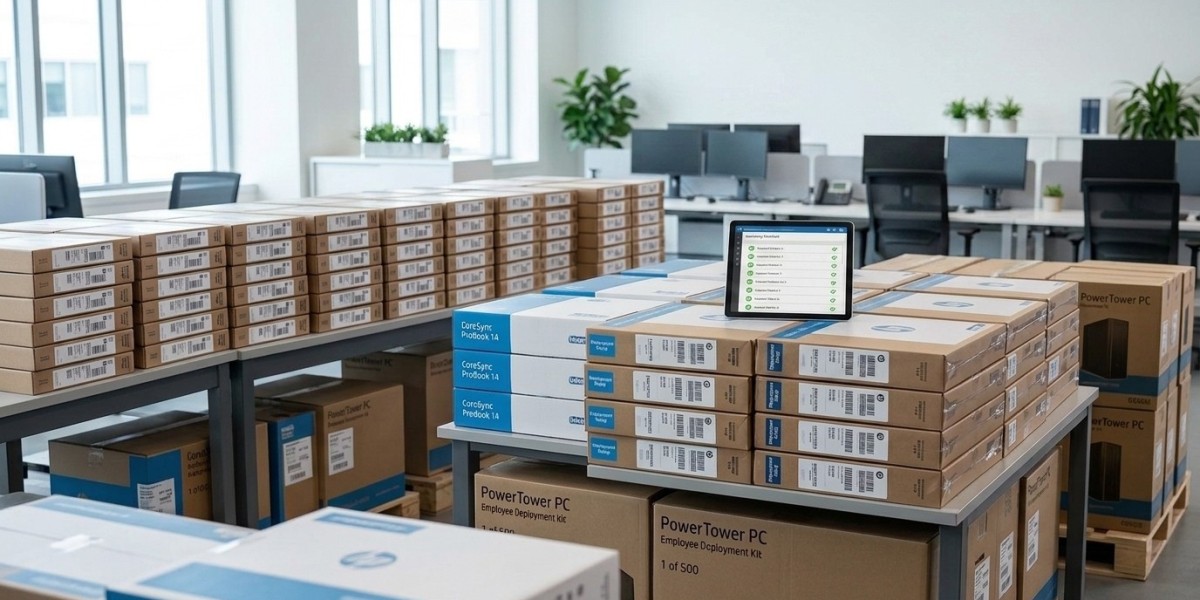

Every growing business eventually hits the same wall: aging laptops that crawl instead of run, servers that struggle under new workloads, and IT budgets that never seem to stretch far enough. When that moment arrives, the way a company chooses to buy its equipment can make the difference between a smooth, cost effective upgrade and a drawn out, budget draining ordeal. This is where bulk IT procurement for businesses becomes more than just a purchasing tactic. It becomes a strategic advantage.
Instead of purchasing devices one at a time as needs arise, many organizations are learning that it pays, quite literally, to buy IT hardware in bulk. Doing so allows companies to negotiate better pricing, standardize their technology environment, and reduce the administrative headaches that come with piecemeal purchasing. In this article, we will explore why bulk procurement matters, how it works, and what businesses should keep in mind to get the most value from their next hardware refresh.
What Is Bulk IT Procurement for Businesses?
At its core, bulk IT procurement for businesses refers to the practice of purchasing computers, servers, networking equipment, and other technology assets in large quantities rather than acquiring them individually or in small batches. This approach is common among enterprises, but it is increasingly being adopted by small and mid sized businesses as well, since suppliers are often willing to offer volume based pricing regardless of company size.
Rather than approaching each hardware need in isolation, procurement teams plan ahead, forecast future requirements, and negotiate directly with manufacturers or authorized resellers. As a result, businesses gain access to pricing tiers and contract terms that simply are not available to occasional, one off buyers.
Why Timing Matters in Bulk Purchasing
Timing plays a surprisingly large role in how much a company saves. Vendors frequently offer end of quarter or end of fiscal year discounts as they work to meet their own sales targets. Consequently, businesses that align their upgrade cycles with these windows can unlock additional savings on top of standard bulk pricing. Planning purchases around new product releases can also be beneficial, since older models are often discounted once a manufacturer announces a successor.
The Financial Benefits of Buying in Bulk
The most obvious advantage of bulk IT procurement for businesses is cost savings, but the financial upside extends well beyond the sticker price of each device.
Lower Per Unit Costs
Suppliers are generally willing to reduce per unit pricing as order volume increases. This is simply how manufacturing and distribution economics work. Producing and shipping larger quantities lowers the supplier's overhead per item, and that savings is often passed along to the buyer. For a business replacing fifty laptops, even a modest discount per unit can translate into thousands of dollars in savings.
Reduced Administrative and Shipping Costs
Placing a single large order is inherently more efficient than processing dozens of smaller purchase orders throughout the year. Fewer transactions mean less time spent on invoicing, approvals, and vendor communication. Additionally, consolidated shipping reduces freight costs compared to multiple smaller deliveries spread out over time.
Predictable Budgeting
Because bulk orders are typically planned well in advance, finance teams can forecast expenses more accurately. Instead of reacting to hardware failures or ad hoc requests throughout the year, businesses can allocate a fixed budget for a scheduled refresh cycle, which makes financial planning far more predictable.
Operational Advantages Beyond the Price Tag
While cost savings often get the most attention, the operational benefits of bulk purchasing deserve equal consideration.
Standardization Across the Organization
When a business buys IT hardware in bulk, it typically ends up with a fleet of devices that share the same specifications, operating system version, and configuration. This uniformity simplifies life for IT support teams, since troubleshooting becomes faster and more predictable when every machine behaves the same way. Furthermore, standardized hardware makes it easier to roll out software updates, security patches, and company wide policies without compatibility issues cropping up.
Simplified Warranty and Support Management
Bulk orders often come bundled with extended warranties or unified service agreements, which means IT teams no longer have to track multiple expiration dates and support contracts for individual devices. Instead, an entire batch of equipment can be covered under a single agreement, streamlining repairs and replacements when issues arise.
Faster Deployment
Rolling out fifty identical laptops is considerably faster than configuring fifty different models with varying specifications. Since bulk purchases usually involve consistent hardware, IT departments can create a single deployment image and apply it across the board, cutting setup time dramatically.
How Bulk IT Procurement for Businesses Supports Long Term Strategy
Beyond the immediate savings, bulk procurement also supports broader business goals. As companies scale, having a repeatable and efficient purchasing process becomes essential. Rather than scrambling to source equipment every time a new employee is hired or a device fails, businesses with an established bulk procurement strategy can simply draw from existing inventory or trigger a pre negotiated reorder.
Building Stronger Vendor Relationships
Consistent, large scale purchasing also strengthens relationships with suppliers. Over time, vendors are more likely to offer priority support, early access to new products, and more flexible payment terms to clients who represent reliable, recurring business. This kind of partnership can be invaluable during supply chain disruptions, when vendors may prioritize fulfilling orders for their most trusted clients first.
Supporting Sustainability Goals
Bulk procurement can also align with a company's sustainability initiatives. Many businesses now pair large hardware purchases with responsible recycling or trade in programs for outdated devices, ensuring that old equipment does not simply end up in a landfill. Some vendors even offer certified refurbished bulk options, allowing businesses to reduce costs and environmental impact simultaneously.
Best Practices for Successful Bulk IT Procurement
To fully capture the benefits of bulk IT procurement for businesses, a thoughtful approach is essential. Jumping into a large purchase without proper planning can lead to overspending on unnecessary features or underestimating future needs.
Assess Current and Future Needs
Before placing an order, it is worth conducting a thorough audit of existing hardware, employee headcount projections, and anticipated software requirements. This ensures the business purchases equipment that will remain useful for several years rather than becoming outdated shortly after deployment.
Compare Multiple Vendors
Even though bulk purchasing offers strong pricing, it is still wise to request quotes from several suppliers. Comparing offers side by side often reveals meaningful differences in pricing, warranty terms, and delivery timelines, allowing businesses to select the option that best fits their needs.
Negotiate Beyond the Price
Price is important, but it should not be the only point of negotiation. Businesses should also discuss warranty length, technical support availability, return policies, and the possibility of staggered delivery schedules, which can help manage cash flow while still locking in bulk pricing.
Plan for Scalability
Finally, businesses should think beyond their immediate needs. Choosing hardware that can accommodate future software updates or increased workloads helps avoid another costly upgrade cycle just a year or two down the road.
Final Thoughts
Hardware upgrades no longer need to be a source of financial stress or operational chaos. By embracing bulk IT procurement for businesses, organizations of nearly any size can secure meaningful cost savings, simplify IT management, and build a more resilient, forward looking technology strategy. From lower per unit pricing to faster deployment and stronger vendor relationships, the advantages extend well beyond the initial purchase.
As competition for technology resources continues to grow and supply chains remain unpredictable, businesses that plan ahead and commit to a structured bulk purchasing strategy will be far better positioned to adapt, scale, and thrive. The next time your organization faces a hardware refresh, consider whether buying in bulk could turn a routine expense into a genuine strategic advantage.