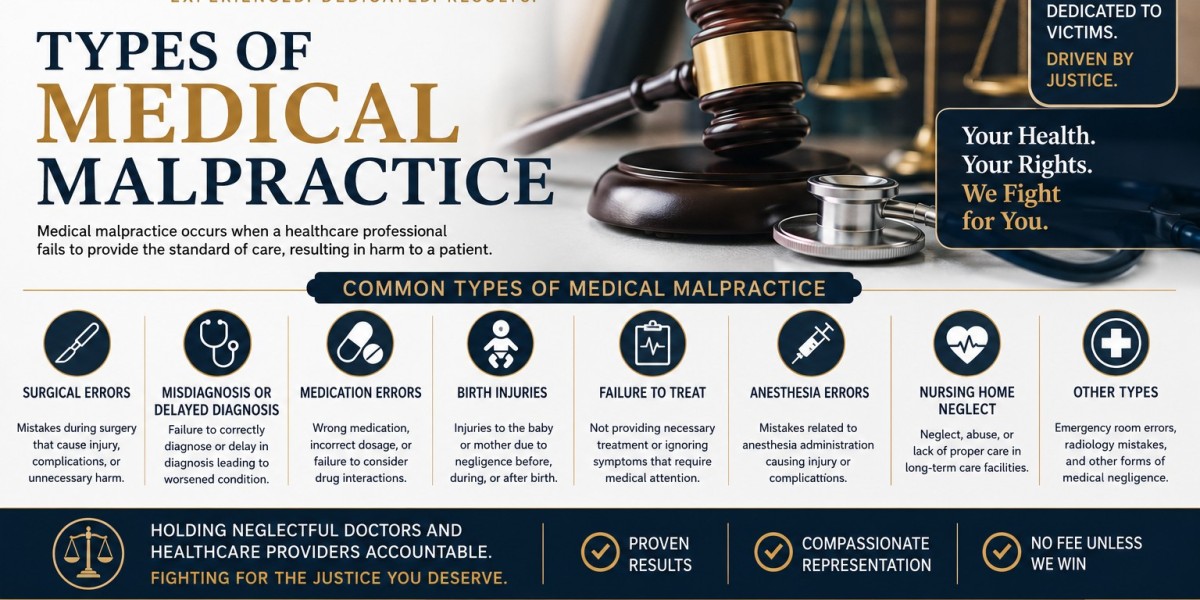

Medical malpractice occurs when a healthcare professional or medical facility fails to provide the accepted standard of care, resulting in injury or harm to a patient. While not every medical error qualifies as malpractice, negligence that causes preventable injuries may give patients the right to seek compensation. Understanding the types of medical malpractice can help you recognize when substandard medical care may have occurred.
1. Misdiagnosis
Misdiagnosis occurs when a healthcare provider incorrectly identifies a patient's illness or medical condition. An incorrect diagnosis can delay proper treatment and allow a condition to worsen.
Common examples include:
Diagnosing the wrong illness
Confusing similar medical conditions
Missing signs of serious diseases
2. Delayed Diagnosis
A delayed diagnosis happens when a doctor fails to diagnose a condition promptly, resulting in unnecessary complications or disease progression.
Delayed diagnoses frequently involve:
Cancer
Heart attacks
Stroke
Serious infections
3. Failure to Diagnose
Sometimes a physician completely fails to identify an existing medical condition despite obvious symptoms or available test results.
Failure to diagnose may prevent patients from receiving timely treatment, leading to avoidable injuries or death.
4. Surgical Errors
Surgical mistakes are among the most serious forms of medical malpractice.
Examples include:
Operating on the wrong body part
Performing the wrong procedure
Leaving surgical instruments inside the patient
Damaging nearby organs or nerves
Preventable surgical infections
Proper surgical planning and adherence to safety protocols help reduce these risks.
5. Medication Errors
Medication mistakes can occur at any stage of treatment.
Examples include:
Prescribing the wrong medication
Incorrect dosage
Dangerous drug interactions
Administering medication to the wrong patient
Pharmacy dispensing errors
Medication errors can cause severe complications or life-threatening reactions.
6. Birth Injuries
Medical negligence during pregnancy, labor, or delivery can lead to serious injuries for both mother and child.
Examples include:
Failure to monitor fetal distress
Delayed emergency cesarean section
Improper use of delivery instruments
Oxygen deprivation during birth
Nerve injuries
Birth injuries may result in lifelong medical needs.
7. Anesthesia Errors
Administering anesthesia requires careful monitoring and precise dosing.
Common anesthesia mistakes include:
Incorrect dosage
Failure to monitor vital signs
Delayed response to complications
Failure to review allergies or medical history
Improper intubation
These errors can lead to brain injury, cardiac complications, or death.
8. Emergency Room Negligence
Emergency departments must quickly evaluate and treat patients with serious medical conditions.
Common emergency room errors include:
Failure to recognize emergencies
Delayed treatment
Misdiagnosis
Inadequate patient monitoring
Failure to order necessary tests
These mistakes can have devastating consequences when immediate care is required.
9. Hospital Negligence
Hospitals may be responsible when systemic failures contribute to patient injuries.
Examples include:
Poor infection control
Inadequate staffing
Unsafe facilities
Improper patient supervision
Equipment failures
Hospitals have a responsibility to maintain a safe environment for patients.
10. Failure to Obtain Informed Consent
Patients have the right to understand the risks, benefits, and alternatives before undergoing medical treatment.
Medical malpractice may occur if a provider:
Performs a procedure without informed consent
Fails to explain significant risks
Omits available treatment alternatives
Without informed consent, patients cannot make fully informed healthcare decisions.
11. Failure to Monitor a Patient
Healthcare providers must closely monitor patients before, during, and after treatment.
Negligence may involve:
Ignoring changes in vital signs
Failing to recognize complications
Delayed response to emergencies
Inadequate post-operative monitoring
Prompt observation can prevent many serious complications.
12. Laboratory and Diagnostic Testing Errors
Errors involving medical tests can lead to delayed or incorrect treatment.
Examples include:
Misreading imaging studies
Incorrect laboratory results
Lost test samples
Failure to communicate abnormal findings
Delayed reporting of results
Accurate diagnostic testing is essential for proper medical care.
13. Prescription Drug Errors
Prescription-related mistakes may occur when healthcare providers fail to prescribe medications safely.
Examples include:
Incorrect prescriptions
Failure to consider allergies
Dangerous medication combinations
Prescribing contraindicated drugs
Inadequate dosage instructions
These errors may result in serious health complications.
14. Nursing Home Negligence
Residents of nursing homes depend on caregivers for proper medical attention and daily care.
Common forms of negligence include:
Medication errors
Falls
Bedsores
Malnutrition
Dehydration
Failure to monitor residents
Physical or emotional abuse
Families should remain alert for signs of neglect or mistreatment.
15. Failure to Treat
Even after making the correct diagnosis, a healthcare provider may fail to provide appropriate treatment.
Examples include:
Discharging a patient too early
Ignoring worsening symptoms
Delaying surgery
Failing to refer a patient to a specialist
Not providing necessary follow-up care
Failure to treat can allow medical conditions to become significantly worse.
Common Injuries Caused by Medical Malpractice
Medical negligence can result in serious injuries, including:
Brain injuries
Spinal cord injuries
Permanent disability
Organ damage
Severe infections
Paralysis
Birth-related injuries
Amputations
Emotional trauma
Wrongful death
These injuries often require extensive medical treatment and long-term care.
What to Do If You Suspect Medical Malpractice
If you believe you have been harmed due to medical negligence:
Seek immediate medical care from another qualified provider.
Request copies of your medical records.
Keep all medical bills and treatment documents.
Document your symptoms and recovery.
Avoid altering or discarding evidence related to your treatment.
Consult an experienced medical malpractice attorney to evaluate your legal options.
Conclusion
Medical malpractice can occur in many forms, from misdiagnosis and surgical errors to medication mistakes and birth injuries. Understanding the types of medical malpractice can help patients recognize when healthcare providers may have failed to meet accepted medical standards. If you or a loved one has suffered harm because of medical negligence, seeking legal guidance can help you understand your rights and determine whether you may be entitled to compensation for your injuries and losses.