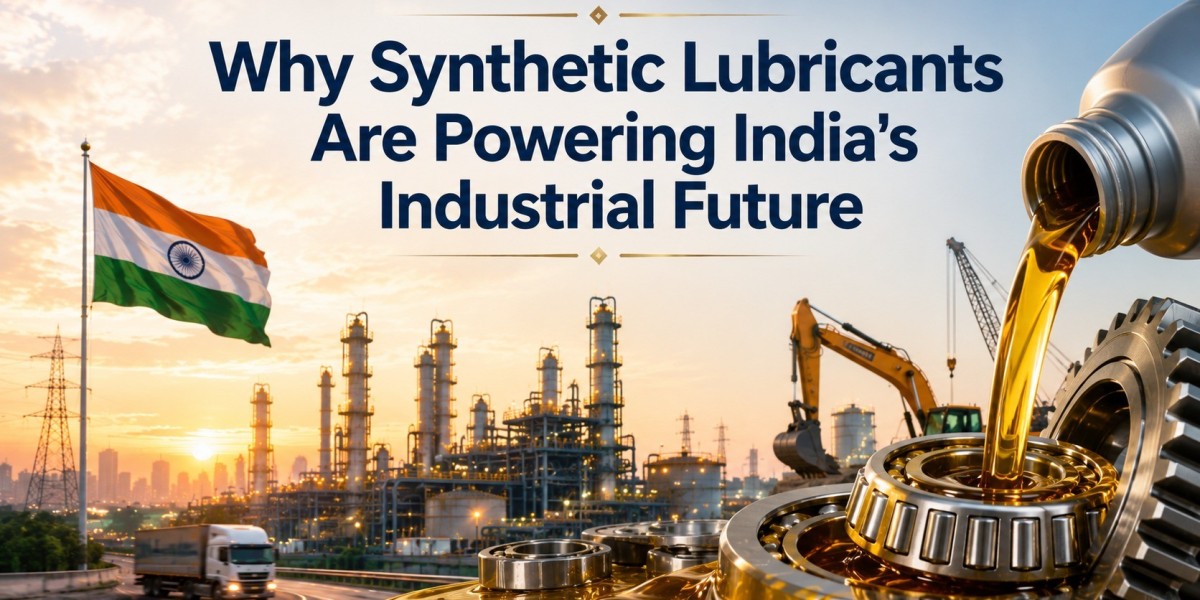

India’s industrial landscape is evolving rapidly as manufacturing, transportation, construction, and automotive activities continue to expand. With growing operational demands, industries are placing greater emphasis on equipment reliability, energy efficiency, and maintenance optimization. In this environment, synthetic lubricants have emerged as a practical solution for businesses seeking better performance under challenging operating conditions.
Unlike conventional mineral-based lubricants, synthetic lubricants are engineered to deliver consistent performance across a broader temperature range while offering enhanced protection against wear, oxidation, and deposits. Businesses looking for deeper insights into advanced lubricant technologies in India are increasingly exploring how these products support modern industrial requirements across multiple sectors.
The growing adoption of automation, precision manufacturing, and advanced machinery is also influencing lubricant selection. Industrial operators are moving beyond purchase price alone and evaluating the long-term operational value that premium lubricants can deliver. As a result, synthetic formulations are becoming an increasingly important part of maintenance strategies across India's expanding industrial ecosystem.
What Makes Synthetic Lubricants Different?
Synthetic lubricants are manufactured using carefully engineered base oils and specialized additive packages designed to provide superior lubrication characteristics. Their molecular structure offers greater consistency than conventional oils, enabling better performance in demanding operating environments where temperature fluctuations, heavy loads, or extended operating hours are common.
These lubricants maintain their viscosity more effectively, reduce friction between moving components, and resist oxidation for longer periods. Such properties contribute to smoother equipment operation and help minimize unexpected mechanical failures that can interrupt production schedules. According to the U.S. Department of Energy, improving lubrication practices can significantly enhance industrial energy efficiency and equipment performance. U.S. Department of Energy
Supporting India's Expanding Manufacturing Base
India continues to strengthen its position as a global manufacturing destination through investments in automotive production, heavy engineering, chemicals, electronics, and industrial infrastructure. As manufacturing facilities become more sophisticated, equipment reliability becomes increasingly important for maintaining productivity and product quality.
Synthetic lubricants help manufacturers support continuous operations by offering improved thermal stability, cleaner engine and machine components, and extended service intervals. These characteristics align well with industries seeking to improve operational efficiency while reducing maintenance-related downtime.
Benefits for the Automotive Sector
The automotive industry remains one of the largest consumers of advanced lubricants. Modern passenger vehicles, commercial fleets, and industrial transport equipment increasingly require lubricants capable of supporting higher engine temperatures, tighter engineering tolerances, and longer maintenance intervals.
Synthetic engine oils provide improved cold-start performance, better fuel efficiency potential, and enhanced protection under severe driving conditions. As vehicle technologies continue to evolve, lubricant performance is becoming an essential factor in maintaining engine durability and supporting manufacturer performance standards.
Industrial Equipment Demands Better Protection
Heavy machinery used in mining, construction, power generation, steel production, and manufacturing often operates under demanding conditions where lubrication quality directly affects operational reliability. Hydraulic systems, compressors, turbines, gearboxes, and bearings all benefit from lubricants capable of maintaining stable performance despite continuous mechanical stress.
Synthetic lubricants offer improved resistance to thermal degradation, helping reduce sludge formation and deposit buildup. Cleaner systems generally contribute to improved equipment efficiency and lower maintenance requirements, allowing businesses to maximize equipment availability.
Sustainability Is Becoming a Key Consideration
Many organizations are incorporating sustainability into maintenance and operational decision-making. Longer-lasting lubricants can contribute to waste reduction by extending oil change intervals and lowering lubricant consumption over time. Improved equipment efficiency may also support broader energy management initiatives.
International organizations such as the International Energy Agency continue to emphasize the importance of energy efficiency improvements across industrial sectors as part of long-term sustainability efforts. International Energy Agency
Technology Is Driving Lubricant Innovation
Research and development continue to improve lubricant formulations through advanced additive chemistry and high-performance synthetic base stocks. Manufacturers are introducing products designed for specialized industrial applications, electric mobility components, high-speed machinery, and equipment operating under extreme environmental conditions.
Digital maintenance practices, predictive monitoring systems, and condition-based maintenance are also increasing the value of premium lubricants by enabling organizations to optimize replacement schedules based on actual operating conditions instead of fixed maintenance intervals.
Future Outlook
India's continued industrial expansion, infrastructure development, automotive innovation, and manufacturing modernization are expected to strengthen demand for high-performance lubrication solutions. Organizations are increasingly recognizing that lubricant selection plays a meaningful role in improving equipment reliability, operational efficiency, and maintenance planning.
Industry analysis published by MarkNtel Advisors highlights the growing importance of synthetic lubricants as businesses continue investing in advanced machinery and productivity improvements. As industrial operations become more technologically advanced, synthetic lubricants are expected to remain an important component of efficient and reliable equipment performance.