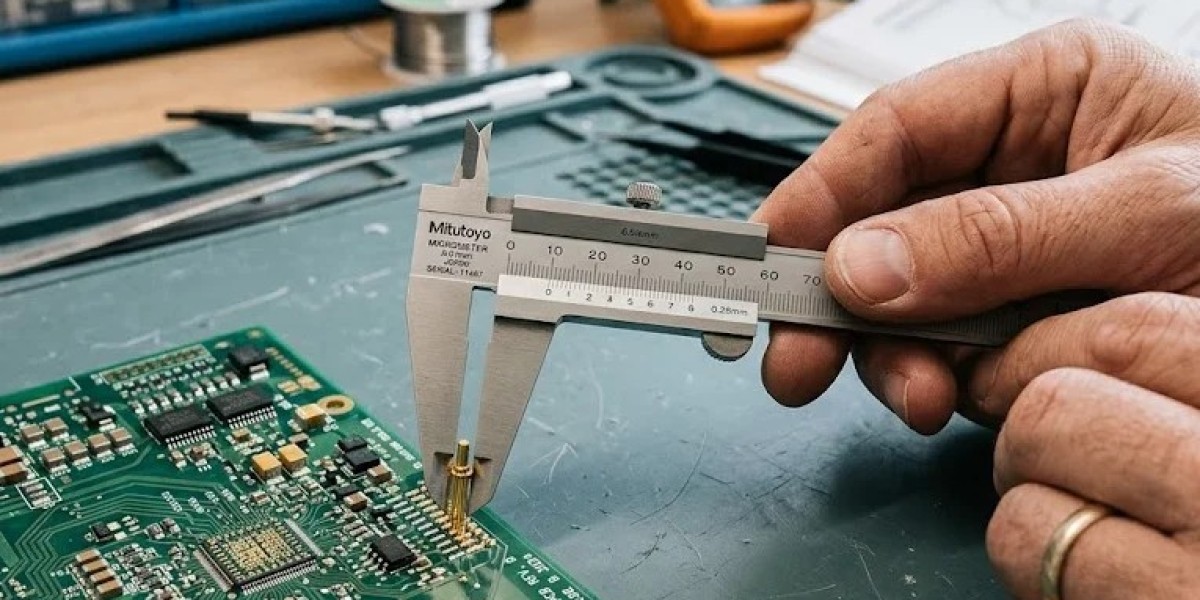

As manufacturing technologies continue to evolve, precision requirements are reaching unprecedented levels. In industries such as packaging equipment, medical devices, electronics assembly, precision machining, and micro-mechanical engineering, measuring accuracy is no longer limited to millimeters—it is often required at the micron level.
Traditional measuring tools remain valuable for many applications, but they are not always capable of inspecting today's increasingly compact and complex components. This is where the ultra-thin micro caliper becomes an indispensable solution.
Designed specifically for measuring narrow spaces, thin walls, deep grooves, and miniature parts, ultra-thin micro calipers provide the accuracy and accessibility needed in modern production environments. For manufacturers like West Lake Packaging Machinery, these instruments play an important role in maintaining consistent product quality, minimizing manufacturing errors, and meeting strict dimensional specifications.
Why Standard Calipers Are No Longer Enough
Conventional vernier and digital calipers are widely used across manufacturing, but they have several limitations when working with highly compact or precision-engineered components.
1. Difficulty Measuring Tight Spaces
Modern industrial products often feature:
- Narrow slots
- Deep recesses
- Thin-wall structures
- Compact mechanical assemblies
- Overlapping components
Standard caliper jaws are frequently too large to access these areas, making accurate measurement difficult or even impossible.
2. Reduced Measurement Consistency
Traditional calipers rely heavily on correct positioning by the operator. Even slight alignment errors can introduce measurement variations, especially when inspecting very small features.
As manufacturing tolerances become tighter, repeatability becomes just as important as accuracy.
3. Insufficient Precision for Advanced Manufacturing
Many industries now require tolerances of ±0.01 mm or even tighter. Under these conditions, conventional measuring tools may no longer provide the reliability needed for quality control.
Key Advantages of Ultra-Thin Micro Calipers
Ultra-thin micro calipers are specifically engineered to overcome the limitations of standard measuring tools.
Ultra-Thin Measuring Jaws
The most recognizable feature is the extremely slim jaw profile, allowing measurements in locations that standard calipers simply cannot reach.
These tools are ideal for measuring:
- Deep grooves
- Narrow channels
- Thin metal or plastic walls
- Small mechanical components
- Compact packaging machinery assemblies
This improved accessibility significantly expands the range of inspection applications.
High-Precision Measurement Performance
Modern ultra-thin micro calipers often incorporate advanced technologies such as:
- High-resolution digital sensors
- Precision linear encoder systems
- Anti-interference electronic circuitry
These features provide stable and repeatable measurements, even in demanding industrial environments.
Lightweight Yet Rigid Construction
Although the measuring jaws are much thinner than those of conventional calipers, structural strength is maintained through carefully engineered designs using:
- Hardened stainless steel
- Precision-ground alloy materials
- Optimized frame geometry
- Anti-deflection structural design
The result is excellent durability without sacrificing measurement accuracy.
Applications in Packaging Machinery Manufacturing
Precision measurement is especially important in the packaging equipment industry, where even minor dimensional errors can affect machine performance.
For manufacturers such as West Lake Packaging Machinery, ultra-thin micro calipers are commonly used during production, assembly, and maintenance to verify critical dimensions.
Typical inspection tasks include:
- Checking sealing component alignment
- Measuring cutting blade positions
- Verifying forming mold dimensions
- Inspecting film guide mechanisms
- Confirming assembly tolerances
Accurate measurements help ensure stable machine operation and consistent packaging quality.
Supporting Quality Control Throughout Production
Ultra-thin micro calipers have become valuable tools for quality assurance departments because they enable accurate inspection of components that are difficult to access.
They are frequently used for:
- Inspecting miniature components
- Verifying machining accuracy
- Measuring tooling wear
- Checking automated feeding systems
- Confirming dimensional consistency before assembly
Reliable measurements reduce production defects while improving overall manufacturing efficiency.
Improving Preventive Maintenance
Precision measuring tools are equally valuable during equipment maintenance.
Routine inspections with ultra-thin micro calipers allow technicians to identify:
- Early mechanical wear
- Component deformation
- Alignment deviations
- Progressive dimensional changes
By detecting these issues before they become serious problems, manufacturers can reduce unexpected downtime and extend equipment service life.
Materials Designed for Long-Term Accuracy
To maintain measurement precision under continuous industrial use, high-quality ultra-thin micro calipers are manufactured from durable materials.
Common material choices include:
- Hardened stainless steel for corrosion resistance
- Precision alloy steel for dimensional stability
- Carbon-fiber reinforced materials for lightweight applications
Many models also feature:
- Wear-resistant surface treatments
- Anti-glare finishes
- Low-friction sliding mechanisms
These design improvements help maintain smooth operation and consistent measurement performance over time.
Meeting the Needs of Smart Manufacturing
As Industry 4.0 continues to reshape manufacturing, measuring tools are becoming increasingly connected to digital quality management systems.
Many advanced ultra-thin micro calipers now support:
- USB or wireless data transmission
- Direct connection with quality management software
- Automatic measurement recording
- Statistical Process Control (SPC) integration
Instead of serving solely as manual inspection tools, they become part of a digital production ecosystem that supports real-time quality monitoring and process optimization.
Why More Manufacturers Are Choosing Ultra-Thin Micro Calipers
Several industry trends are accelerating the adoption of these precision instruments:
- Continued miniaturization of industrial components
- Increasingly strict dimensional tolerances
- Greater production automation
- Higher expectations for zero-defect manufacturing
- Rapid development of precision packaging equipment
As manufacturing technology advances, ultra-thin micro calipers are evolving from specialized inspection tools into standard equipment for many precision production environments.
Final Thoughts
Accurate measurement is one of the foundations of modern manufacturing. The ability to inspect complex geometries and ultra-small features directly influences product quality, production efficiency, and long-term equipment reliability.
Ultra-thin micro calipers provide manufacturers with the precision, accessibility, and consistency needed to meet today's demanding engineering standards. For companies like West Lake Packaging Machinery, investing in advanced measurement technology is not simply about inspection—it is an essential step toward delivering reliable products and maintaining competitive manufacturing performance.
As industrial designs continue to become smaller, more sophisticated, and more precise, ultra-thin micro calipers will remain an indispensable tool in precision engineering and quality assurance.