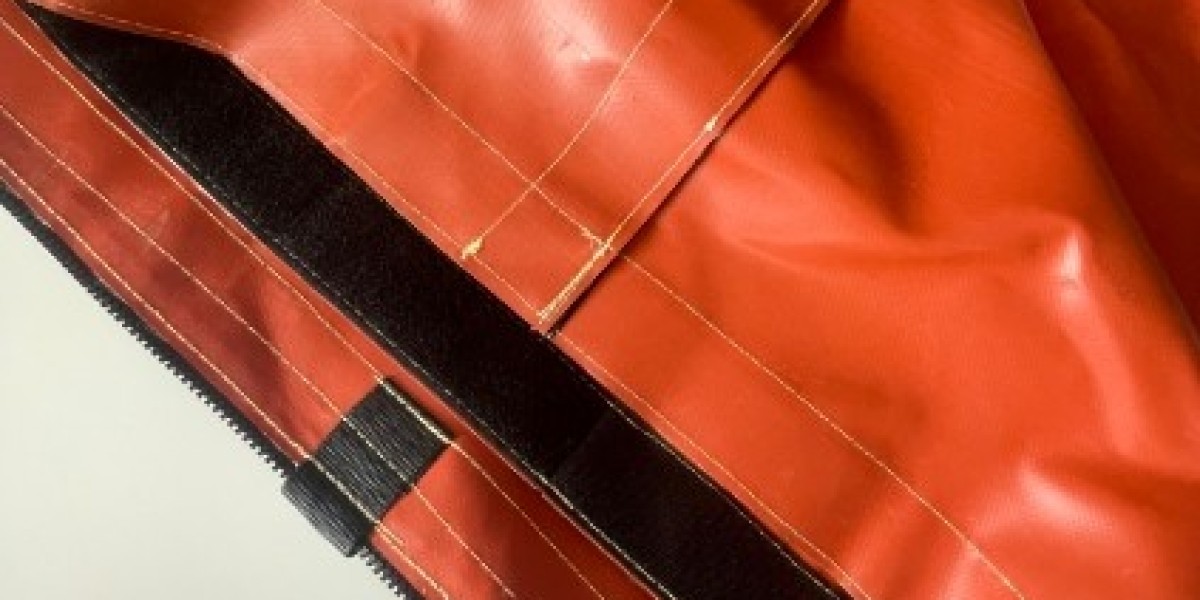

The scenario illustrates a procurement failure that repeats across the offshore industry: specifying a welding habitat for the mildest operation in the work scope rather than the most severe. The standard habitat was adequate for TIG welding — and inadequate the moment carbon-arc gouging entered the work plan.
The Four Scenarios That Demand Heavy-Duty Specification
Carbon-Arc Gouging and Weld Removal
Carbon-arc gouging generates a continuous stream of molten metal at 1,500°C directed downward into the welding habitat floor area. Unlike welding spatter — discrete particles that strike and cool — gouging produces a sustained pool of liquid steel that accumulates and transfers heat continuously into the floor panels.
Standard 550°C floor panels survive this exposure for 30-60 minutes before burn-through. Heavy-duty 850°C floor panels with vermiculite coating survive the full gouging operation — typically 2-4 hours of continuous or intermittent gouging — because the vermiculite coating causes molten metal to bead and roll rather than adhere. The thermal mass of the thicker fabric (1.0mm vs. 0.45mm) absorbs the conducted heat without allowing the back-side temperature to reach the panel's structural-failure point.
The specification rule: any welding habitat deployment involving carbon-arc gouging requires 850°C heavy-duty floor panels as a minimum. Wall and ceiling panels can remain at the 550°C standard specification because gouging spatter is directional — downward — rather than omnidirectional.
High-Wind Offshore Environments
Offshore platforms in the North Sea, Norwegian Sea, and South China Sea experience sustained wind speeds above 30 knots during winter maintenance seasons. A standard welding habitat assembled from lightweight panels may maintain structural integrity in these conditions but requires additional tie-down points and external guy lines to prevent the enclosure from deforming under gust loading.
A heavy-duty offshore welding habitat specification for high-wind environments includes: reinforced corner panels with integrated D-ring tie-down points at 1-meter spacing, heavier-gauge zippers (size #10 or larger vs. standard #8), and a structural frame kit — lightweight aluminum tubing that clips to the interior panel grid — providing additional rigidity without compromising the modular assembly advantage. The frame kit adds approximately 45 minutes to assembly time and $800-1,200 to the enclosure cost.
Confined-Space and Multi-Level Deployments
A welding habitat assembled inside a platform's confined process area — between parallel vessels, under pipe racks, inside模块 maintenance bays — faces different structural demands than an open-deck deployment. The enclosure must conform to irregular space geometries while maintaining pressure integrity.
Heavy-duty confined-space habitats use a higher proportion of custom-modified panels — angled-edge panels for column wraps, narrow infill panels for gap-filling, and reduced-height panels for low-clearance overhead. The panel map for a confined-space deployment typically includes 40-60% custom panels versus 10-20% for open-deck deployments. The assembly time increases proportionally — 5-7 hours versus 3-4 hours for the same enclosed volume.
Extended-Duration Deployments (5+ Days)
A welding habitat deployed for a 10-day riser-replacement project accumulates spatter damage, floor slag, and zipper wear at roughly twice the daily rate of a 2-day deployment because the panels are never decommissioned, inspected, or cleaned between work shifts — they remain assembled and in continuous service.
Heavy-duty extended-duration specifications include: 1.0mm wall panels instead of 0.45mm — providing additional thermal mass for cumulative spatter exposure, double-layer floor panels with a sacrificial top layer that is replaced mid-deployment if burn-through occurs, and scheduled mid-deployment inspections at the 5-day mark — a partial disassembly of the lower wall-to-floor zipper connections to inspect and clean accumulated slag that would otherwise cause burn-through by day 8 or 9.
A Real Heavy-Duty Deployment
A North Sea platform operator required a welding habitat for a 12-day riser-replacement project spanning carbon-arc gouging, TIG root welding, and stick-weld fill passes — all conducted in a single enclosure through the work sequence. The specification included: 850°C vermiculite-coated floor panels throughout the enclosure (not just the gouging zone, because spatter ricochet distributed slag across the full floor area), 1.0mm silicone-coated wall panels, a structural frame kit for 35-knot wind conditions, and a scheduled mid-deployment inspection at day 6. The habitat performed without panel failure across the full 12-day deployment. The mid-deployment inspection identified one floor panel with 40% coating loss from accumulated slag — the panel was replaced in 45 minutes during a scheduled shift change, preventing what would likely have been a burn-through failure on day 9 or 10.
Heavy-Duty Specification Checklist
Classify Every Operation in the Work Scope. Before specifying a welding habitat, list every hot-work operation in the planned scope and classify each as standard (TIG/MIG/stick welding), heavy (carbon-arc gouging, heavy grinding), or extreme (thermite welding, exothermic cutting). The most severe classification determines the floor-panel specification.
Account for Deployment Duration. A welding habitat deployed for more than five continuous days requires a mid-deployment inspection and may require upgraded panel specifications to handle cumulative spatter exposure that single-day deployments never accumulate.
Frequently Asked Questions
When is a heavy duty welding habitat required instead of a standard one?
A heavy-duty welding habitat is required for carbon-arc gouging, thermite welding, extended deployments exceeding five days, high-wind offshore environments above 30 knots, and confined-space installations requiring a high proportion of custom-modified panels.
What is the difference between standard and heavy duty offshore welding habitat?
Standard welding habitat uses 0.45mm panels rated for 550°C. Heavy-duty specification includes 850-1,000°C floor panels, 1.0mm wall panels, reinforced tie-down points, larger-gauge zippers, and an optional structural frame kit for high-wind environments.
How much more does a heavy duty welding habitat cost?
A heavy-duty welding habitat costs 30-50% more than a standard specification, driven primarily by upgraded floor panels ($25-35/m² premium), thicker wall panels, and the structural frame kit. The premium is recovered through avoided panel-failure downtime during operations.
Can a standard welding habitat be upgraded to heavy duty in the field?
Standard welding habitat wall panels cannot be field-upgraded to heavy-duty specification. Floor panels can be swapped for 850°C-rated replacements and a structural frame kit can be retrofitted. The enclosure's certification status may change with field modifications — verify with the panel supplier.
How does deployment duration affect welding habitat specification?
A welding habitat deployed for 5+ continuous days accumulates spatter damage that single-day deployments never experience. Specify 1.0mm wall panels and schedule a mid-deployment floor inspection at day 5 to identify and replace panels approaching burn-through.
What wind speed requires a heavy duty welding habitat?
Welding habitat deployments in sustained winds above 25 knots require reinforced tie-down points at 1-meter spacing. Deployments above 35 knots require the structural frame kit. Above 45 knots, habitat assembly is not recommended regardless of specification.