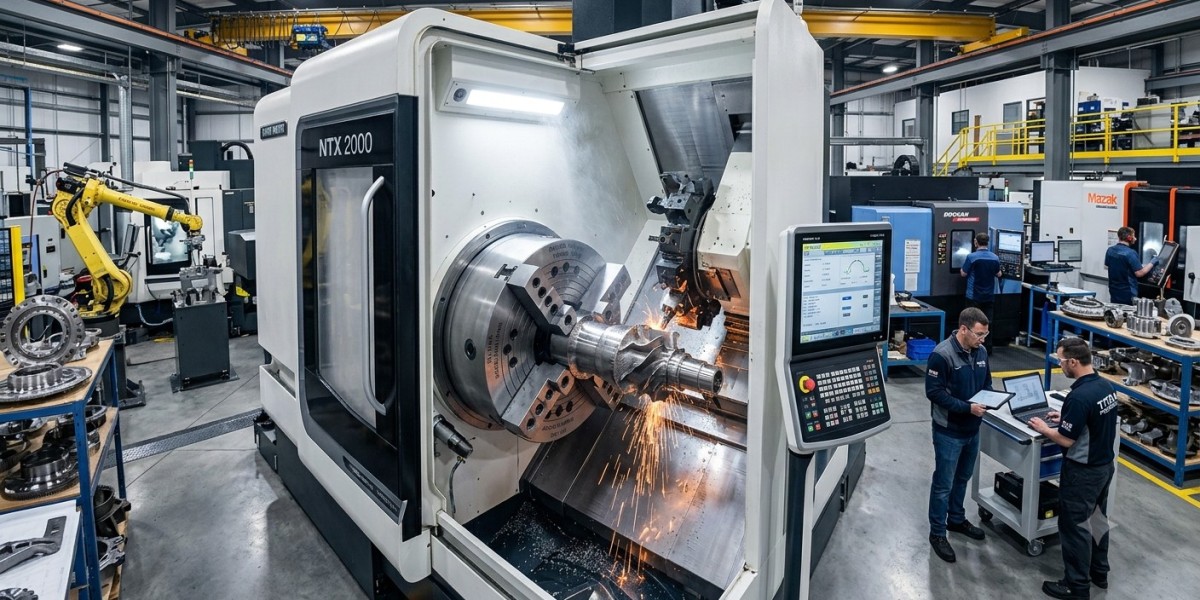

In precision manufacturing, even the smallest movement can create major quality problems. This is especially true in the aerospace and automotive industries, where parts must meet extremely tight tolerances. Special Round Jaws have become an essential workholding solution because they provide better gripping performance, improve part accuracy, and reduce production costs.
From holding thin titanium tubes to supporting automated CNC production lines, special round jaws help manufacturers achieve high precision and consistent results. Let's explore why these specialized jaws are becoming a critical investment for modern machine shops.
The High Cost of Part Slippage
Part slippage is one of the biggest challenges in machining. A workpiece that moves even a few microns during cutting can lead to:
- Poor surface finish
- Dimensional inaccuracies
- Increased scrap rates
- Tool damage
- Production delays
In aerospace manufacturing, even a minor deviation can make a part unusable. Components such as fuel nozzles, turbine parts, and landing gear pieces require exceptional accuracy.
Standard chuck jaws often struggle to hold complex geometries. They are designed for general applications and may not provide enough contact area for unusual shapes or delicate materials.
A stable grip directly affects the final part tolerance. The better the workholding system, the better the machining results.
Solving Complex Geometry Challenges
Modern industries produce components with increasingly complex designs. Thin walls, curved surfaces, and exotic materials require specialized gripping solutions.
Custom Contours for Exotic Alloys
Aerospace manufacturers commonly machine titanium and other high-performance alloys. These materials are expensive and difficult to work with.
For example, thin-walled titanium tubes can easily deform if clamping pressure is uneven.
Special round jaws solve this problem by:
- Providing custom-machined contact surfaces
- Distributing pressure evenly
- Reducing the risk of deformation
- Improving part stability during cutting
Instead of gripping at only a few points, round jaws create a larger contact area, minimizing stress on the workpiece.
Reducing Scrap in Turbine Blade Production
A turbine blade manufacturer experienced high scrap rates due to part movement during machining. After switching to custom round jaws designed specifically for the blade geometry, the company:
- Reduced scrap significantly
- Improved dimensional consistency
- Increased production efficiency
- Lowered rework costs
This example shows how proper workholding directly impacts profitability.
Concentricity in High-RPM Spinning
Many aerospace components rotate at extremely high speeds. Even small amounts of runout can affect performance and safety.
Eliminating Runout in Fuel Nozzles
Fuel nozzles require perfect centering during machining. Poor concentricity can result in:
- Uneven fuel flow
- Reduced engine performance
- Increased wear
- Product failure
Special round jaws are precision-ground to ensure accurate centering and eliminate runout.
Balanced Jaw Weights Improve Machine Life
Imbalanced workholding systems create vibration, which leads to:
- Faster spindle wear
- Reduced bearing life
- Poor surface finish
- Higher maintenance costs
Because special round jaws are carefully manufactured and balanced, they help machines run smoothly even at high spindle speeds.
Boosting Throughput in Automotive Production
Automotive manufacturers focus heavily on productivity. Every second saved during production increases profitability.
Rapid Changeover for Mixed-Model Production
Modern factories often produce multiple part variants on the same machine.
Traditional jaw changes can take hours and require machine downtime.
Special round jaws with quick-change inserts allow operators to:
- Switch between parts quickly
- Reduce setup time
- Increase machine utilization
- Improve production flexibility
Many manufacturers report significant reductions in cycle times after implementing dedicated round jaw systems.
Reducing Downtime
Shorter setup times mean:
- More production hours
- Higher machine output
- Lower labor costs
- Faster order completion
In competitive industries, these savings make a major difference.
Automating the Loading Process
Automation continues to transform manufacturing. CNC machines increasingly rely on robotic loading systems.
Integrating with Robotic Arms
Robotic pick-and-place systems need repeatable and reliable workholding.
Special round jaws help automation by providing:
- Consistent part positioning
- Repeatable clamping force
- Reliable seating of components
- Improved process stability
Reducing Human Error
Manual loading can cause:
- Incorrect alignment
- Part damage
- Setup inconsistencies
Automated systems combined with specialized jaws eliminate many of these problems and improve overall production quality.
Material Science and Jaw Durability
The performance of a chuck jaw depends greatly on its material.
Hardened Steels vs. Soft Jaws
Different applications require different jaw materials.
Hardened Steel Jaws
Best for:
- Heavy cutting operations
- High gripping forces
- Long production runs
- Tough materials
Soft Jaws
Ideal for:
- Finished surfaces
- Delicate materials
- Custom-machined contours
- Preventing surface damage
Choosing the correct jaw material protects both the workpiece and the machine.
Using Carbide Inserts for Abrasive Materials
Some materials, such as cast iron and composite materials, wear jaws quickly.
Carbide inserts provide:
- Longer service life
- Improved wear resistance
- Reduced maintenance costs
- Better dimensional consistency
Matching Jaw Hardness to the Workpiece
A jaw that is too hard may damage the workpiece.
A jaw that is too soft may not hold the part securely.
Proper hardness matching helps:
- Prevent marring
- Improve grip
- Extend jaw life
- Increase part repeatability
Over time, worn jaws create inconsistent clamping and increase the risk of producing out-of-spec parts.
Thermal Expansion Management
Heat is another major challenge in machining.
Heavy roughing cuts generate significant temperatures that can affect both the workpiece and the workholding system.
Handling Heat Buildup
As temperatures rise:
- Materials expand
- Clamping forces change
- Accuracy decreases
Special round jaws designed for high-temperature environments maintain better grip stability during temperature changes.
Thermal Stability in Aerospace Applications
Aerospace standards require extremely tight tolerances.
Even small dimensional changes caused by thermal expansion can lead to rejected parts.
Thermally stable jaw materials help manufacturers maintain accuracy throughout the machining cycle.
ROI of Specialized Workholding
Some shops hesitate to invest in specialized jaws because of the initial cost.
However, the long-term savings often make the investment highly profitable.
Reducing Secondary Operations
Poor workholding frequently requires additional operations such as:
- Repositioning
- Re-measuring
- Additional finishing
Special round jaws often allow manufacturers to complete more features in a single setup.
Benefits include:
- Reduced labor costs
- Faster production
- Better accuracy
- Higher throughput
Lowering Total Cost Per Part
Although custom jaws cost more than standard jaws initially, they reduce:
- Scrap
- Rework
- Setup time
- Machine downtime
The result is a lower total cost per part and improved profitability.
Quality Assurance and Scrap Reduction
Quality requirements in aerospace and automotive manufacturing continue to become stricter.
Lowering Out-of-Spec Parts
Stable workholding helps manufacturers produce:
- Better dimensional accuracy
- Consistent surface finishes
- Improved repeatability
- Higher first-pass yield
Meeting Industry Standards
Manufacturers serving aerospace and automotive customers often need to comply with:
- AS9100 quality standards
- IATF 16949 requirements
Reliable workholding systems play an important role in meeting these demanding certifications.
Reducing Rework Costs
An engine block manufacturer reduced rework expenses significantly after implementing custom round jaws that improved part positioning and repeatability.
The savings quickly exceeded the cost of the new workholding system.
Future-Proofing Your Machine Shop
Manufacturing continues to evolve, and machine shops must prepare for future demands.
Adopting Modular Jaw Systems
Modular systems provide:
- Greater flexibility
- Faster changeovers
- Easier customization
- Lower tooling inventory
Implementing Regular Wear Audits
Regular inspections help identify:
- Uneven wear patterns
- Damaged gripping surfaces
- Declining performance
Preventive maintenance keeps quality levels high and avoids unexpected downtime.
Moving Toward Data-Driven Clamping
Modern manufacturing increasingly uses sensors and monitoring systems to track:
- Clamping pressure
- Jaw wear
- Machine conditions
- Production consistency
Data-driven workholding solutions will become an important part of smart manufacturing and Industry 4.0 initiatives.
Conclusion
Precision manufacturing demands reliable and accurate workholding solutions. Special Round Jaws provide superior gripping performance for complex geometries, delicate materials, and automated production environments.
By improving concentricity, reducing scrap, increasing throughput, and supporting strict quality standards, these specialized jaws have become essential tools for aerospace and automotive manufacturers.
For machine shops looking to improve quality, lower costs, and prepare for future manufacturing challenges, investing in special round jaws is not simply a tooling upgrade—it's a strategic decision that delivers long-term competitive advantages.