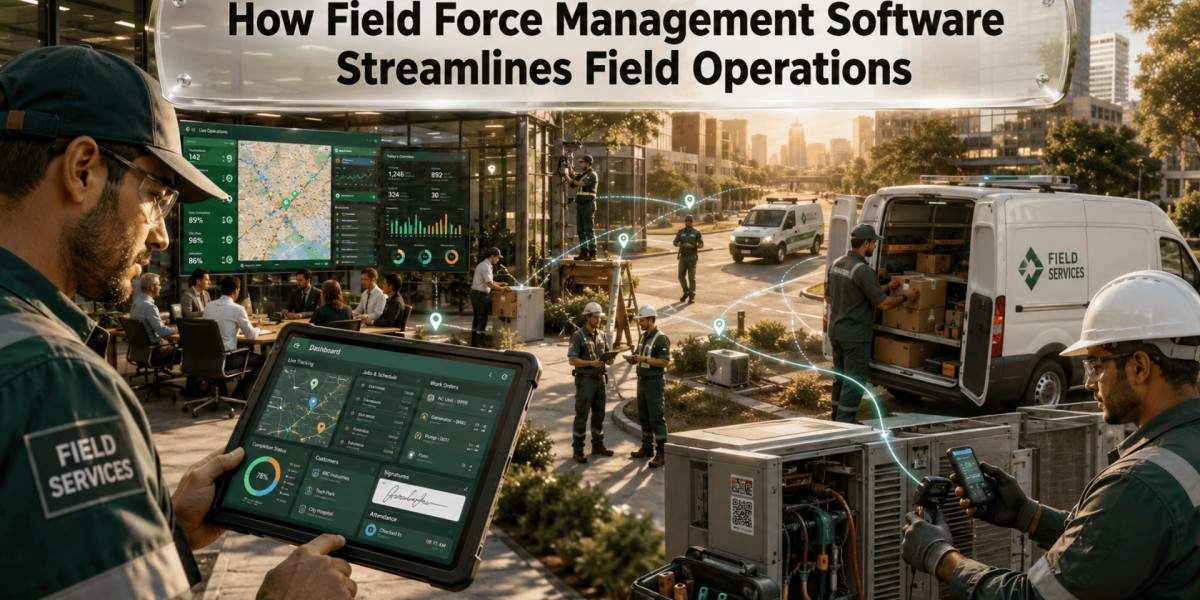
How can businesses manage field teams more efficiently while reducing delays and improving customer satisfaction? The answer lies in adopting smarter digital solutions that provide real-time visibility, seamless communication, and better task coordination.
Organizations that rely on technicians, sales representatives, delivery personnel, or service engineers often struggle with scheduling, route planning, and workforce accountability. Modern workforce management platforms solve these challenges by automating daily operations, improving decision-making, and helping managers track field activities from a centralized dashboard.
Businesses that embrace digital field operations typically experience faster response times, improved productivity, reduced operational costs, and higher customer satisfaction.
What Is Field Force Management?
Field force management is the process of organizing, monitoring, and optimizing employees who perform work outside the office. Field force management software enables organizations to assign tasks, monitor progress, and communicate with mobile employees in real time instead of relying on manual reporting or spreadsheets.
Common industries that benefit include:
- Healthcare
- Telecommunications
- Logistics
- Utilities
- Construction
- Retail
- Facility management
- Maintenance services
A centralized management system ensures everyone stays connected regardless of location.
Why Businesses Need Better Field Operations
Managing a distributed workforce comes with several challenges.
These may include:
- Delayed task assignments
- Limited visibility into employee locations
- Inefficient route planning
- Communication gaps
- Inaccurate attendance records
- Missed customer appointments
- Manual paperwork
Without proper visibility, managers often spend valuable time following up instead of focusing on strategic improvements.
This is where field force management software becomes an essential business solution by bringing scheduling, tracking, reporting, and communication into one intelligent platform.
Key Features That Improve Productivity
An effective field operations platform includes several powerful capabilities that simplify everyday work.
Real-Time Location Tracking
Managers can monitor employee movement and verify job completion without constant phone calls.
Smart Scheduling
Automatic task allocation ensures employees receive assignments based on availability, skills, and location.
Route Optimization
Efficient route planning reduces travel time, saves fuel costs, and enables more customer visits each day.
Attendance Management
GPS-based attendance helps eliminate manual check-ins while providing accurate work-hour records.
Mobile Access
Employees can receive tasks, upload reports, capture photos, and update job status directly from their smartphones.
Instant Notifications
Real-time alerts help field staff stay informed about schedule changes, urgent assignments, or customer requests.
Benefits for Businesses
Organizations implementing digital field management often experience measurable improvements across multiple departments.
Some major advantages include:
- Faster service delivery
- Improved workforce accountability
- Better resource utilization
- Increased employee productivity
- Lower administrative workload
- Accurate reporting
- Higher customer satisfaction
- Reduced operational costs
These improvements contribute to stronger business performance while making daily operations significantly easier to manage.
Enhancing Security Alongside Productivity
Operational efficiency should never come at the cost of business security. Organizations handling customer information, confidential documents, or sensitive operational data should also consider implementing Insider threat detection software alongside workforce management solutions.
Combining operational visibility with proactive security monitoring helps organizations identify unusual activities, protect valuable business information, and strengthen overall compliance without disrupting employee productivity.
A balanced approach supports both operational excellence and data protection.
Best Practices for Successful Implementation
Introducing a new management system requires thoughtful planning.
Follow these steps for a smoother transition:
- Identify operational challenges.
- Define measurable business goals.
- Select software that supports future growth.
- Train field employees thoroughly.
- Monitor performance metrics regularly.
- Gather employee feedback.
- Continuously optimize workflows.
Successful implementation depends not only on technology but also on employee adoption and ongoing process improvement.
How to Choose the Right Solution
Before investing, evaluate software based on your organization's operational needs.
Look for features such as:
- User-friendly interface
- Mobile compatibility
- GPS tracking
- Offline functionality
- Automated reporting
- Workflow customization
- Cloud-based accessibility
- Third-party integrations
- Data security
- Scalability
A flexible platform will continue supporting business growth without requiring frequent system changes.
The Future of Field Operations
Technology continues to reshape how organizations manage remote teams.
Emerging innovations include:
- Artificial intelligence for intelligent scheduling
- Predictive workforce analytics
- Automated dispatching
- IoT-enabled equipment monitoring
- Digital forms and paperless documentation
- Advanced business intelligence dashboards
As organizations continue modernizing operations, field force management software will remain a key driver of efficiency, visibility, and customer service excellence.
You can also watch this video: Field Force Tracking: The Ultimate App for Managing Your Mobile Workforce
Summary
Efficient field operations require more than manual coordination and spreadsheets. Field force management software helps organizations automate scheduling, improve communication, optimize routes, and increase workforce visibility. By adopting the right platform, businesses can enhance productivity, reduce operational costs, and consistently deliver exceptional customer service while preparing for future growth.
Frequently Asked Questions
What is field force management software?
It is a digital solution that helps businesses schedule, monitor, and manage employees working outside traditional office environments through real-time tracking, reporting, and communication tools.
Which industries benefit the most?
Industries such as logistics, healthcare, utilities, telecommunications, construction, retail, and facility management gain significant operational improvements.
Does it improve customer satisfaction?
Yes. Faster response times, accurate scheduling, improved communication, and timely service delivery contribute to a better customer experience.
Is it suitable for small businesses?
Absolutely. Many scalable solutions are designed for organizations of all sizes, allowing businesses to grow without changing their operational processes.