
Introduction
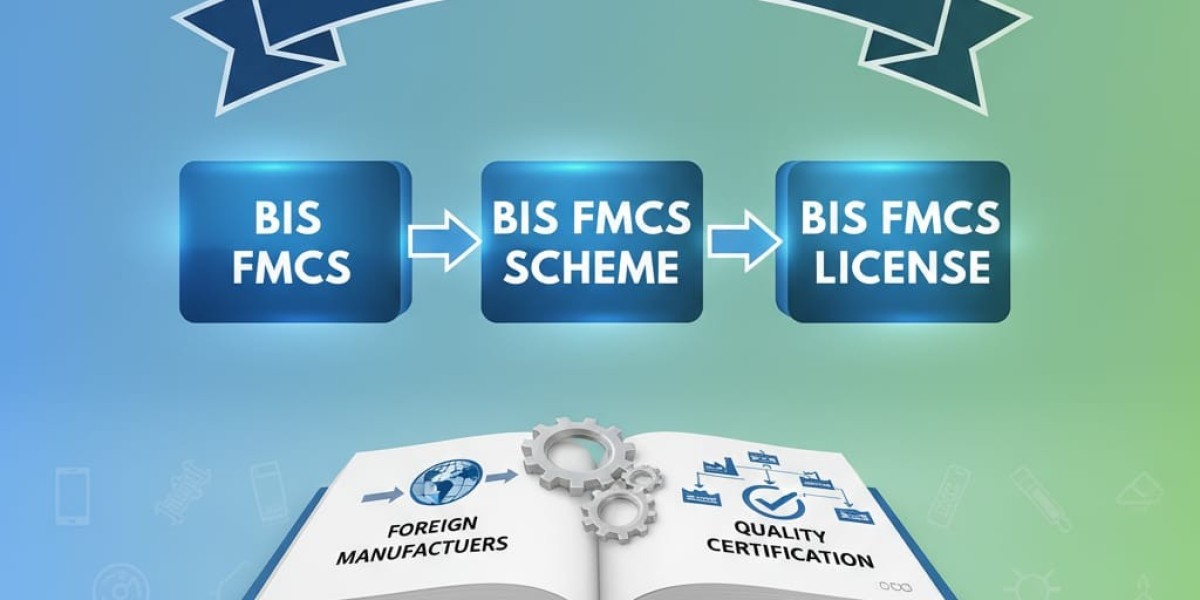
Expanding into the Indian market offers significant opportunities for foreign manufacturers, but compliance with Indian quality regulations is essential. One of the most important certification systems for overseas manufacturers is the BIS FMCS. The BIS FMCS Scheme enables foreign manufacturers to obtain approval from the Bureau of Indian Standards (BIS) and legally sell products in India that fall under mandatory certification requirements. A valid BIS FMCS License demonstrates that your manufacturing process and products comply with Indian Standards. Once approved, manufacturers receive a BIS FMCS Certificate, allowing them to use the Standard Mark on eligible products and strengthen their presence in the Indian market.
What is BIS FMCS?
BIS FMCS stands for the Foreign Manufacturers Certification Scheme, a certification program introduced by the Bureau of Indian Standards (BIS). This scheme allows manufacturers located outside India to certify products according to applicable Indian Standards before exporting them to India. Through the BIS FMCS Scheme, foreign manufacturers can ensure that their products meet the same quality and safety standards required for products manufactured within India. The scheme plays a vital role in maintaining product quality, protecting consumers, and ensuring compliance with Indian regulations.
What is the BIS FMCS Scheme?
The BIS FMCS Scheme is specifically designed for overseas manufacturing units. It applies to products covered under mandatory BIS certification requirements, particularly those notified through Quality Control Orders (QCOs).
Under this scheme, BIS evaluates:
Manufacturing facilities
Quality control systems
Production capability
Product testing results
Compliance with applicable Indian Standards
After successful evaluation, BIS grants certification to eligible manufacturers.
Who Needs a BIS FMCS License?
A BIS FMCS License is generally required for foreign manufacturers who wish to export regulated products to India.
This includes manufacturers of:
Steel products
Cement
Electrical equipment
Household appliances
Chemicals
Automotive components
Industrial products
Construction materials
Consumer goods
Pressure equipment
If the product falls under mandatory BIS certification, obtaining the license is essential before exporting it to India.
What is a BIS FMCS Certificate?
A BIS FMCS Certificate is the official approval issued by the Bureau of Indian Standards after successful completion of the certification process.
The certificate confirms that:
The manufacturing unit complies with Indian Standards.
The production process follows quality management requirements.
Products consistently meet prescribed safety and performance standards.
The manufacturer is authorized to use the BIS Standard Mark.
Receiving the certificate improves product credibility and simplifies access to the Indian market.
Benefits of BIS FMCS
Obtaining BIS FMCS approval provides several advantages for foreign manufacturers.
1. Legal Market Access
Products covered under mandatory BIS regulations cannot be imported into India without appropriate certification.
2. Increased Customer Confidence
Indian buyers prefer certified products because they comply with recognized safety and quality standards.
3. Competitive Advantage
Certified products gain greater acceptance among distributors, retailers, and institutional buyers.
4. Improved Brand Reputation
A valid BIS FMCS Certificate demonstrates a manufacturer's commitment to quality and regulatory compliance.
5. Reduced Regulatory Risk
Compliance minimizes the chances of customs delays, product rejection, or regulatory penalties.
Documents Required for BIS FMCS License
Although document requirements vary depending on the product category, applicants generally need:
Manufacturing license
Company registration documents
Factory layout
Product specifications
Manufacturing process details
Quality control procedures
Testing reports
List of manufacturing equipment
Calibration records
Authorized Indian Representative (AIR) details
Trademark documents (if applicable)
Providing complete and accurate documentation helps ensure a smoother approval process.
Step-by-Step BIS FMCS Scheme Process
Step 1: Product Identification
Identify the applicable Indian Standard (IS) for the product.
Step 2: Document Preparation
Compile all technical and legal documents required by BIS.
Step 3: Product Testing
Submit product samples for testing at a BIS-recognized laboratory.
Step 4: Application Submission
Submit the application along with all supporting documents.
Step 5: Factory Inspection
BIS officials inspect the overseas manufacturing facility to verify production capability and quality control systems.
Step 6: Technical Evaluation
The Bureau evaluates inspection findings, laboratory reports, and documentation.
Step 7: Grant of BIS FMCS Certificate
Upon successful verification, BIS issues the BIS FMCS Certificate and grants the BIS FMCS License.
Role of the Authorized Indian Representative (AIR)
Foreign manufacturers applying under the BIS FMCS Scheme are generally required to appoint an Authorized Indian Representative (AIR).
The AIR acts as the official point of contact between BIS and the foreign manufacturer and assists with:
Application coordination
Regulatory communication
Documentation support
Compliance management
Renewal procedures
Selecting an experienced AIR helps simplify the certification process.
Common Challenges During BIS FMCS Certification
Manufacturers often encounter challenges such as:
Incorrect product classification
Missing documentation
Product testing failures
Delays in factory inspections
Non-compliance with Indian Standards
Incomplete quality management records
Proper preparation and technical review before application can significantly reduce these issues.
Best Practices for Successful BIS FMCS Certification
Foreign manufacturers can improve the approval process by following these recommendations:
Verify the correct Indian Standard before applying.
Conduct internal quality audits.
Maintain updated calibration and testing records.
Ensure consistent manufacturing processes.
Prepare complete documentation.
Coordinate effectively with the Authorized Indian Representative.
Respond promptly to BIS observations and queries.
These practices help reduce delays and improve certification success rates.
Conclusion
The BIS FMCS program is an essential certification system for foreign manufacturers exporting regulated products to India. Through the BIS FMCS Scheme, manufacturers can demonstrate compliance with Indian quality and safety standards while gaining legal access to one of the world's largest consumer markets. Obtaining a BIS FMCS License and BIS FMCS Certificate not only fulfills regulatory requirements but also enhances brand reputation, customer trust, and long-term business growth. Proper planning, complete documentation, and adherence to BIS guidelines ensure a smoother certification journey.