
Every four years, the world seems to stop.
Schools adjust schedules. Offices become quieter. Streets empty as millions rush home to watch football. Families gather around televisions, strangers celebrate together in public squares, and nations unite behind a single flag.
No other sporting event creates this level of global excitement.
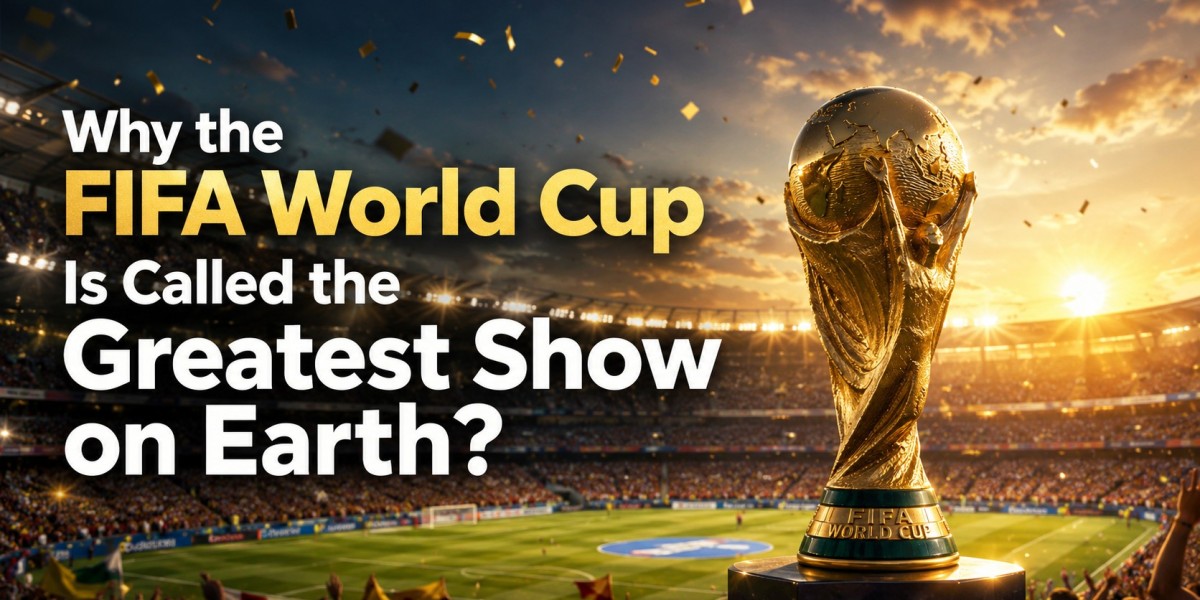
That is why the FIFA World Cup has earned one of the most iconic nicknames in sports history: "The Greatest Show on Earth."
But is it simply marketing, or does the tournament genuinely deserve that title?
The numbers—and history—suggest it does.
A Tournament That Captivates Billions
Few sporting events can claim to reach nearly every corner of the globe.
According to FIFA, more than 5 billion people engaged with the 2022 FIFA World Cup through television broadcasts, streaming platforms, digital media, and social networks. The final between Argentina and France attracted an estimated 1.5 billion viewers, making it one of the most-watched sporting events ever.
No annual club competition—not even the UEFA Champions League—comes close to matching that global audience.
The World Cup is more than a football tournament. It becomes a shared global experience. You can watch the FIFA World Cup on RTS TV APK.
Every Continent Has a Dream
Unlike continental tournaments such as the UEFA European Championship or Copa América, the World Cup welcomes nations from every inhabited continent.
Teams from Europe, South America, Africa, Asia, North America, and Oceania all compete for football's ultimate prize.
This diversity creates matchups that fans rarely see elsewhere:
Argentina vs. Saudi Arabia
Brazil vs. Cameroon
Japan vs. Germany
Morocco vs. Portugal
Every edition introduces new football cultures, styles, and stories.
It reminds fans that football truly is the world's game.
The Greatest Players Define Their Legacies Here
Many football legends built their reputations over years of club football.
But World Cups define immortality.
Pelé won three World Cups, a record that still stands.
Diego Maradona transformed into a global icon after leading Argentina to victory in 1986.
Zinedine Zidane inspired France to its first World Cup title in 1998.
For years, critics argued that Lionel Messi could not be considered the greatest player of all time without winning the World Cup. His triumph in Qatar in 2022 completed one of football's most celebrated careers.
Former Brazil striker Ronaldo Nazário has repeatedly described the World Cup as the ultimate dream for every footballer because representing an entire nation carries a unique responsibility.
Club trophies make stars.
World Cups create legends.
It Produces the Sport's Greatest Stories
The World Cup consistently delivers unforgettable moments.
In 1950, Uruguay stunned hosts Brazil in front of nearly 200,000 spectators at the Maracanã.
In 1966, England won its only World Cup.
In 1986, Maradona produced both the infamous "Hand of God" goal and the extraordinary "Goal of the Century."
In 2014, Germany defeated Brazil 7–1 in one of the biggest shocks in football history.
In 2022, Morocco became the first African nation ever to reach a World Cup semifinal, inspiring millions across the continent.
These moments transcend sport. They become part of global culture.
National Pride Makes Every Match Bigger
Unlike club football, the World Cup is about representing an entire nation.
Players are not competing for contracts or club rivalries. They carry the hopes of millions of supporters.
Former England captain Harry Kane has described playing for his country at a major tournament as the highest honor in football.
This emotional connection creates an atmosphere that few competitions can replicate.
When a nation wins, the celebration extends far beyond stadiums. It becomes part of the country's history.
Even the Underdogs Can Change History
One of the World Cup's defining characteristics is its unpredictability.
Saudi Arabia shocked eventual champions Argentina in the opening round of the 2022 tournament.
Croatia reached the final in 2018 despite a population of fewer than four million people.
Morocco's remarkable run to the semifinals in 2022 challenged the long-standing dominance of traditional football powers.
These stories remind fans that football's biggest stage still leaves room for miracles.
The Economic and Cultural Impact Is Unmatched
The World Cup is also football's largest commercial event.
According to FIFA's financial reports, the organization generated approximately $7.5 billion in revenue during the 2019–2022 commercial cycle, driven primarily by broadcasting rights, sponsorships, hospitality, and licensing associated with the World Cup.
Host nations invest heavily in infrastructure, tourism, transportation, and stadium development, while the tournament creates lasting cultural moments that resonate for decades.
Its influence extends well beyond the pitch.
What Football Experts Say
Legendary manager Sir Alex Ferguson has often spoken about the unique prestige of the World Cup, emphasizing that international success holds a special place in football history.
Former Arsenal manager Arsène Wenger, now FIFA's Chief of Global Football Development, has argued that the World Cup remains football's ultimate showcase because it brings together the best national teams while inspiring billions of fans worldwide.
Their views reflect a widely held belief across the sport: no other tournament combines quality, emotion, history, and global significance on the same scale.
The Verdict
Calling the FIFA World Cup "The Greatest Show on Earth" is more than a catchy slogan.
The tournament attracts the largest audiences in football, unites nations from every continent, crowns the sport's greatest legends, and creates moments that generations remember long after the final whistle.
While competitions like the UEFA Champions League and the UEFA European Championship deliver exceptional football, neither matches the World Cup's combination of global reach, national pride, historical significance, and emotional power.
Every four years, the world pauses to watch a single tournament.
Few events in any sport can make that claim.
That is why, for billions of fans, the FIFA World Cup remains the greatest show on Earth.