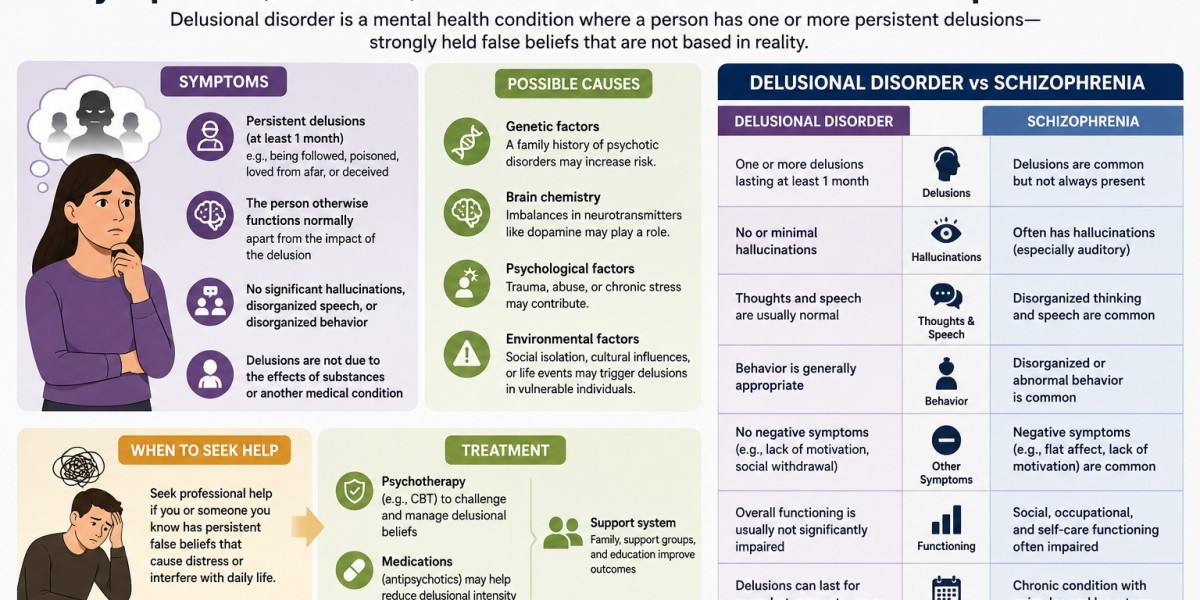

Understanding Delusional Disorder: Symptoms, Causes, and How It Differs From Schizophrenia
Mental health disorders are not always noticeable. Others may go to work, talk to their friends, and live their day-to-day lives while suffering from thoughts that they know in their mind are real, yet may not be in reality. This is the reason why it can be hard to diagnose delusional disorder in the initial stages.
Sometimes family members observe unusual behavior before the patient recognizes that something is awry. An individual can have a very strong feeling that they are being watched, followed, betrayed, or harmed, and these feelings may be unfounded. These thoughts can gradually impact relationships, work performance, emotional health, and quality of life.
Since the symptoms typically start slowly, many people try to treat themselves for years before seeking professional help. Early mental health care, however, can be an important factor to help manage symptoms and enhance functioning in daily life. It is important to make an appointment with a mental health professional to have these thoughts or beliefs properly assessed if they are ongoing and affect the person's life.
What Is Delusional Disorder?
Delusional disorder is a mental disorder in which a person has a false belief that is not caused by hallucination or substance use, but is held with great conviction despite the presence of conflicting evidence. Delusions are beliefs that don't change.
People with this disorder can live a normal life and seem emotionally stable in other areas of life, unlike some other severe psychiatric disorders. That's why the condition is frequently not detected.
There may be different interpretations of the beliefs. Some people feel they are being watched by others, some feel they are being secretly courted by someone, and others feel that someone is trying to hurt them.
These thoughts seem very real to the person having them, and this makes it more difficult to be persuaded by arguments or reassurance from their family.
Common Delusional Disorder Symptoms
Symptoms are typically related to the nature of the delusion. It is often the case that the individual develops a strong emotional tie to these beliefs, and they may be extremely sensitive to questioning.
These are typically the following symptoms:
Persistent suspicious thoughts
Thinking others are conspiring against them
Suspicion of being observed or followed all the time.
Reinforced jealousy—when there is no actual reason to feel jealous.
Thinking they have special powers or importance
Withdrawal, mistrust
Anxiety, irritability, or anger about the idea
A man or woman may, for instance, accuse a spouse over and over despite having no proof of infidelity. Another person might think neighbors are listening to their conversations without their knowledge.
These beliefs can wreak emotional havoc on the patient and family over time and affect relationships.
What Causes This Condition?
Delusional thinking can be attributed to a number of factors, according to mental health professionals. Typically, no single cause exists.
Family History and Genetics
Those with family members suffering from psychiatric disorders may be more likely to have the same disorder.
Stressful Life Events
Stress, emotional upset, loneliness, or trauma can cause unusual thinking patterns in some cases.
Brain Chemistry Changes
Some chemical abnormalities in the brain can impact one's interpretation of reality and situations.
Social Isolation
Those who spend long periods without companionship or have little social interaction could be more susceptible to misconceptions and paranoia.
Delusional Disorder vs Schizophrenia
A lot of people mistake delusional disorder for schizophrenia because they can have abnormal beliefs. There are, however, some significant distinctions between them.
In general, the person with delusional disorder has at least one, but may have more, false beliefs that are very firmly fixed in his or her mind, and he or she may function relatively normally. They frequently have orderly speech and behavior, and the organization of their daily routines.
The symptoms of schizophrenia are more general, including hallucinations, mixed-up speech, disorganized behavior, emotional isolation, and problems with reality testing.
For instance, a person with schizophrenia might hear voices or feel very confused, and with delusional disorder, a person's main problem will be one false belief.
It is significant to differentiate the two conditions, as treatment and long-term management may differ.
Why Early Diagnosis Matters
The most difficult thing is that many patients are not aware that they require treatment. The beliefs sound like they are true, and so they may think that family members or doctors are not understanding them.
Unfortunately, if symptoms are not treated, they can begin to impact:
Personal relationships
Workplace performance
Emotional stability
Sleep and stress levels:
Social interaction
At times, the suspicious thinking could be so deep that it leads to conflict, fear, and unsafe behavior.
This can help minimize emotional stress and enhance communication between the patient and family. If symptoms persist and interfere with an individual's functioning, then it is important to schedule a mental health evaluation.
How Doctors Diagnose Delusional Disorder
Diagnosis typically consists of psychological testing, symptom rating, and discussion of thoughts, feelings, and behaviors.
Mental health providers also attempt to determine if other conditions are causing symptoms, such as:
Schizophrenia
Severe depression
Substance-related disorders
Neurological conditions
Anxiety-related illnesses
Diagnosis is important as it may lead to unnecessary fear and confusion if they make a self-diagnosis or base the diagnosis on information found on the internet.
Treatment Options and Recovery Support
Treatment will vary based on symptom severity and willingness of the patient to engage in treatment.
Therapy and Counseling
Patients are gradually made aware of their thought, emotional, and behavioral patterns through psychotherapy.
Therapy can also enhance coping and communication.
Medication Support
For some, medications to decrease suspicious thinking, anxiety, or emotional distress may be helpful.
Family Involvement
The support of the family is frequently a significant factor in recovery. Typically, family members are advised to refrain from “fighting about the faith” and to engage in gentle communication and emotional support.
Symptoms can last for several years, and recovery may take longer. Regular follow-up and consistent treatment may enhance long-term outcomes.
The Emotional Impact on Families
Patient's mental health issues are not the only thing affected. Emotional pressures, confusion and frustration also affect families.
For instance, relatives might take months to tell the person that beliefs are false, but they will get angry or distrustful responses. This can lead to an emotional drain within the family over time.
This is the reason why professional advice is essential not just for the patient, but for family members who wish to get an understanding of the condition.
When Should You Seek Professional Help?
You should consider medical consultation if unusual beliefs begin interfering with relationships, work, daily activities, or emotional well-being.
Warning signs include:
Increasing paranoia or suspiciousness
Strong false beliefs lasting several weeks or months
Withdrawal from friends and family
Emotional aggression linked to certain beliefs
Severe trust issues affecting normal life
Early mental health care can reduce stress, improve understanding, and support healthier long-term recovery. If symptoms continue affecting everyday functioning, it may help to book an appointment with experienced healthcare professionals for further evaluation.
FAQs
What is delusional disorder?
Delusional disorder is a mental health condition where a person strongly believes things that are not true despite evidence against them.
What are common delusional disorder symptoms?
Symptoms may include paranoia, suspicious thinking, jealousy, false beliefs, emotional anger, and social withdrawal.
What is the difference between delusional disorder and schizophrenia?
People with delusional disorder usually have fixed false beliefs but maintain relatively organized behavior, while those with schizophrenia often include hallucinations and severe confusion.
Can delusional disorder be treated?
Yes. Therapy, medications, and emotional support can help manage symptoms and improve daily functioning.
When should someone seek professional help?
Medical help should be considered when unusual beliefs begin affecting relationships, emotional health, work, or normal daily activities.
Conclusion
Delusional disorder is a complex mental health condition that often develops quietly over time. Because many individuals continue functioning normally in certain areas of life, symptoms may remain unnoticed until relationships and emotional health begin to suffer.
Understanding the warning signs, emotional effects, and differences between delusional disorder and schizophrenia can help families recognize when professional support is needed. Early diagnosis, therapy, and compassionate care can improve quality of life and reduce emotional distress for both patients and loved ones.
Instead of ignoring unusual thoughts or relying on arguments to solve the issue, seeking proper mental health guidance is often the safest and most effective step toward recovery.