
Why Walking Is the Best Way to Experience Munich for the First Time
First-time visitors to Munich often face the challenge of deciding how to allocate limited time among the city's extraordinary concentration of sights, experiences, and cultural attractions. The answer, for most visitors with a genuine interest in understanding the city rather than merely checking landmarks off a list, is almost always a walking tour that connects the major highlights in a coherent narrative sequence guided by someone with the knowledge to bring context and meaning to what they are seeing. Munich is a remarkably walkable city, with its most important historic attractions concentrated in the Altstadt within comfortable walking distance of each other, making an on-foot exploration both practical and deeply rewarding.
Starting Point: Marienplatz and Its Towers
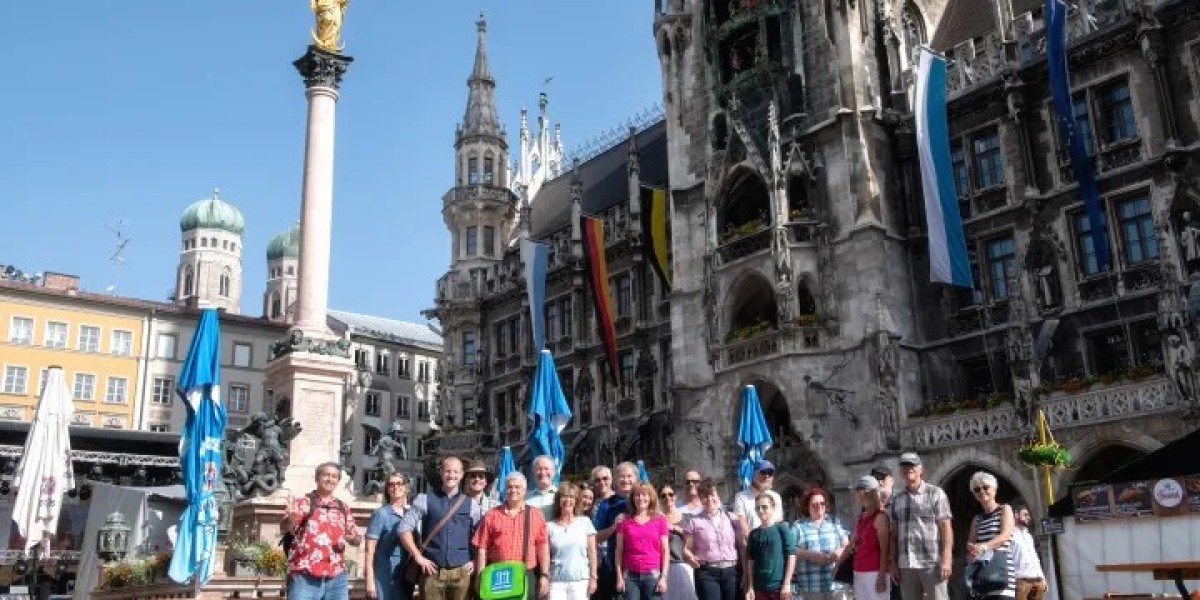
The logical starting point for any first-time exploration of Munich is Marienplatz, the central square from which the city's historic districts radiate in every direction. The square itself is a spectacle worth absorbing slowly — the elaborate neo-Gothic facade of the New Town Hall, the simpler medieval face of the Old Town Hall on its opposite side, the golden column of the Mariensäule at the center, and the constant flow of Munich residents and visitors who use the square as a gathering point throughout the day. The Glockenspiel performances at eleven in the morning and noon are a genuine spectacle, with the rotating figures and bells attracting a crowd that reflects the enduring appeal of this medieval automaton tradition.
The Essential Sights No First Visit Should Miss
First-time visitors to Munich are well served by focusing their walking time on a core selection of essential sights that represent the city's history, culture, and character most completely. The Frauenkirche, Munich's iconic twin-towered cathedral, deserves a visit both for its impressive Gothic interior and for the view from the tower. The Residenz palace complex offers a compelling journey through six centuries of Wittelsbach dynastic history. The Viktualienmarkt provides an authentic slice of daily Munich life in a setting that has changed remarkably little over two centuries. Odeonsplatz, with its Feldherrnhalle and the yellow facade of the Theatinerkirche, showcases the Italian architectural influences that shaped Munich's Baroque transformation.
The Hofgarten and Outdoor Munich
Between the Residenz and the Englischer Garten lies the Hofgarten, the formal court garden created in 1613 as a recreational space for the Wittelsbach court and now a beloved public park where Munich residents lunch on benches, play traditional Bavarian games, and stroll beneath the arcaded walkways that frame the garden's geometric layout. The circular Dianatempel at the garden's center was designed in 1615 and became such a beloved Munich landmark that when it was destroyed in World War II it was rebuilt and restored to its original form. Walking through the Hofgarten provides a pleasant transition between the densely historic streets of the Altstadt and the expansive green spaces of the Englischer Garten beyond.
Navigating Munich's Historic Districts on Foot